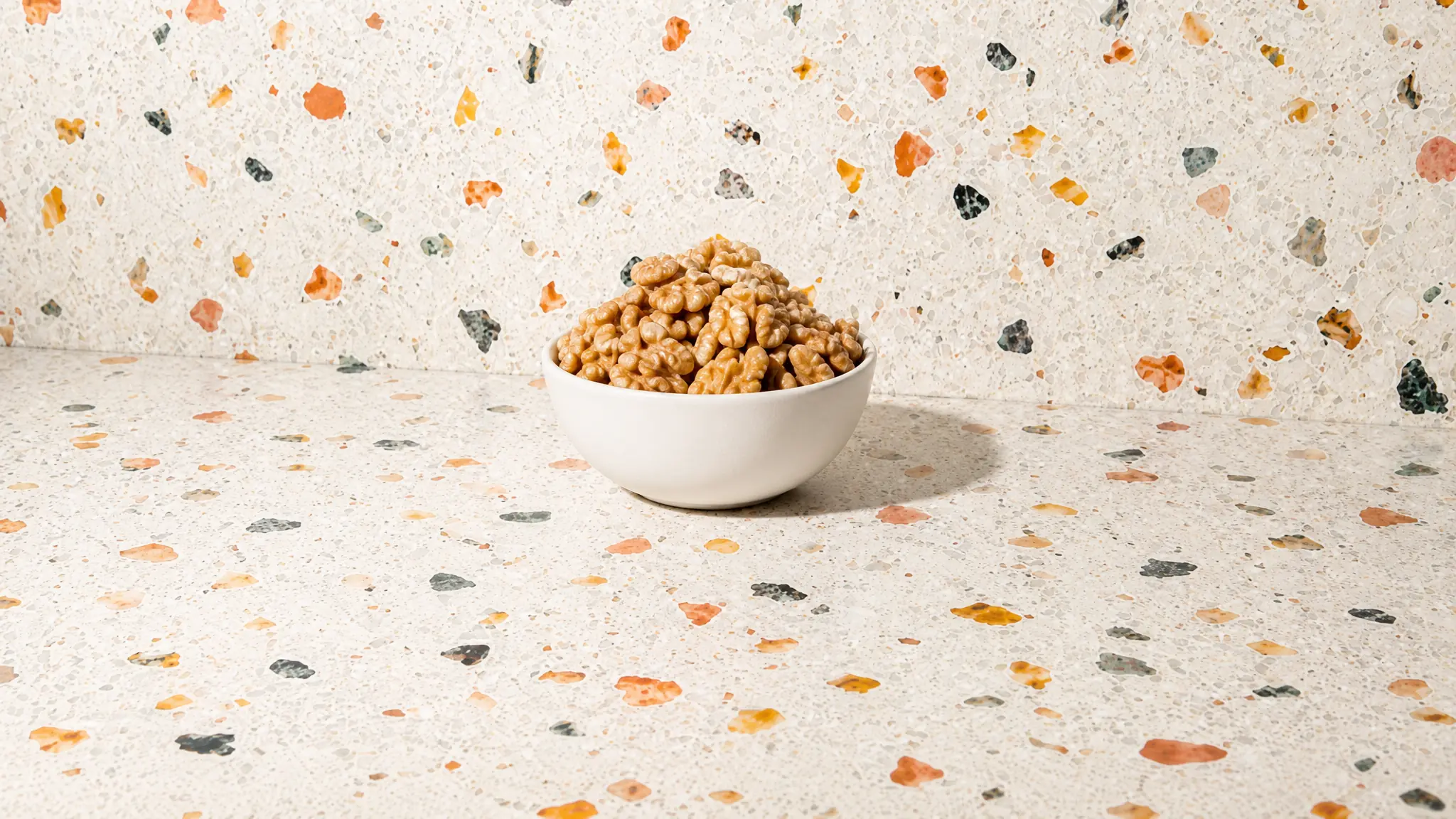

Walnut
Treenut
Last updated July 5, 2026. The Tummi Food Team maintains this Can I Feed This safety guide guide. Supporting links appear in Sources when available.



Clinically reviewed by Andria Procopio and Arefa Mohamed
Direct answer
Can babies eat Walnut?
Walnuts can be introduced from around 6 months, once your baby is developmentally ready for solid foods, by offering them finely ground and mixed into food or as smooth walnut butter thinned or spread thinly on another food; do not offer whole or chopped walnuts or spoonfuls of nut butter because they are choking hazards.
- Serve Age6+months
Most babies start solids around 6 months once they show readiness signs. Match the texture and serving size to your baby's skills.
- Allergens
Walnut is flagged for tree nut. Introduce common allergens in a baby-safe form and follow your clinician's advice if your baby is higher risk.
- Choking Risk123451
Lower choking risk when served in the right texture. Always supervise meals and adjust the shape for your baby.
This guide is for everyday food prep questions. Ask your pediatrician about medical concerns, feeding delays, allergy plans, or serious reactions.
How Do You Serve Walnut?
How to serve Walnut to babies 6 months and older
- 1Use smooth, honey‑free walnut butter or walnuts ground until no hard pieces remain; if needed, pound or process them until very fine and powdery.
- 2Thin walnut butter with breastmilk, formula, water, or unsweetened purees until spreadable or loose enough to drizzle — thinner texture reduces choking risk.
- 3Offer very small amounts: spread a very thin layer on long toast strips for easy grasping, or sprinkle just a tiny pinch into warm cereal, yogurt, or soft mashed fruits (like avocado).
- 4Always stay within arm’s reach while feeding, keep the baby upright, and offer small sips from an open cup to help clear any sticky bits.
How to serve Walnut to babies 12 months and older
- 1Finely grind walnuts or use very smooth, thinned walnut butter stirred into yogurt, warm cereal, mashed vegetables, or spread thinly on toast.
- 2Offer small amounts to start (about 1/2–1 teaspoon) and observe for any allergic reaction for several hours after serving.
- 3Avoid whole nuts or chunky pieces because they can cause choking. Always supervise while your child eats.
- 4Walnut milk can be offered occasionally, but it is low in calories, fat, and protein compared with toddler needs — serve small portions and pair with more nourishing foods.
How to serve Walnut to babies 24 months and older
- 1Continue using finely ground walnuts and walnut butter as the safer everyday option; only introduce whole walnuts after the child consistently shows mature chewing skills (small bites, moving food to molars, thorough chewing, and the ability to spit out poorly chewed pieces).
- 2When introducing whole walnuts, offer only one or two at a time and place them on a tray or plate while the child is seated upright.
- 3Always seat the child fully upright and stay within arm’s reach — do not give whole nuts while the child is walking, in a car seat, or otherwise distracted.
- 4Model taking a small bite and moving it to the back teeth, and supervise closely so you can intervene if the child struggles; remain attentive until the nut is fully chewed or removed.
Is Walnut a Common Allergen?
Walnuts are a tree‑nut allergen and can cause severe allergic reactions, including anaphylaxis, in sensitive children. Avoid giving walnuts or foods containing walnuts (walnut oil, pestos, baked goods, mixed‑nut products) to children with tree‑nut allergy and be mindful of cross‑contact in kitchens and childcare settings. Always read ingredient labels, inform caregivers and schools about tree‑nut allergies, and follow your clinician’s guidance about emergency medications (e.g., epinephrine) if prescribed.
Is Walnut a Choking Hazard?
Low Choking Risk
Walnuts are a significant choking hazard for babies and young children—whole nuts, nut pieces, and sticky globs of nut butter can block an airway. Always keep baby seated upright and within arm’s reach during meals, and avoid letting them eat while walking, moving, or highly distracted. Nuts and nut pieces are generally considered choking hazards well into toddlerhood (commonly advised until at least age 4), so introduce them only when chewing skills are well-developed and you can closely supervise.
Save Walnut to your food log
Track foods, reactions, and prep notes in Tummi when you want to keep your baby's feeding history in one place.
Sources
- Health Benefits of Nut Consumption (Ros, 2010) - Nutrients doi.org
- Clinical Relevance of Cross-Reactivity in Food Allergy (Cox et al., 2021) - J Allergy Clin Immunol Pract doi.org
- Defining challenge-proven coexistent nut and sesame seed allergy (Brough et al., 2020) - Journal of Allergy and Clinical Immunology doi.org
- The prevalence of plant food allergies: A systematic review (Zuidmeer et al., 2008) - Journal of Allergy and Clinical Immunology doi.org
- Cow's milk substitutes for children: Nutritional aspects... (Verduci et al., 2019) - Nutrients doi.org
What Other Treenut Can Babies Eat?
See all →




Source-Linked Guidance
See the evidence behind the guide.
Food guides show direct links to public-health guidance and research when supporting references are available. Source inclusion does not imply endorsement.
 Centers for Disease Control and Prevention
Developmental milestones, nutrition guidelines, and allergen introduction timelines.
 American Academy of Pediatrics
Evidence-based feeding recommendations from the leading pediatric authority.
 National Institutes of Health
Peer-reviewed research on infant nutrition, allergies, and food safety.