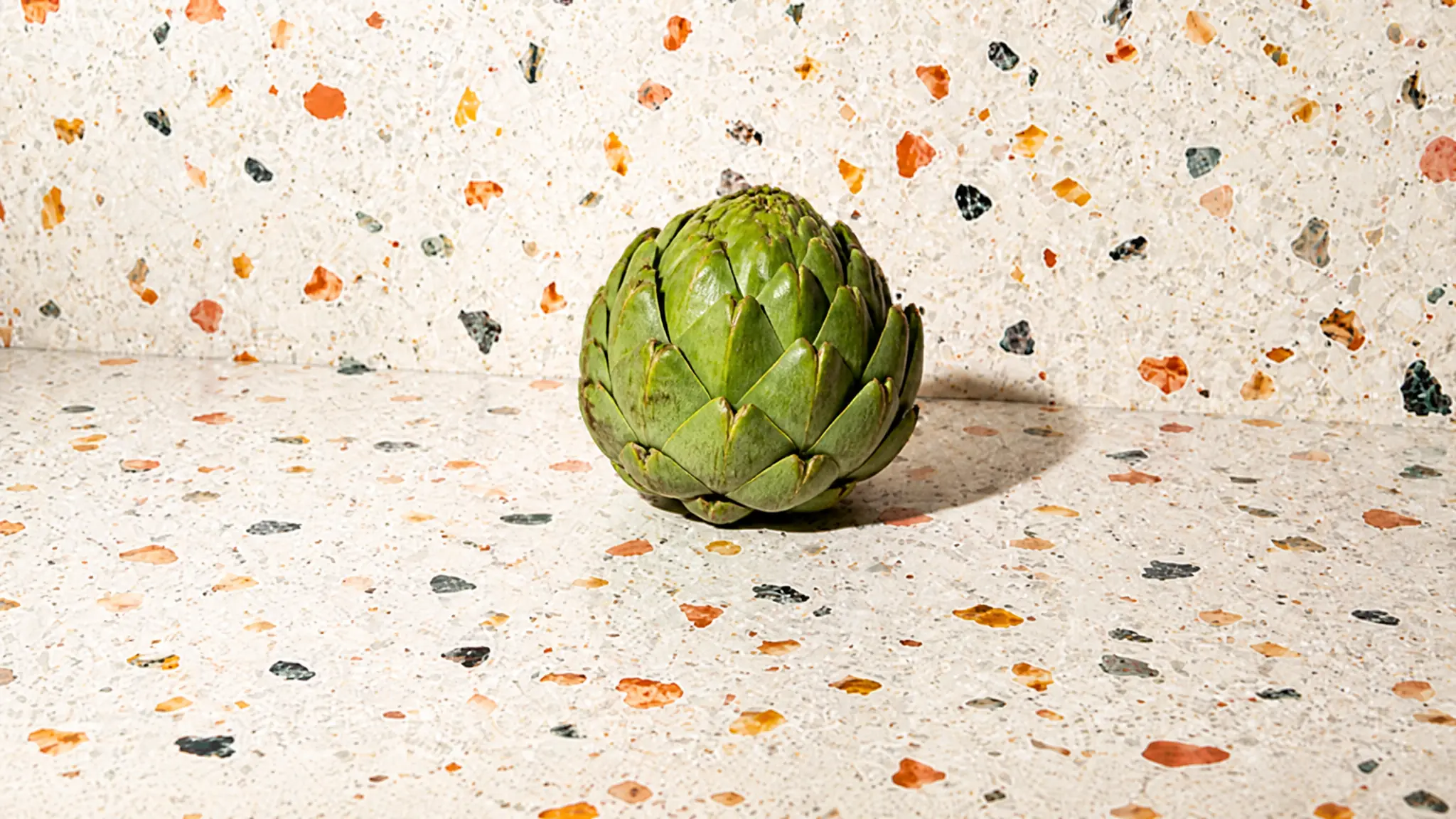

Artichoke
Vegetable
Last updated July 5, 2026. The Tummi Food Team maintains this Can I Feed This safety guide guide. Supporting links appear in Sources when available.



Clinically reviewed by Andria Procopio and Arefa Mohamed
Direct answer
Can babies eat Artichoke?
Yes, artichokes can be introduced around 6 months of age when baby is ready to start solids, ensuring they are fully cooked, soft, and prepared in an age-appropriate way.
- Serve Age6+months
Most babies start solids around 6 months once they show readiness signs. Match the texture and serving size to your baby's skills.
- No Allergens
Artichoke is not flagged as one of the major allergens tracked in this database. Still watch your baby closely when serving any new food.
- Choking Risk123453
Some choking risk. Use the prep section to change the size, shape, or texture before serving.
This guide is for everyday food prep questions. Ask your pediatrician about medical concerns, feeding delays, allergy plans, or serious reactions.
How Do You Serve Artichoke?
How to serve Artichoke to babies 6 months and older
- 1Trim the artichoke: remove the outer tough petals and cut off the stem tip so it cooks evenly.
- 2Cook using steam, boiling, or a pressure cooker until the heart is very soft (about 25–40 minutes steaming or 10–15 minutes pressure cooking) so the heart can be easily removed and mashed.
- 3After cooling, remove the outer petals and use a spoon to lift out the inner fuzzy “choke” — discard it — then scoop out the tender heart and stem.
- 4Serve whole or halved with the stem as a handle for self-feeding, or finely mash or chop the cooked heart and mix with mashed avocado or plain yogurt to create a scoopable texture.
- 5Let cool to lukewarm, check for any small hard pieces, and avoid adding salt; refrigerate leftovers in an airtight container for up to 48 hours.
How to serve Artichoke: Varies
- 1Remove inedible parts: Trim the stem and snap off tough outer leaves; after cooking, scoop out and discard the fuzzy choke and any sharp leaf tips.
- 2Cook until very tender: Steam or boil whole or halved artichokes until leaves pull away easily and the heart is soft (small 20–30 minutes; larger ones take longer).
- 3Offer safe textures that match feeding skills: For less-experienced feeders, finely mash or puree the cooked heart; for those practicing self-feeding, serve very small, soft pieces with no sharp edges.
- 4Supervise every bite and check temperature: Always watch your child while they eat and make sure pieces are soft and cool enough to reduce choking risk.
How to serve Artichoke to babies 9 months and older
- 1Steam or boil artichoke hearts until very tender (a fork slides in easily), cool to lukewarm, and remove any tough outer leaves and the fuzzy choke before serving.
- 2Offer whole or halved very-soft hearts with the stem for grasping so the child can hold and self-feed; supervise closely and try a piece yourself first to check temperature and texture.
- 3When the child uses a pincer grasp, cut hearts into bite-sized pieces or thin slices that are easy to gum to lower gagging risk.
- 4Continue offering mashed or finely chopped artichoke mixed into other foods so flavors and textures are familiar while feeding skills develop.
How to serve Artichoke to babies 12 months and older
- 1Steam, boil, or roast artichoke hearts until very soft, then remove any tough outer petals and the fuzzy choke so only tender flesh remains.
- 2Cut into quarters or small, bite-sized pieces to make them easy to pick up; offer as finger food or serve with an age-appropriate fork.
- 3Canned or jarred artichoke hearts are okay—rinse them and check texture, removing any chewy parts before serving.
- 4Chop and stir into pastas, grains, spreads, or stews for added flavor and texture, and coach utensil use as your child practices picking up and chewing safely.
Is Artichoke a Common Allergen?
Artichokes are not common food allergens and do not contain major allergens like gluten, dairy, eggs, peanuts, tree nuts, soy, fish, shellfish, or sesame. However, artichokes are in the Asteraceae (daisy) family and can cause oral allergy syndrome or cross-reactions in people with pollen allergies (e.g., ragweed, mugwort); watch for itching or swelling of the mouth/throat. Introduce cautiously if your child has known pollen or plant allergies and seek medical advice if symptoms occur. Also check labels for prepared products, which may contain hidden allergens.
Is Artichoke a Choking Hazard?
Moderate Choking Risk
Artichokes can be a choking hazard because their texture varies — they can be firm and slippery, which makes them harder for young mouths to manage. Stay within arm’s reach and watch closely during feeds so you can respond quickly if gagging or choking occurs. Be familiar with infant choking first aid and when to seek emergency help.
Have More Questions?
Cool cooked artichoke promptly, then refrigerate it and use it within 2 days, or freeze it. Store it in a covered container, and discard any portion that has already been served to your baby and partly eaten.
Yes. Freezing pureed or cooked artichoke is possible and helps preserve it for future feeds. Use suitable containers, leaving space for expansion, and thaw in the refrigerator before serving.
Organic artichoke may reduce pesticide exposure, but either organic or conventional artichoke can be offered. Wash the artichoke thoroughly under running water before preparing it, and cook the edible heart until soft enough for your baby’s feeding skills.
Yes, you can combine cooked, tender artichoke with other foods your baby already eats. For example, mash it with another vegetable or mix it with pasteurized plain yogurt without added sugar, keeping the final texture appropriate for your baby’s feeding skills.
Portion sizes vary based on your baby’s age and appetite, but small, manageable servings like a few teaspoons are appropriate for beginners. Adjust as your baby develops eating skills.
Save Artichoke to your food log
Track foods, reactions, and prep notes in Tummi when you want to keep your baby's feeding history in one place.
Sources
- Does salt intake in the first two years of life affect the development of cardiovascular disorders in adulthood? doi.org
- Infants' and Children's Salt Taste Perception and Liking: A Review doi.org
- Occupational Contact Dermatitis Caused by Artichokes doi.org
- Airborne allergic contact dermatitis caused by artichoke doi.org
What Other Vegetable Can Babies Eat?
See all →

Source-Linked Guidance
See the evidence behind the guide.
Food guides show direct links to public-health guidance and research when supporting references are available. Source inclusion does not imply endorsement.
 Centers for Disease Control and Prevention
Developmental milestones, nutrition guidelines, and allergen introduction timelines.
 American Academy of Pediatrics
Evidence-based feeding recommendations from the leading pediatric authority.
 National Institutes of Health
Peer-reviewed research on infant nutrition, allergies, and food safety.