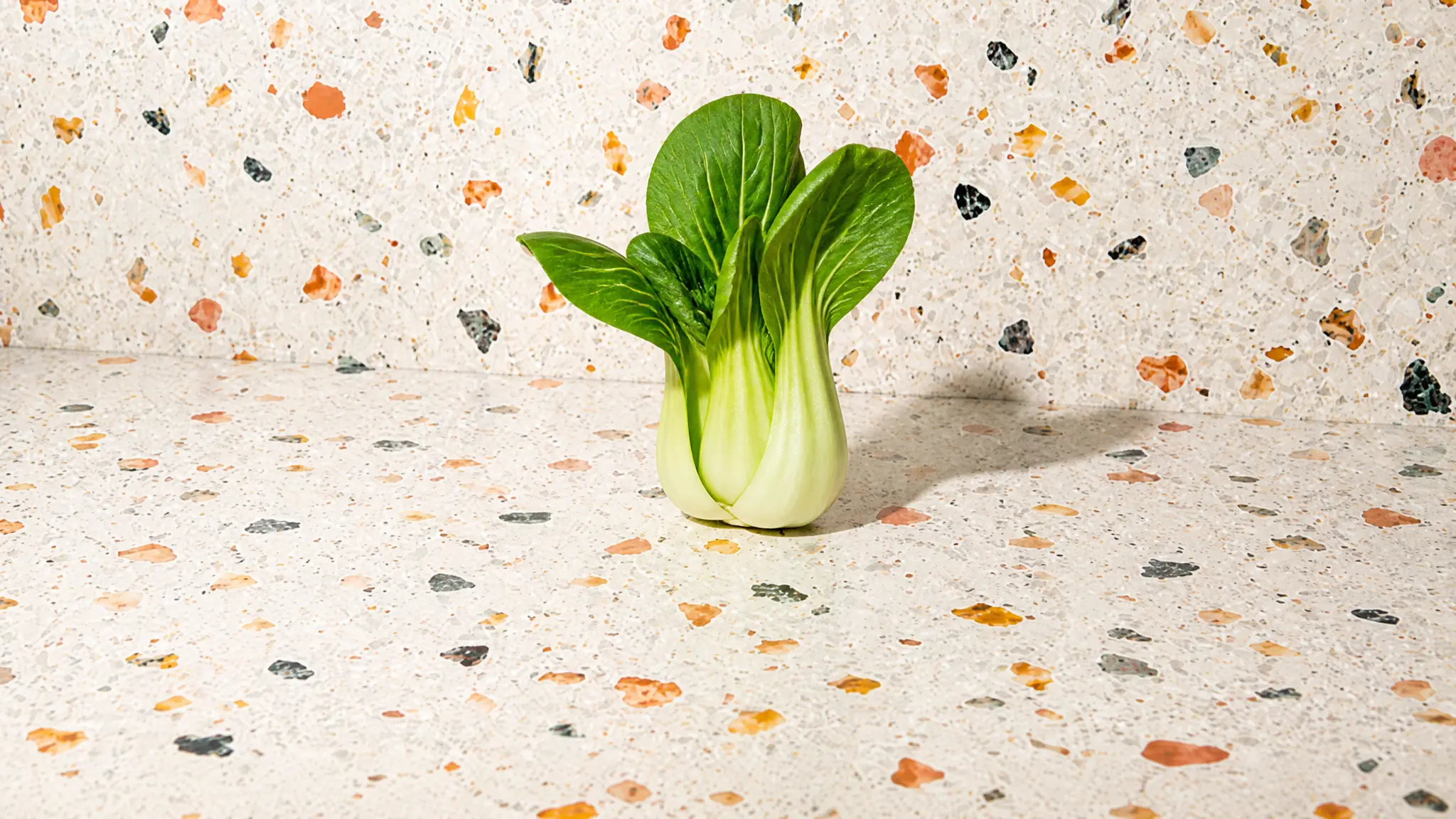
Bok Choy
Vegetable
Last updated July 5, 2026. The Tummi Food Team maintains this Can I Feed This safety guide guide. Supporting links appear in Sources when available.



Clinically reviewed by Andria Procopio and Arefa Mohamed
Direct answer
Can babies eat Bok Choy?
Yes, babies can eat bok choy from around 6 months, prepared in an age-appropriate, cooked, and soft form to reduce choking risks.
- Serve Age6+months
Most babies start solids around 6 months once they show readiness signs. Match the texture and serving size to your baby's skills.
- No Allergens
Bok Choy is not flagged as one of the major allergens tracked in this database. Still watch your baby closely when serving any new food.
- Choking Risk123453
Some choking risk. Use the prep section to change the size, shape, or texture before serving.
This guide is for everyday food prep questions. Ask your pediatrician about medical concerns, feeding delays, allergy plans, or serious reactions.
How Do You Serve Bok Choy?
How to serve Bok Choy to babies 6 months and older
- 1Remove the leafy tops and trim the white/light-green ribs into 2–3-inch sticks so baby can grasp them; steam or boil until tender. Test with a fork to ensure they are soft enough to gum.
- 2Offer the cooked rib whole (leafy parts removed) so baby can hold and gum it; always stay within arm’s reach and supervise closely for safety.
- 3Finely mince or chop cooked leaves and ribs and stir into soft, scoopable foods like congee, mashed vegetables, porridge, or noodles to add flavor and nutrients. Start with small amounts and increase as your baby accepts the texture.
- 4Avoid added salt or strong spices; mix with breastmilk, formula, or a little olive oil if you want mild flavor. Refrigerate leftovers promptly and use within 48 hours, reheating until steaming and checking temperature before serving.
How to serve Bok Choy to babies 12 months and older
- 1Steam or sauté bok choy until stems are very tender (about 5–7 minutes) so the whole piece is soft and easy to chew.
- 2Cut for the skill you want to practice: shred or finely chop to make chewing easier, or leave in larger, bite-sized strips to encourage biting and tearing.
- 3Always check texture and temperature before serving—pieces should be soft and cool enough to touch and easily mashable with gentle pressure.
- 4Encourage self-feeding with a child-safe fork or let them use their fingers; pre-load a utensil if they need help and always supervise closely, offering small amounts at a time.
Is Bok Choy a Common Allergen?
Bok choy is not a common food allergen. Rare contact or oral allergy to cruciferous vegetables can occur, but it does not contain major allergens (peanut, tree nuts, dairy, egg, soy, wheat/gluten, shellfish, sesame). For babies, cook and puree stems/leafy parts to reduce choking risk and introduce it like other new vegetables, one at a time while monitoring for reactions.
Is Bok Choy a Choking Hazard?
Moderate Choking Risk
Yes — bok choy can be a choking risk, particularly the firm raw stalks which are hard for young babies to chew and may become stuck. The leafy parts are less likely to choke, but small pieces can stick to the tongue or roof of the mouth and trigger gagging, which is common and not the same as choking. Always supervise closely (within arm’s reach), learn the signs of choking, and have a plan for infant choking first aid.
Have More Questions?
Yes. Bok choy can be stored in a sealed container in the refrigerator for a few days, but it's best to use it quickly for optimal freshness and nutrient retention.
Yes. Freezing pureed or cooked bok choy in ice cube trays allows for convenient portions and extended storage, usually up to a few months.
It depends. Organic bok choy generally has fewer pesticides but costs more; conventional bok choy may be more affordable, but thoroughly wash all vegetables before preparing for your baby.
Yes. Combining bok choy with other baby-friendly foods like sweet potato or rice can diversify flavors and nutrients, making meals more appealing.
It depends on your baby's age and eating skills. Start with small portions, around 1-2 teaspoons, and gradually increase as your baby shows interest and can handle more.
Save Bok Choy to your food log
Track foods, reactions, and prep notes in Tummi when you want to keep your baby's feeding history in one place.
Sources
- Attenuation of Carcinogenesis and the Mechanism Underlying by the Influence of Indole-3-carbinol and Its Metabolite 3,3'-Diindolylmethane: A Therapeutic Marvel doi.org
- Cruciferous vegetables and human cancer risk: epidemiologic evidence and mechanistic basis doi.org
- The beneficial effects of Brassica vegetables on human health pubmed.ncbi.nlm.nih.gov
- Oral Allergy Syndrome (OAS) or Pollen Fruit Syndrome (PFS) aaaai.org
What Other Vegetable Can Babies Eat?
See all →
Source-Linked Guidance
See the evidence behind the guide.
Food guides show direct links to public-health guidance and research when supporting references are available. Source inclusion does not imply endorsement.
 Centers for Disease Control and Prevention
Developmental milestones, nutrition guidelines, and allergen introduction timelines.
 American Academy of Pediatrics
Evidence-based feeding recommendations from the leading pediatric authority.
 National Institutes of Health
Peer-reviewed research on infant nutrition, allergies, and food safety.