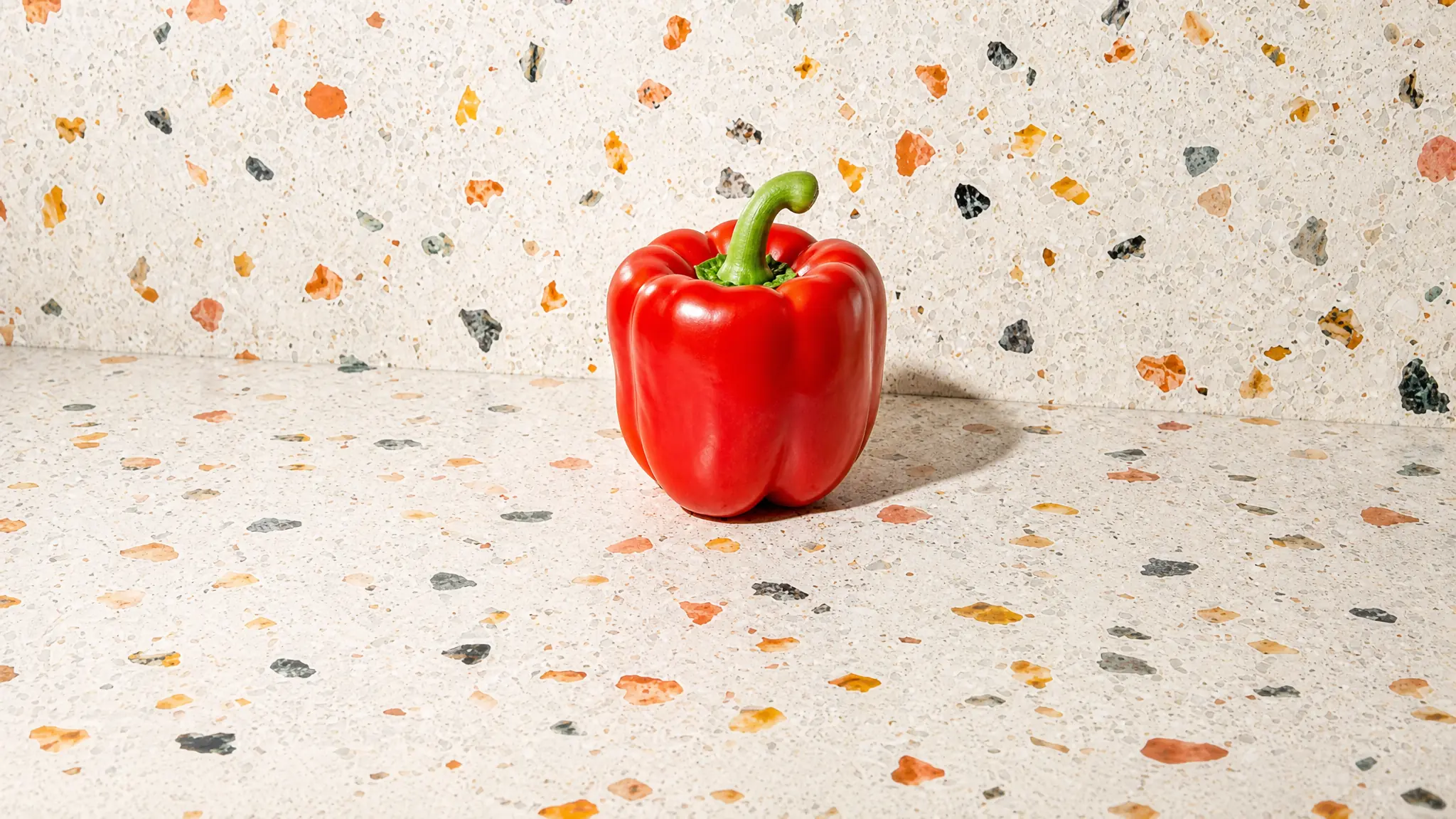
Bell Pepper
Vegetable
Last updated July 5, 2026. The Tummi Food Team maintains this Can I Feed This safety guide guide. Supporting links appear in Sources when available.



Clinically reviewed by Andria Procopio and Arefa Mohamed
Direct answer
Can babies eat Bell Pepper?
Yes, bell peppers can be introduced to babies around 6 months old, cooked and cut into age-appropriate pieces to reduce choking hazards.
- Serve Age6+months
Most babies start solids around 6 months once they show readiness signs. Match the texture and serving size to your baby's skills.
- No Allergens
Bell Pepper is not flagged as one of the major allergens tracked in this database. Still watch your baby closely when serving any new food.
- Choking Risk123453
Some choking risk. Use the prep section to change the size, shape, or texture before serving.
This guide is for everyday food prep questions. Ask your pediatrician about medical concerns, feeding delays, allergy plans, or serious reactions.
How Do You Serve Bell Pepper?
How to serve Bell Pepper to babies 6 months and older
- 1Cook the pepper until soft—roast, steam, or sauté—so pieces are easy to gum and swallow.
- 2Cut into a half or long strip and remove the stem, white pith, and all seeds to eliminate choking hazards.
- 3Leave the skin on unless it feels tough. Peeling helps some babies handle the texture more easily.
- 4For very young or unsure feeders, mash or puree cooked peppers, or use jarred roasted peppers; store cooked peppers in the fridge up to 3 days.
How to serve Bell Pepper to babies 9 months and older
- 1Remove the skin, seeds, and pith from cooked peppers; slice into large, soft strips (about the width of an adult finger) for biting and tearing practice.
- 2For self-feeding, cut cooked peppers into small, soft, bite-sized pieces (pea- to grape-sized) that squash easily between your fingers.
- 3Very thin raw slices are OK if supervised. Make slices thin enough to bend easily so they’re less likely to cause choking.
- 4Offer roasted-pepper dips or spreads (e.g., hummus or yogurt-based) to add flavor and encourage exploration; expect some spitting as chewing skills develop and calmly model chewing.
How to serve Bell Pepper to babies 18 months and older
- 1Remove seeds and white pith, then offer large raw pieces like thick slices or a halved pepper—these are easy for a child to grasp and bite.
- 2If preferred, cook peppers (roast, steam, or sauté) until tender and cut into cooked slices or bite-sized pieces to make chewing easier.
- 3Serve with dips or spreads (e.g., hummus, mashed avocado) to vary texture and flavour; check dip thickness to avoid choking risks.
- 4Always supervise during eating and adjust piece size or cooking level to match your child’s chewing ability.
Is Bell Pepper a Common Allergen?
Bell peppers are not a common top-9 allergen and are generally safe for most children. Some individuals with pollen allergies may experience oral allergy syndrome (itching or mild swelling of the mouth/throat) after eating raw peppers. Rarely, peppers can cause contact dermatitis or true food allergy; watch for hives, vomiting, swelling, or breathing difficulties and seek emergency care for severe reactions. Introduce gradually to infants and monitor for any adverse signs.
Is Bell Pepper a Choking Hazard?
Moderate Choking Risk
Raw bell pepper can be a choking hazard because its firm, slippery texture is hard for babies to manage and they may bite off pieces that obstruct the airway. Be especially vigilant as your child develops biting skills—stay within arm’s reach and watch closely during meals. Know the signs of choking and gagging and have an infant/child choking first-aid plan in place.
Have More Questions?
Yes, you can store cooked or pureed bell peppers in an airtight container in the refrigerator for up to 48 hours. For longer storage, freeze in ice cube trays and transfer to a zip-top bag.
It depends. Bell peppers can be frozen, but for best texture and flavor, it's recommended to blanch and peel them before freezing, especially if serving as finger foods.
Yes, choosing organic bell peppers can reduce your baby's exposure to pesticides, but conventional ones are also safe if washed thoroughly.
It depends. Combining bell peppers with other vegetables or fruits can diversify flavors and nutrients, but introduce new foods separately to monitor for reactions.
It depends. Typical portion sizes for babies vary, but start with a few teaspoons of pureed or small pieces and adjust based on your child's appetite and age.
Save Bell Pepper to your food log
Track foods, reactions, and prep notes in Tummi when you want to keep your baby's feeding history in one place.
Sources
- Bell Pepper Allergy: Different Sensitization Profiles (Callero et al., 2018) doi.org
- Anaphylactic reaction to bell pepper (Capsicum annuum) in a patient with a latex-fruit syndrome (Garcia-Menaya et al., 2014) doi.org
- Allergic sensitization and clinical reactions to latex, food and pollen in adult patients (Levy et al., 2000) doi.org
- Characterization of cross-reactive bell pepper allergens involved in the latex-fruit syndrome (Wagner et al., 2004) doi.org
- Oral Allergy Syndrome: An Update for Stomatologists (Kashyap & Kashyap, 2015) doi.org
- Oral Allergy Syndrome (OAS) or Pollen Food Syndrome (PFS) — American Academy of Allergy, Asthma & Immunology aaaai.org
- The Truth About Nightshades: Are They Bad for You? — Cleveland Clinic (Health Essentials) health.clevelandclinic.org
What Other Vegetable Can Babies Eat?
See all →
Source-Linked Guidance
See the evidence behind the guide.
Food guides show direct links to public-health guidance and research when supporting references are available. Source inclusion does not imply endorsement.
 Centers for Disease Control and Prevention
Developmental milestones, nutrition guidelines, and allergen introduction timelines.
 American Academy of Pediatrics
Evidence-based feeding recommendations from the leading pediatric authority.
 National Institutes of Health
Peer-reviewed research on infant nutrition, allergies, and food safety.