
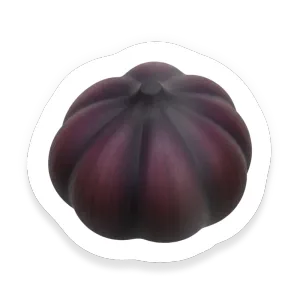
Black Garlic
Vegetable
Last updated July 5, 2026. The Tummi Food Team maintains this Can I Feed This safety guide guide. Supporting links appear in Sources when available.



Clinically reviewed by Andria Procopio and Arefa Mohamed
Direct answer
Can babies eat Black Garlic?
Yes, black garlic can be introduced around 6 months of age; ensure it is minced or mashed for safe consumption.
- Serve Age6+months
Most babies start solids around 6 months once they show readiness signs. Match the texture and serving size to your baby's skills.
- No Allergens
Black Garlic is not flagged as one of the major allergens tracked in this database. Still watch your baby closely when serving any new food.
- Choking Risk123451
Lower choking risk when served in the right texture. Always supervise meals and adjust the shape for your baby.
This guide is for everyday food prep questions. Ask your pediatrician about medical concerns, feeding delays, allergy plans, or serious reactions.
How Do You Serve Black Garlic?
How to serve Black Garlic to a 12-month-old baby
- 1Finely mash or mince black garlic and briefly sauté in a small amount of olive oil until just warmed to soften the texture and mellow the flavor.
- 2Stir a small amount into soft foods like mashed sweet potato, cooked quinoa or rice, or a softly scrambled omelet to introduce flavor.
- 3Start with a pea-sized amount and watch for digestion or reaction. Increase slowly over several days.
- 4Store opened black garlic in the refrigerator and do not keep it submerged in oil to lower the risk of botulism.
How to serve Black Garlic to a 24-month-old baby
- 1Mash black garlic until completely smooth so there are no sticky pieces.
- 2Offer a small amount to start — about 1/4–1/2 teaspoon — mixed into foods like whole-grain toast, mashed avocado, or plain yogurt to gently introduce the flavor.
- 3Stir it into sauces, dressings, cooked or roasted vegetables, or baked goods (e.g., black-garlic bread) so the flavor is evenly distributed.
- 4Refrigerate opened packages and use within a few days. Avoid products stored in oil.
- 5Always supervise meals and keep garlic well-mashed to prevent choking on sticky pieces.
Is Black Garlic a Common Allergen?
Black garlic is simply aged garlic and is not one of the common top-9 food allergens, so most children without garlic/allium sensitivities tolerate it. A small number of people can have an allergy or intolerance to alliums (garlic, onion, leeks), so avoid if your child has a known sensitivity. Commercial black garlic products (sauces, pastes, flavored bulbs) may contain added allergens like soy, wheat (gluten), dairy, nuts, or sesame—always read ingredient labels and check for cross-contact warnings. For young children, serve mashed or finely chopped to reduce choking risk.
Is Black Garlic a Choking Hazard?
Low Choking Risk
Black garlic cloves can pose a choking risk for babies because they can be firm and sticky, making them easy to inhale or lodge in the throat. Stay close and watch your baby carefully during meals, and pay attention to the texture and size of any black garlic served so it’s appropriate for their developmental stage.
Have More Questions?
Yes. Black garlic can be introduced to babies once they are starting solids around 6 months, as long as it is prepared in a safe, age-appropriate manner.
It depends. Black garlic is generally healthy for babies, offering nutrients and probiotics, but always introduce it gradually and observe for any adverse reactions.
Yes. Black garlic is lower in vitamin C but richer in fiber and bioavailable nutrients, making it a nutritious addition to a baby's diet when used appropriately.
It depends. While black garlic isn’t a common choking hazard, its sticky texture means it should be minced or mashed and served carefully to prevent choking.
No. Black garlic is not considered a common allergen, but because it belongs to the allium family, it’s wise to consult a healthcare professional if your family has a history of food allergies.
Save Black Garlic to your food log
Track foods, reactions, and prep notes in Tummi when you want to keep your baby's feeding history in one place.
Sources
- Kimura S., Tung Y., Pan M., Su N., Lai Y., & Cheng K. (2017). Black garlic: A critical review of its production, bioactivity, and application. Journal of Food and Drug Analysis, 25(1), 62-70. doi.org
- Chelule P., Mockgatle M., Zungu L., & Chaponda A. (2014). Caregivers’ Knowledge and Use of Fermented Foods for Infant and Young Children Feeding in a Rural Community of Odi, Gauteng Province, South Africa. Health Promotion Perspectives, 4(1), 54-60. doi.org
- Mennella J. & Beauchamp J. (1993). The effects of repeated exposure to garlic-flavored milk on the nursling’s behavior. Pediatric Research, 34(6), 805-808. doi.org
- Bell V., Ferrão J., & Fernandes T. (2018). Fermented Food Guidelines for Children. Foods, 6(8), 65. doi.org
What Other Vegetable Can Babies Eat?
See all →


Source-Linked Guidance
See the evidence behind the guide.
Food guides show direct links to public-health guidance and research when supporting references are available. Source inclusion does not imply endorsement.
 Centers for Disease Control and Prevention
Developmental milestones, nutrition guidelines, and allergen introduction timelines.
 American Academy of Pediatrics
Evidence-based feeding recommendations from the leading pediatric authority.
 National Institutes of Health
Peer-reviewed research on infant nutrition, allergies, and food safety.