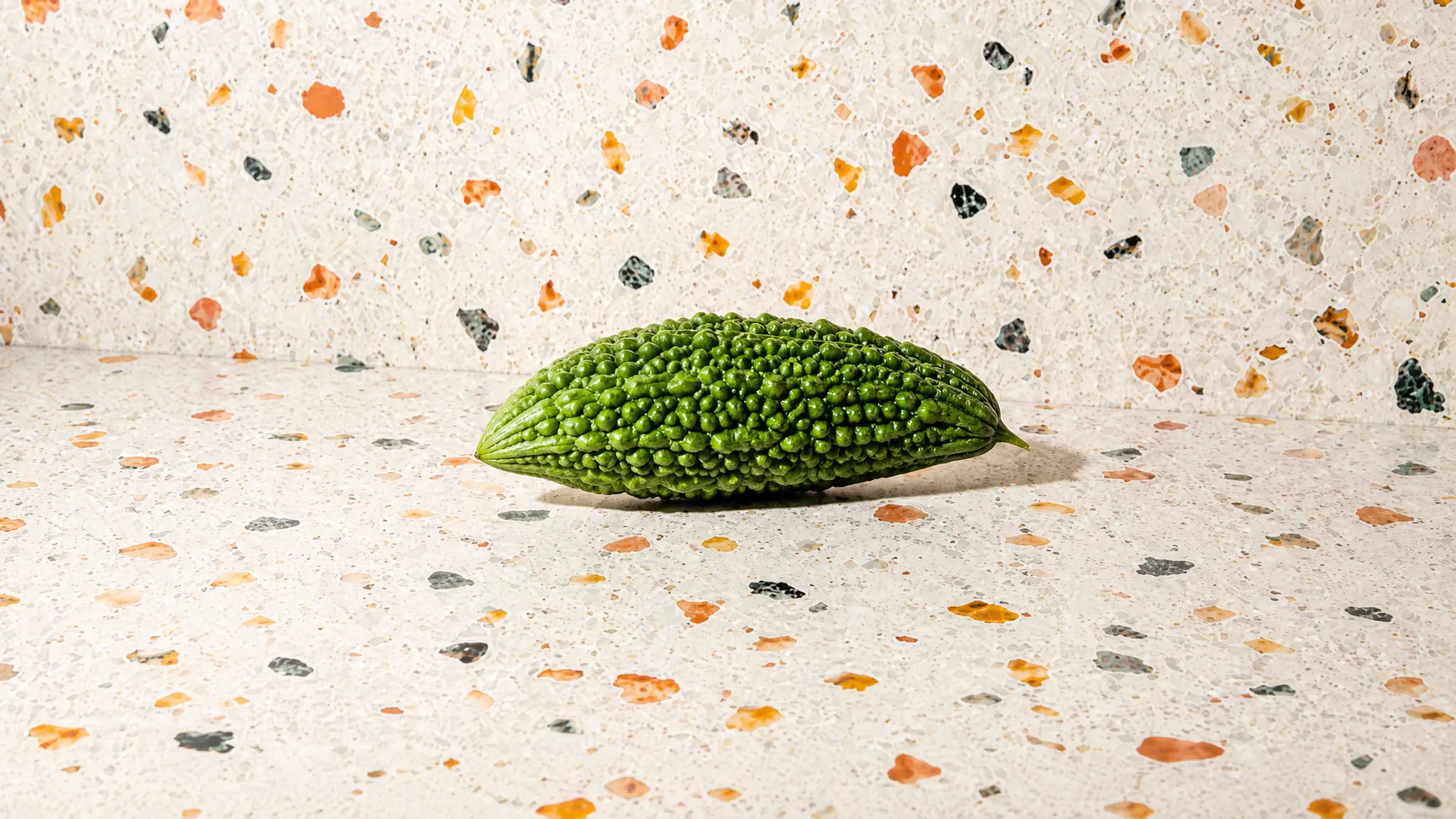
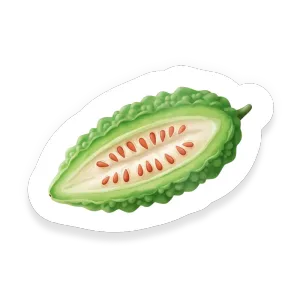
Bitter Melon
Fruit
Last updated July 5, 2026. The Tummi Food Team maintains this Can I Feed This safety guide guide. Supporting links appear in Sources when available.



Clinically reviewed by Andria Procopio and Arefa Mohamed
Direct answer
Can babies eat Bitter Melon?
Yes, bitter melon can be introduced to babies around 6 months old, peeled, cooked, and served in small, manageable pieces to prevent choking.
- Serve Age6+months
Most babies start solids around 6 months once they show readiness signs. Match the texture and serving size to your baby's skills.
- No Allergens
Bitter Melon is not flagged as one of the major allergens tracked in this database. Still watch your baby closely when serving any new food.
- Choking Risk123454
Higher choking risk. Watch the prep steps closely, especially because this food can be hard, slippery, and fibrous or stringy.
This guide is for everyday food prep questions. Ask your pediatrician about medical concerns, feeding delays, allergy plans, or serious reactions.
How Do You Serve Bitter Melon?
How to serve Bitter Melon to babies 6 months and older
- 1Rinse the bitter melon and cut it lengthwise, then use a small spoon to scoop out and discard all seeds and the white pith.
- 2To reduce bitterness, sprinkle with a pinch of salt and let sit 10–15 minutes then rinse, or cook the flesh until very soft by simmering, steaming, or roasting.
- 3Let pieces cool; offer cooled halves or thick crosswise rounds as finger foods only when they can be easily squashed between finger and thumb.
- 4For spoon- or hand-scooping, mash or puree the cooked flesh to a smooth or slightly textured consistency and always check temperature and texture before serving.
How to serve Bitter Melon to babies 9 months and older
- 1Cook until very soft (steam, boil, or simmer) so it mashes easily—then cool. Remove all seeds.
- 2Cut into small, soft pieces your baby can pick up with a pincer grasp (about pea- to grape-sized); press to confirm they squish easily.
- 3Offer larger soft strips or lightly mashed spoonfuls for hand-scooping if preferred, but keep textures soft and easy to swallow.
- 4Serve plain (no salt or strong spices), check temperature, and supervise at all times to reduce choking risk.
How to serve Bitter Melon to babies 12 months and older
- 1Cook bitter melon until tender (steam, boil, or stir-fry) and remove all seeds; cut into 1–2 cm pieces that are easy to grasp.
- 2For bite practice, serve larger soft pieces; to mix into meals, finely chop and blend into sauces or stir-fries so the flavor is less intense.
- 3Match piece size to the utensil—offer pieces sized for trainer chopsticks, small forks, or spoons to encourage independent feeding.
- 4Supervise closely during meals, check temperature and texture before serving, and trim away any tough strings or leftover seeds.
Is Bitter Melon a Common Allergen?
Bitter melon is not a common food allergen and is generally safe for children without known fruit/vegetable allergies. Rare allergic skin or oral reactions have been reported, so observe for hives, swelling, or breathing difficulty. It can cause gastrointestinal upset and can significantly lower blood sugar—use caution in children on diabetes medications and consult a clinician for infants, pregnant or breastfeeding children. If a child has a known allergy to cucurbit family plants (e.g., squash, cucumber), avoid and watch closely for reactions.
Is Bitter Melon a Choking Hazard?
Elevated Choking Risk
Bitter melon can be firm, slippery, and contains large seeds, which raises the risk of choking. Always stay within an arm’s reach during meals, watch closely for gagging or choking, and familiarize yourself with infant choking first aid. If your baby has persistent coughing, trouble breathing, blue discoloration, or cannot make sounds, call emergency services immediately.
Have More Questions?
Yes, bitter melon can be introduced to babies around 6 months of age when they start solids. Ensure it is cooked and prepared in a baby-friendly way to reduce potential choking hazards.
Yes, bitter melon is healthy for babies as it provides essential nutrients like vitamin C, folate, and potassium. However, avoid giving concentrated juice, seeds, or extracts to prevent gastrointestinal upset.
No, bitter melon is not a common allergen, but some children allergic to other cucurbit family foods might react. Introduce it gradually and watch for any adverse reactions.
It depends. Bitter melon can be firm and slippery with large seeds, which may pose a choking risk. Always serve it in a prepared, baby-appropriate texture and watch closely during meals.
It depends. Because of its bitter taste, many parents choose to serve it mixed with other foods or in small amounts to help babies adjust to the flavor. Start with a small portion to gauge acceptance.
Save Bitter Melon to your food log
Track foods, reactions, and prep notes in Tummi when you want to keep your baby's feeding history in one place.
Sources
- Bitter Melon | Memorial Sloan Kettering Cancer Center mskcc.org
- Bitter melon (Momordica charantia): a review of efficacy and safety (Basch et al., 2003) pubmed.ncbi.nlm.nih.gov
- Momordica charantia, a Nutraceutical Approach for Inflammatory Related Diseases (Bortolotti et al., 2019) frontiersin.org
- Vicine, a favism-inducing toxin from Momordica charantia Linn. seeds (Dutta et al., 1981) jglobal.jst.go.jp
- Oral allergy syndrome – pollens and cross-reacting foods (American Academy of Allergy, Asthma & Immunology) aaaai.org
What Other Fruit Can Babies Eat?
See all →




Source-Linked Guidance
See the evidence behind the guide.
Food guides show direct links to public-health guidance and research when supporting references are available. Source inclusion does not imply endorsement.
 Centers for Disease Control and Prevention
Developmental milestones, nutrition guidelines, and allergen introduction timelines.
 American Academy of Pediatrics
Evidence-based feeding recommendations from the leading pediatric authority.
 National Institutes of Health
Peer-reviewed research on infant nutrition, allergies, and food safety.