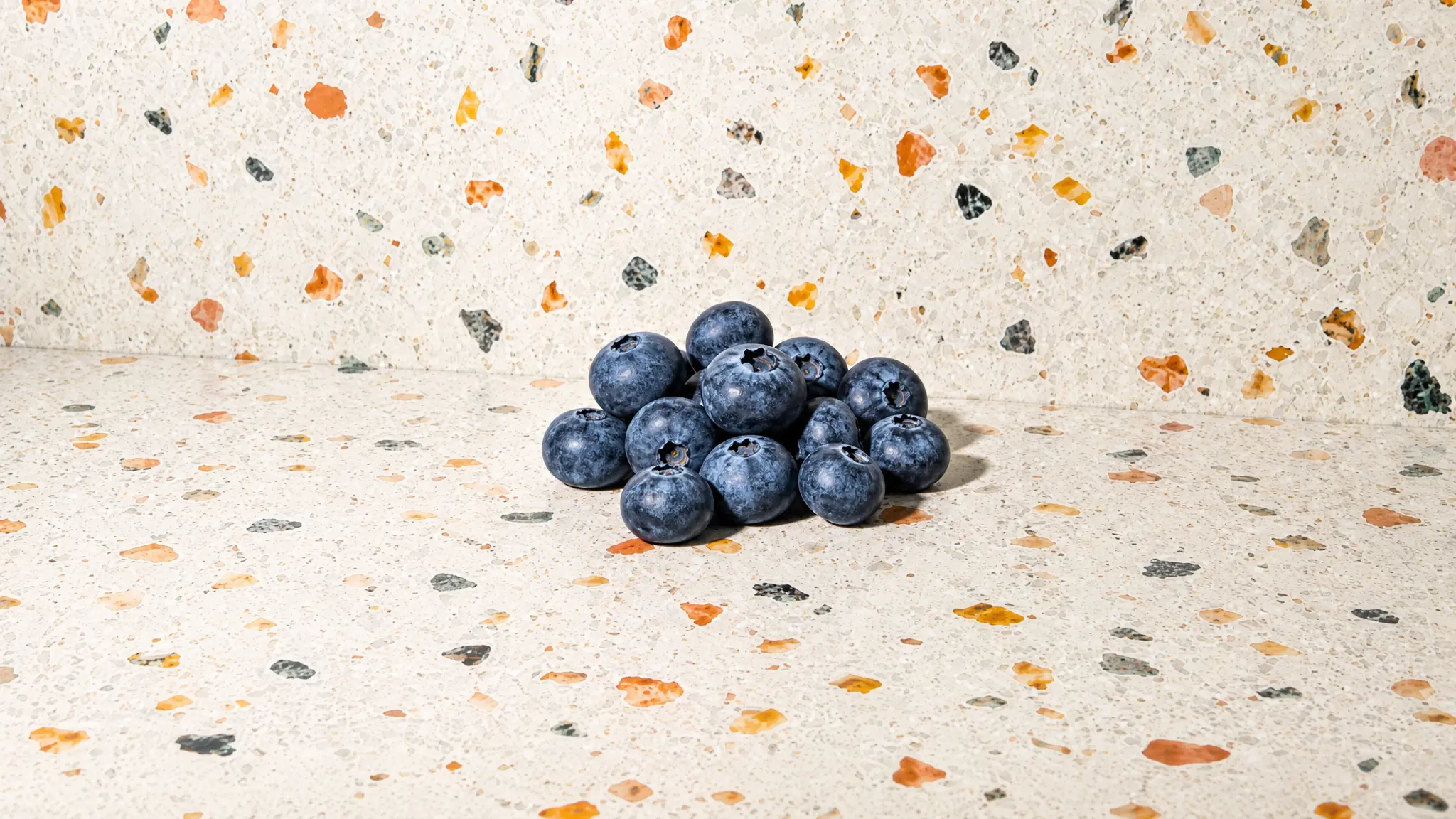

Blueberries
Fruit
Last updated July 5, 2026. The Tummi Food Team maintains this Can I Feed This safety guide guide. Supporting links appear in Sources when available.



Clinically reviewed by Andria Procopio and Arefa Mohamed
Direct answer
Can babies eat Blueberries?
Yes, blueberries can be introduced around 6 months, prepared in a safe, age-appropriate way to prevent choking.
- Serve Age6+months
Most babies start solids around 6 months once they show readiness signs. Match the texture and serving size to your baby's skills.
- No Allergens
Blueberries is not flagged as one of the major allergens tracked in this database. Still watch your baby closely when serving any new food.
- Choking Risk123455
Higher choking risk. Watch the prep steps closely, especially because this food can be small and round, hard, and slippery.
This guide is for everyday food prep questions. Ask your pediatrician about medical concerns, feeding delays, allergy plans, or serious reactions.
How Do You Serve Blueberries?
How to serve Blueberries to babies 6 months and older
- 1Rinse and drain ripe fresh or fully thawed frozen blueberries.
- 2Cook berries in a small saucepan over medium-low for 3–5 minutes until skins soften and some burst; let cool slightly before folding into porridge, yogurt, ricotta, or other scoopable foods.
- 3For a whole-berry texture, gently smash cooked berries so pieces are very tender and easy to swallow, then mix into soft meals.
- 4If serving raw, flatten each berry into a thin disc with a fork or your thumb to reduce choking risk; if the pieces are too small for your baby to pick up, offer mashed berries instead.
- 5Always check temperature, serve small spoonfuls, and store leftovers promptly — refrigerate and use within 24–48 hours or freeze in single-serving portions.
How to serve Blueberries to babies 9 months and older
- 1Press large, ripe blueberries slightly flat into thin discs so they’re easy for little fingers to pick up and hold.
- 2Offer berries mixed into yogurt, porridge, or small pieces of baked goods to introduce different textures and flavors.
- 3Place berries on the tray or table to encourage independent self-feeding and keep close supervision during the entire meal.
- 4Ensure safe seating and appropriate portion sizes. Always supervise bites and split or mash any berries that are still large to reduce choking risk.
How to serve Blueberries: Varies
- 1Offer whole, ripe blueberries one at a time only when the child reliably takes small bites and doesn’t stuff their mouth, and always supervise closely while they eat.
- 2If the child isn’t ready for whole berries, flatten or slice berries so they’re easier to chew, then gradually reduce how much you flatten as their skills improve.
- 3Rehydrate dried blueberries by soaking them in warm water, fruit puree, or unsweetened applesauce until very soft, then mash or chop before serving.
- 4Flatten very small wild berries before offering and remove any stems or hard bits; avoid giving multiple whole berries at once to lower choking risk.
- 5Stay within arm’s reach and be prepared to intervene if the child gags or struggles while eating.
Is Blueberries a Common Allergen?
Blueberries are not one of the major common food allergens (peanut, tree nuts, dairy, egg, soy, wheat, fish, shellfish, sesame) and are generally low‑risk. However, people with birch‑pollen or other pollen allergies can get oral allergy syndrome — itching or mild swelling of the mouth/throat — after eating raw blueberries. Severe reactions are uncommon but possible; seek medical advice if your child develops hives, swelling, breathing trouble, or other systemic symptoms. For infants and toddlers, mash or chop berries to reduce choking risk.
Is Blueberries a Choking Hazard?
High Choking Risk
Blueberries are small, round, and can be firm, which makes them a notable choking hazard for young children. Always stay within arm's reach and closely watch a child while they're eating, and be aware of the signs of choking and how to respond. Many health bodies consider whole blueberries a common choking risk up to around age four, so base offering them on your child’s chewing skills and readiness.
Have More Questions?
Yes. Blueberries can be stored in the refrigerator for a few days or frozen for longer storage, making them convenient for baby food preparation.
Yes. You can freeze pureed blueberries in ice cube trays, then transfer the cubes to a freezer bag for easy portioning and long-term storage.
It depends. Organic blueberries are grown without synthetic pesticides and may have fewer chemical residues, but conventional blueberries are also safe; washing thoroughly is key.
Yes. You can combine blueberries with other fruits or foods to introduce new flavors and textures, as long as the combined foods are appropriate for your baby's age and development.
Yes. For a baby starting solids, small portions like a teaspoon or two are appropriate, gradually increasing as your baby gets used to eating solids.
Save Blueberries to your food log
Track foods, reactions, and prep notes in Tummi when you want to keep your baby's feeding history in one place.
Sources
- Recent Research on the Health Benefits of Blueberries and Their Anthocyanins — Advances in Nutrition (2020) doi.org
- Bioactive Compounds and Antioxidant Activity in Different Types of Berries — International Journal of Molecular Sciences (2015) doi.org
- 10 kDa lipid transfer protein: the main allergenic structure in a German patient with anaphylaxis to blueberry — Allergy (2009) doi.org
- Prevalence of blueberry allergy in a Turkish population — Annals of Allergy, Asthma & Immunology (2015) doi.org
- Mineral Composition of Wild and Cultivated Blueberries — Biological Trace Element Research (2018) doi.org
What Other Fruit Can Babies Eat?
See all →








Source-Linked Guidance
See the evidence behind the guide.
Food guides show direct links to public-health guidance and research when supporting references are available. Source inclusion does not imply endorsement.
 Centers for Disease Control and Prevention
Developmental milestones, nutrition guidelines, and allergen introduction timelines.
 American Academy of Pediatrics
Evidence-based feeding recommendations from the leading pediatric authority.
 National Institutes of Health
Peer-reviewed research on infant nutrition, allergies, and food safety.