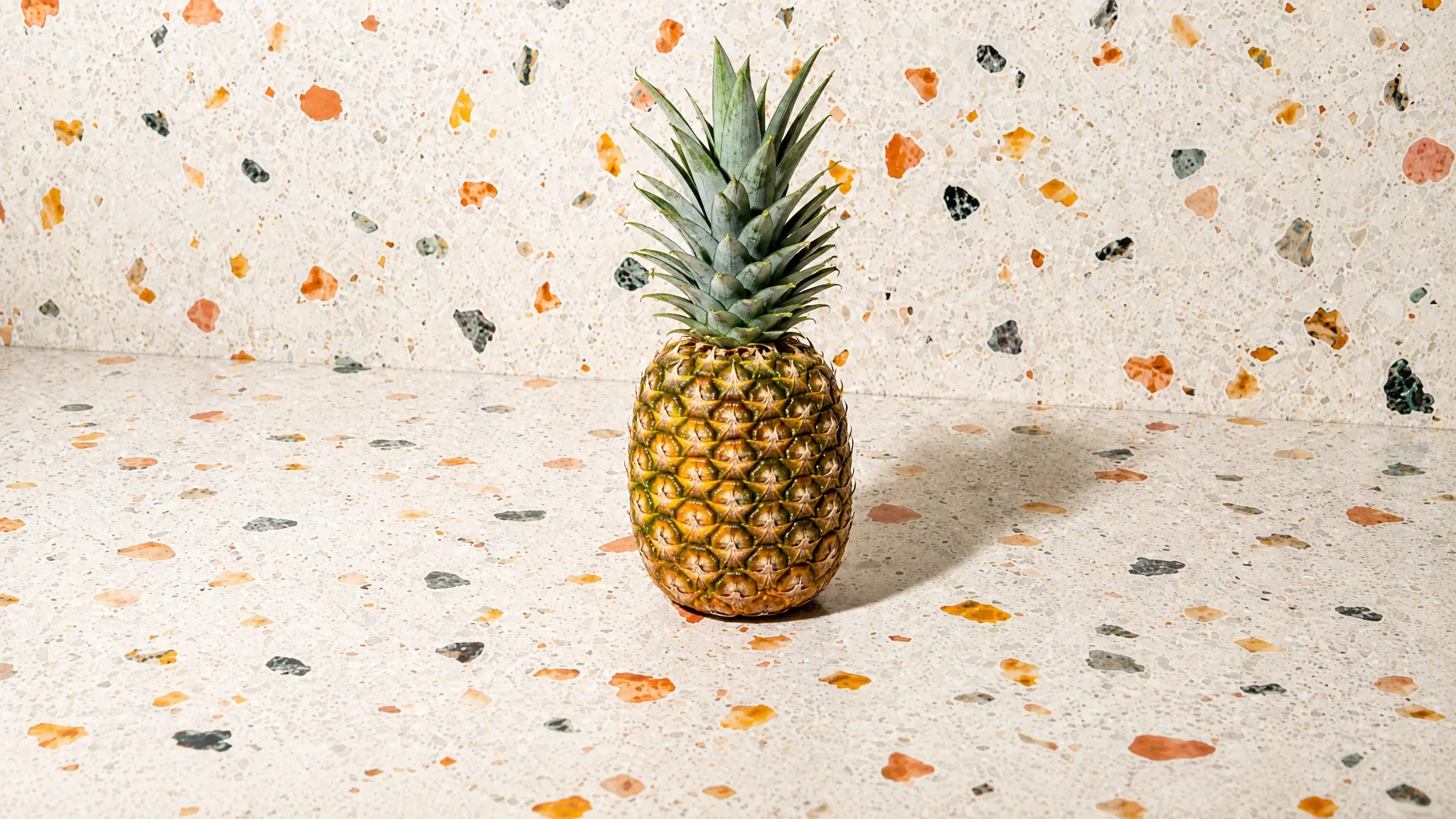
Pineapple
Fruit
Last updated July 5, 2026. The Tummi Food Team maintains this Can I Feed This safety guide guide. Supporting links appear in Sources when available.



Clinically reviewed by Andria Procopio and Arefa Mohamed
Direct answer
Can babies eat Pineapple?
Yes, babies can eat pineapple starting at around 6 months, ensuring it's ripe, peeled, and served in small, manageable pieces.
- Serve Age6+months
Most babies start solids around 6 months once they show readiness signs. Match the texture and serving size to your baby's skills.
- No Allergens
Pineapple is not flagged as one of the major allergens tracked in this database. Still watch your baby closely when serving any new food.
- Choking Risk123454
Higher choking risk. Watch the prep steps closely, especially because this food can be hard, slippery, and fibrous or stringy.
This guide is for everyday food prep questions. Ask your pediatrician about medical concerns, feeding delays, allergy plans, or serious reactions.
How Do You Serve Pineapple?
How to serve Pineapple to babies 6 months and older
- 1Choose a ripe pineapple — check ripeness with the squish test: a small piece gives slightly under gentle pressure.
- 2Offer the core as a teether or slice it into long, flat strips about the width of two adult fingers to reduce choking risk.
- 3Stop offering the core once the child can bite through it, and serve pineapple alongside a creamy food (yogurt or coconut milk) to help reduce tongue acidity.
- 4Avoid pre-cut cubes or firm canned chunks; if using cubes, finely chop them into small, soft pieces to lower choking risk.
How to serve Pineapple to babies 9 months and older
- 1Cut ripe pineapple into soft, bite-size pieces about 1/2–1 inch so they’re easy for little hands to pick up.
- 2Squish test: press a piece between your thumb and forefinger. If it squashes easily, it’s soft enough for safe chewing.
- 3Offer pieces that encourage pincer-grasp and self-feeding, and always supervise at arm’s reach during eating.
- 4Offer thicker strips or the core only if the child can reliably bite and chew them. Stop offering core once they can bite through it to avoid hard chunks.
- 5Trim away tough fibers and consider serving with yogurt or rinsing to reduce acidity if the pineapple feels too tangy.
How to serve Pineapple to babies 12 months and older
- 1Cut pineapple into small, bite-sized pieces (about grape-sized or smaller) so they’re easy to chew and swallow.
- 2If pineapple is firm, remove the tough core and cook briefly to soften. Test tenderness with a fork before serving.
- 3Serve on a shallow plate and offer a child-sized fork to encourage practice; expect children to alternate between fingers and utensils as they learn.
- 4Always supervise closely during eating, keep pieces small to reduce choking risk, and have water nearby in case they need to rinse.
Is Pineapple a Common Allergen?
Pineapple is not a common top food allergen but can cause oral allergy syndrome (itching or swelling of the mouth, lips, tongue) in people with pollen allergies and, more rarely, true allergic reactions. The fruit contains bromelain, an enzyme that can irritate mucous membranes or cause contact reactions in sensitive individuals. If your child has known pollen or latex allergies, introduce pineapple cautiously and watch for immediate oral swelling, hives, vomiting, or breathing difficulty; seek medical care for severe reactions. For mild mouth itching, rinsing the mouth and avoiding more pineapple usually helps, but consult your pediatrician or allergist if concerned.
Is Pineapple a Choking Hazard?
Elevated Choking Risk
Pineapple can be firm and slippery, which increases choking risk, and its mixed consistency of juice and fibrous flesh may cause coughing as babies learn to manage different textures. Stay within arm’s reach and closely supervise your baby while they try pineapple so you can intervene quickly if they gag or choke. Make sure all caregivers know the signs of choking and how to perform infant choking first aid.
Have More Questions?
It depends. While pineapple can be part of a balanced diet for babies, it is best introduced gradually to monitor for any adverse reactions or sensitivities.
It depends. Freezing puree or chunks of pineapple can be a convenient way to store leftovers, but be sure to use airtight containers to prevent freezer burn and ensure freshness.
It depends. Organic pineapple may have fewer pesticide residues, but conventional pineapple is also safe; washing thoroughly is key for both.
It depends. Combining pineapple with other foods can introduce your baby to complex flavors, but start with one new ingredient at a time to monitor for reactions.
It depends. Typical portion sizes for babies vary, but generally, a small amount (about 1-2 tablespoons) is a good starting point for introducing pineapple.
Save Pineapple to your food log
Track foods, reactions, and prep notes in Tummi when you want to keep your baby's feeding history in one place.
Sources
- Arampath PC & Dekker M (2019). Bulk storage of mango and pineapple pulp. Journal of the Science of Food and Agriculture. doi.org
- Knox S, Lang D & Hoyt A (2019). The many flavors of pineapple reactions. Annals of Allergy, Asthma & Immunology. doi.org
- Nucera E et al. (2020). Latex Allergy: Current Status and Future Perspectives. Journal of Asthma and Allergy. doi.org
- National Center for Complementary and Integrative Health. (2020). Bromelain. nccih.nih.gov
- Nettis E et al. (2001). IgE-mediated allergy to bromelain. Allergy. doi.org
- Gailhofer G et al. (1988). Asthma caused by bromelain. Clinical Allergy. doi.org
- Bedolla-Barajas M et al. (2017). Prevalence of oral allergy syndrome in children. Allergologia et Immunopathologia. doi.org
- Brehler R et al. (1997). 'Latex-fruit syndrome'. Allergy. doi.org
- American Academy of Allergy, Asthma & Immunology. Oral Allergy Syndrome (OAS). aaaai.org
- Kashyap RR & Kashyap RS (2015). Oral Allergy Syndrome: An Update for Stomatologists. Journal of Allergy. doi.org
- World Health Organization (2023). WHO Guideline for complementary feeding of infants and young children 6-23 months of age. who.int
- Fidler Mis N et al. (2017). Sugar in Infants, Children and Adolescents: Position Paper. Journal of Pediatric Gastroenterology and Nutrition. doi.org
What Other Fruit Can Babies Eat?
See all →


Source-Linked Guidance
See the evidence behind the guide.
Food guides show direct links to public-health guidance and research when supporting references are available. Source inclusion does not imply endorsement.
 Centers for Disease Control and Prevention
Developmental milestones, nutrition guidelines, and allergen introduction timelines.
 American Academy of Pediatrics
Evidence-based feeding recommendations from the leading pediatric authority.
 National Institutes of Health
Peer-reviewed research on infant nutrition, allergies, and food safety.