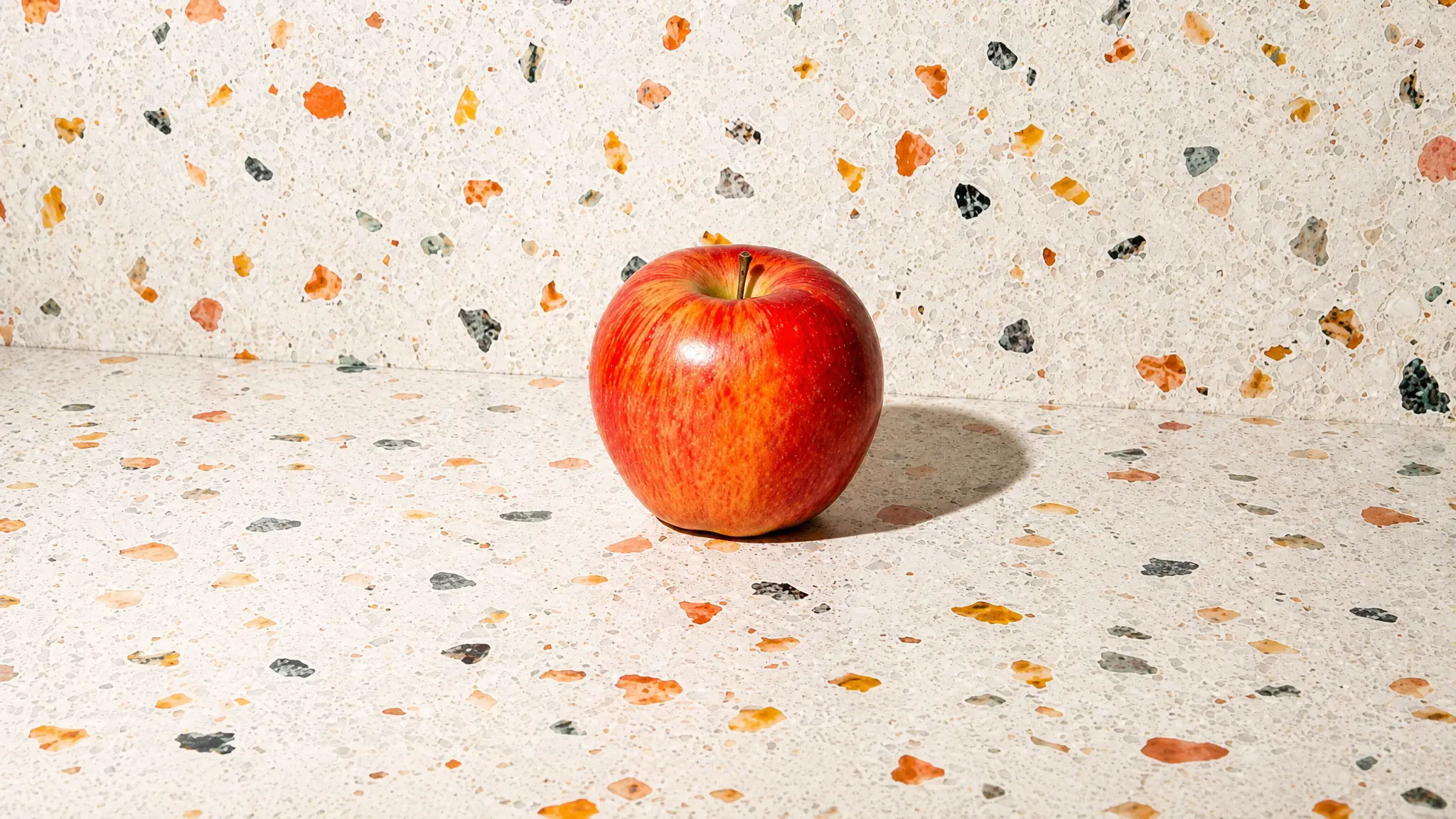

Apple
Fruit
Last updated July 5, 2026. The Tummi Food Team maintains this Can I Feed This safety guide guide. Supporting links appear in Sources when available.



Clinically reviewed by Andria Procopio and Arefa Mohamed
Direct answer
Can babies eat Apple?
Yes, apple can be introduced around 6 months once your baby shows the developmental signs of readiness for solid foods. Offer it cooked until soft and prepared in a shape and texture your baby can manage; avoid hard raw apple because it is a choking hazard.
- Serve Age6+months
Most babies start solids around 6 months once they show readiness signs. Match the texture and serving size to your baby's skills.
- No Allergens
Apple is not flagged as one of the major allergens tracked in this database. Still watch your baby closely when serving any new food.
- Choking Risk123453
Some choking risk. Use the prep section to change the size, shape, or texture before serving.
This guide is for everyday food prep questions. Ask your pediatrician about medical concerns, feeding delays, allergy plans, or serious reactions.
How Do You Serve Apple?
How to serve Apple to babies 6 months and older
- 1Cut the apple in half and remove the core and all seeds, then simmer in a small pan with a splash of water or steam until the flesh is very soft (about 10–15 minutes).
- 2If the baby struggles with skin, peel the apple before or after cooking; peeling after can preserve some nutrients while still making it easy to remove.
- 3Allow the apple to cool to warm or room temperature, then mash with a fork for soft lumps or puree in a blender for smooth applesauce.
- 4Stir in a small amount of unsalted butter, plain yogurt, or a pinch of gentle spices like cinnamon for flavor; avoid added salt or sugar.
- 5Always check texture and temperature yourself before serving to make sure it’s easy to swallow and not too hot.
How to serve Apple to babies 9 months and older
- 1Serve apple as soft, easy-to-handle pieces — cooked sections or raw thin rounds/half-moons about 1 cm thick to reduce choking risk.
- 2Decide on skin based on your child’s chewing: leave it on if they chew well, or peel if skin feels tough or causes gagging.
- 3Grated or finely shredded apple is a safe, easy option; offer small amounts and watch while chewing.
- 4Always supervise during eating, encourage small bites, and discard any hard, unripe, or stringy pieces.
How to serve Apple: varies
- 1Cook or grate the apple until very soft and easy to mash — this reduces choking risk and helps safer swallowing.
- 2Remove the core and seeds, and slice raw apple into long, thin strips or wedges that are easy to grasp and chew.
- 3Offer bite-sized pieces suited to the child's chewing ability. Test first with a small piece to confirm they can bite and swallow safely.
- 4Ensure the child sits upright and supervise every bite — never leave them unattended during meals.
How to serve Apple to babies 18 months and older
- 1Core the apple and remove the stem and seeds; offer the whole cored fruit only if the child chews thoroughly and stays seated.
- 2If you're unsure about chewing ability, cut the apple into thin wedges or small bite-sized pieces to reduce choking risk.
- 3Choose a slightly softer variety or peel the apple to make chewing easier, especially if teeth are still emerging.
- 4Stay within arm’s reach and have the child sit while eating so you can quickly intervene if a large piece is taken; encourage calm, controlled bites.
Is Apple a Common Allergen?
Apples are not commonly one of the major food allergens (no dairy, egg, nut, peanut, soy, gluten, shellfish, fish, or sesame present). Some people with pollen allergies may experience oral allergy syndrome (itching or mild swelling of the mouth/throat) after raw apple—cooking or peeling often prevents this. For infants and young children, serve apples in age-appropriate forms (puree or soft, small pieces) to reduce choking risk. If a child has a history of severe allergic reactions or develops respiratory symptoms after eating apple, seek medical advice promptly.
Is Apple a Choking Hazard?
Moderate Choking Risk
Raw apple is one of the top choking hazards for children under 3 because it’s firm and can form slippery, wedge-shaped pieces. Stay within an arm’s reach and make sure the child is calm and seated during eating; avoid giving apples while a child is in a stroller or car seat. Ensure caregivers know choking first-aid and are prepared to act quickly if needed.
Have More Questions?
Yes, leftover homemade apple puree can be refrigerated promptly in a covered container for 1 to 2 days. Discard puree left in the serving dish after feeding because it may have been contaminated by the used spoon.
Yes. Homemade apple puree can be stored in an airtight container in the refrigerator for up to 48 hours or frozen for longer storage.
No, organic apple is not required for serving apple to a baby. Whether you choose organic or conventional fruit, wash it before preparation and remove the core and seeds.
Yes, apple can be mixed with other foods for your baby. Prepare the finished mixture in a soft texture your baby can manage, and avoid hard raw apple pieces.
There is no single required portion of apple for every baby. Start with a small amount and let your baby decide how much to eat by responding to their hunger and fullness cues.
Save Apple to your food log
Track foods, reactions, and prep notes in Tummi when you want to keep your baby's feeding history in one place.
Sources
- Fatal and non-fatal food injuries among children (Altkorn et al., 2008) doi.org
- Apples and cardiovascular health (Koutsos et al., 2015) doi.org
- Determination of amygdalin in apple seeds (Bolarinwa et al., 2015) doi.org
- Amygdalin (Memorial Sloan Kettering Cancer Center, 2020) mskcc.org
- Oral allergy syndrome (Muluk & Cingi, 2018) doi.org
- Oral Allergy Syndrome / Pollen Food Syndrome (American Academy of Allergy Asthma & Immunology) aaaai.org
- Oral allergy syndrome (Sussman et al., 2010) doi.org
- WHO Guideline for complementary feeding of infants and young children 6-23 months of age (2023) who.int
- Sugar in Infants, Children and Adolescents (Fidler Mis et al., 2017) doi.org
What Other Fruit Can Babies Eat?
See all →


Source-Linked Guidance
See the evidence behind the guide.
Food guides show direct links to public-health guidance and research when supporting references are available. Source inclusion does not imply endorsement.
 Centers for Disease Control and Prevention
Developmental milestones, nutrition guidelines, and allergen introduction timelines.
 American Academy of Pediatrics
Evidence-based feeding recommendations from the leading pediatric authority.
 National Institutes of Health
Peer-reviewed research on infant nutrition, allergies, and food safety.