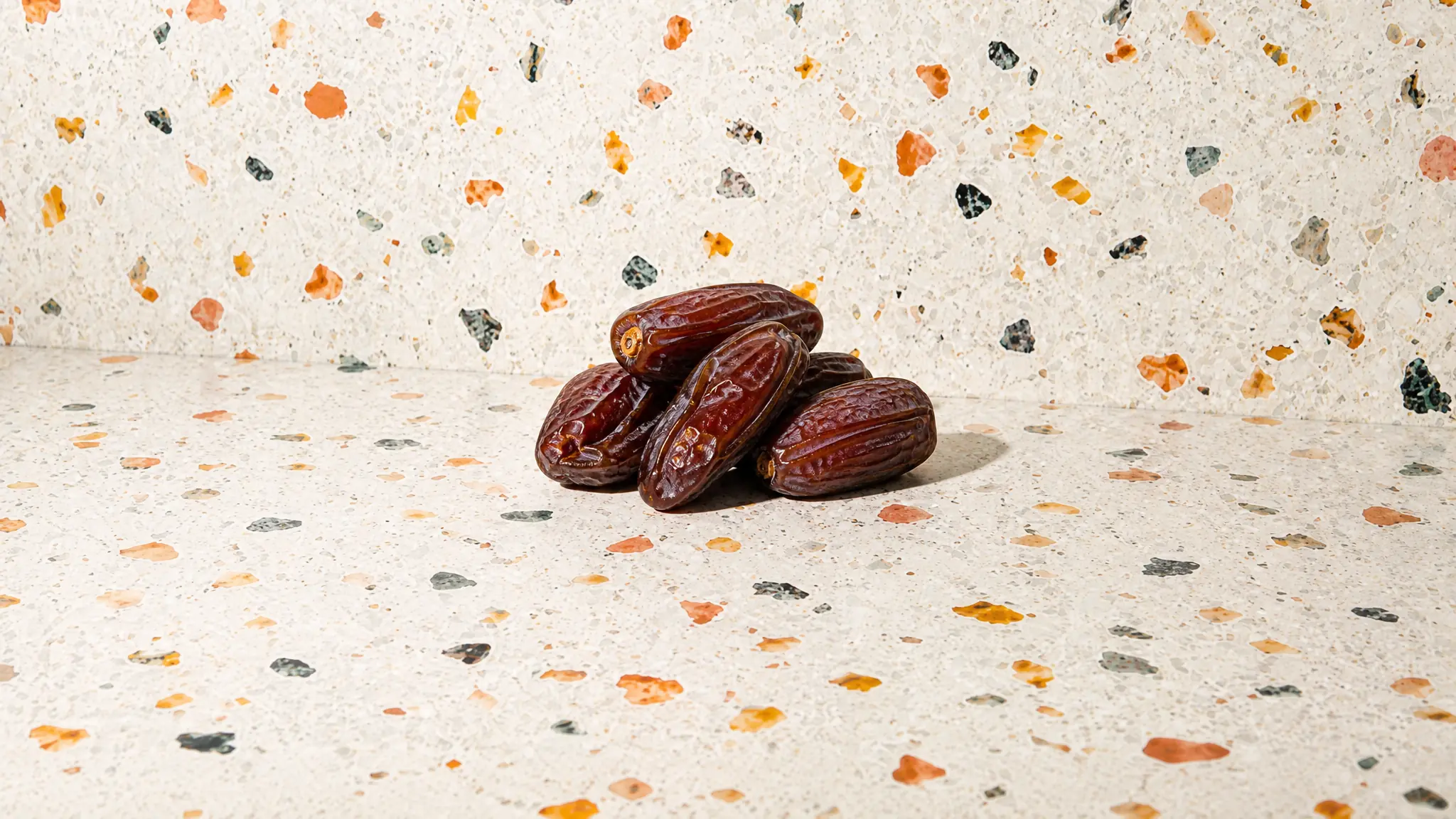
Dates
Fruit
Last updated July 5, 2026. The Tummi Food Team maintains this Can I Feed This safety guide guide. Supporting links appear in Sources when available.



Clinically reviewed by Andria Procopio and Arefa Mohamed
Direct answer
Can babies eat Dates?
Yes, dates can be introduced around 6 months of age, ensuring they are pitted and prepared in an age-appropriate way.
- Serve Age6+months
Most babies start solids around 6 months once they show readiness signs. Match the texture and serving size to your baby's skills.
- No Allergens
Dates is not flagged as one of the major allergens tracked in this database. Still watch your baby closely when serving any new food.
- Choking Risk123452
Lower choking risk when served in the right texture. Always supervise meals and adjust the shape for your baby.
This guide is for everyday food prep questions. Ask your pediatrician about medical concerns, feeding delays, allergy plans, or serious reactions.
How Do You Serve Dates?
How to serve Dates to babies 6 months and older
- 1Remove pits and check each date for mold or hard spots; discard any that look or smell off.
- 2For dried dates, soak until very soft in hot water for 10–15 minutes, then drain and let cool before serving.
- 3Finely chop, mash, or puree the softened fruit; if it’s too sticky, thin with a little breast milk, formula, or water to a spoonable consistency.
- 4Offer plain or stirred into oatmeal, yogurt, or porridge, and start small to reduce the chance of gas—watch your baby’s digestion after first servings.
How to serve Dates to babies 12 months and older
- 1Soak dried dates in warm water for 10–20 minutes until very soft, then drain and finely chop or mash before serving.
- 2To make a smooth puree, blend soaked dates with a little water or milk until scoopable, then mix into yoghurt, porridge, or other soft foods.
- 3If using fresh dates, remove the pit and offer only very soft pieces cut into small bites; ensure each piece squashes easily between your thumb and forefinger.
- 4Avoid firm or sticky pieces; if dates are too firm, simmer them in a little water until soft or use as a puree. Always supervise while your child is eating.
How to serve Dates to babies 18 months and older
- 1Remove all pits and serve only whole, pitted dates to eliminate choking hazards.
- 2Offer one or two dates at a time so you can closely watch and guide chewing.
- 3Model a small bite and demonstrate moving the piece to the molars to encourage safe chewing.
- 4Use brief, hands-on demonstrations and simple cues (e.g., “small bite”) if the child needs prompting.
- 5For the first few tries, consider holding the date so the child takes the bite from you to better assess and support their chewing.
Is Dates a Common Allergen?
Dates are not a common allergen and are generally safe for most children, but check packaging for sulfites or preservatives used in dried dates which can trigger reactions in sensitive individuals. Dates may be processed in facilities that handle tree nuts—if your child has a nut allergy, look for cross-contact warnings. For babies and young children, chop finely or puree to reduce choking risk and introduce slowly while watching for any rare allergic reaction. Consult your pediatrician if you have specific concerns.
Is Dates a Choking Hazard?
Low Choking Risk
Dates can be a choking risk: some fresh varieties are firm or crunchy, dried dates are sticky and can be hard for young mouths to break down, and whole dates may contain hard pits. Remove pits, stay within arm’s reach while your child is eating, and watch closely for any signs of gagging or choking. Refresh your infant choking first-aid skills so you can respond quickly if needed.
Have More Questions?
Yes. Dates can be stored in an airtight container at room temperature for up to a year if dried, and a few days in the refrigerator if fresh, to maintain freshness and prevent spoilage.
Yes. Freeze pureed dates in an airtight container or ice cube tray for up to 3 months to preserve their flavor and nutrients, making them easy to portion for baby feedings.
It depends. Organic dates are generally grown without synthetic pesticides or fertilizers, making them a better choice for babies if you prioritize organic food options.
Yes. You can combine dates with other soft fruits or grains when preparing baby food, which helps introduce a variety of flavors and nutrients in each meal.
It depends. Typical portion sizes for babies start around one small or half a tablespoon of pureed dates once they are introduced and tolerate it well, then gradually increase as tolerated.
Save Dates to your food log
Track foods, reactions, and prep notes in Tummi when you want to keep your baby's feeding history in one place.
Sources
- Total phenolic content in ripe date fruits (Phoenix dactylifera L.): A systematic review and meta-analysis doi.org
- Allergy to date fruits: characterization of antigens and allergens of fruits of the date palm (Phoenix dactylifera L.) pubmed.ncbi.nlm.nih.gov
- Cross-reactivities between date palm (Phoenix dactylifera L.) polypeptides and foods implicated in the oral allergy syndrome pubmed.ncbi.nlm.nih.gov
What Other Fruit Can Babies Eat?
See all →


Source-Linked Guidance
See the evidence behind the guide.
Food guides show direct links to public-health guidance and research when supporting references are available. Source inclusion does not imply endorsement.
 Centers for Disease Control and Prevention
Developmental milestones, nutrition guidelines, and allergen introduction timelines.
 American Academy of Pediatrics
Evidence-based feeding recommendations from the leading pediatric authority.
 National Institutes of Health
Peer-reviewed research on infant nutrition, allergies, and food safety.