Açaí
Fruit
Last updated July 5, 2026. The Tummi Food Team maintains this Can I Feed This safety guide guide. Supporting links appear in Sources when available.



Clinically reviewed by Andria Procopio and Arefa Mohamed
Direct answer
Can babies eat Açaí?
Yes, babies can eat açaí starting around 6 months, when they are ready to start solids, with mashed or de-seeded preparations.
- Serve Age6+months
Most babies start solids around 6 months once they show readiness signs. Match the texture and serving size to your baby's skills.
- No Allergens
Açaí is not flagged as one of the major allergens tracked in this database. Still watch your baby closely when serving any new food.
- Choking Risk123451
Lower choking risk when served in the right texture. Always supervise meals and adjust the shape for your baby.
This guide is for everyday food prep questions. Ask your pediatrician about medical concerns, feeding delays, allergy plans, or serious reactions.
How Do You Serve Açaí?
How to serve Açaí to babies 6 months and older
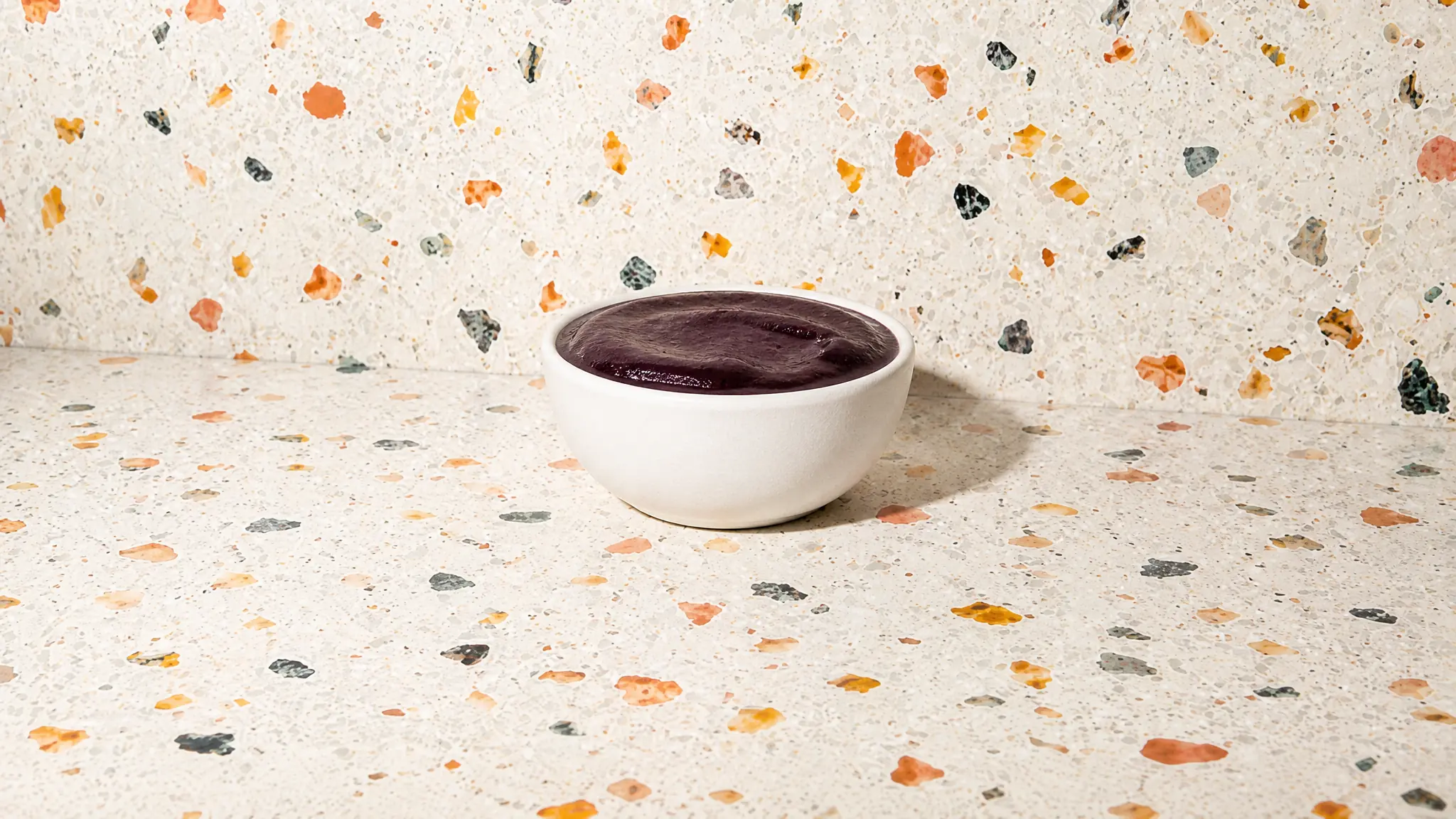
- 1Puree or mash açaí until very smooth and serve plain or stirred into soft, scoopable foods like porridge or yogurt for an easy introduction.
- 2Make baby-friendly popsicles by mixing unsweetened açaí purée or powder with breastmilk, formula, or mashed banana and freezing in molds.
- 3Remove or finely chop any crunchy or hard toppings (granola, whole nuts, large seeds, whole grapes) to eliminate choking risks, and never add honey.
- 4Choose unsweetened açaí products to avoid added sugar and introduce new foods one at a time while watching for any allergic reactions.
How to serve Açaí to babies 12 months and older
- 1Mix açaí pulp or purée into porridge, yogurt, or smoothies to thin and blend flavors; açaí powder also works well when stirred into batters or bowls.
- 2Make frozen treats by diluting purée with fruit or yogurt and pouring into molds for popsicles — ensure the texture is smooth so pieces are easy to chew.
- 3For bowls, choose soft, low-risk toppings (mashed banana, finely chopped berries, or smooth nut butter) and remove or modify any choking hazards.
- 4Serve small, manageable spoonfuls or a preloaded spoon to support self-feeding, always supervise during eating, and limit added sugars such as honey or syrups.
How to serve Açaí to babies 18 months and older
- 1Blend açaí pulp or purée until completely smooth and mix into smoothies, yogurt, or oatmeal to create a spoonable texture.
- 2Freeze açaí into popsicles or small scoopable portions for snacks. Break popsicles into small pieces before serving to make them easier to eat.
- 3Top açaí bowls with soft options like mashed banana, mashed avocado, or finely shredded coconut, and avoid hard or large pieces such as whole nuts or big fruit chunks.
- 4Cut or mash all toppings into small, manageable sizes and stay within arm’s reach while the child eats to reduce choking risk.
Is Açaí a Common Allergen?
Pure açaí isn’t a common allergen, but allergic reactions have been reported and are possible. The main concerns for children are cross‑contamination during processing and common açaí‑bowl toppings or mix‑ins (nuts, peanuts, dairy, soy, granola). Always check labels or ask vendors about shared equipment, and consult an allergist if your child has a history of severe food allergy.
Is Açaí a Choking Hazard?
Very Low Choking Risk
Fresh açaí berries pose a choking risk for babies because their round shape, small size, and central seed can easily block a young airway. Stay within arm’s reach during feeding and avoid offering whole berries or similarly shaped pieces to infants.
Have More Questions?
Yes. Açaí can be stored in the freezer for months, making it convenient to keep for future use, but always ensure it is stored in an airtight container to prevent freezer burn.
Yes. You can freeze pureed or chopped açaí in ice cube trays for easy portioning, then transfer to a sealed bag for longer storage, which helps preserve flavor and nutrients.
It depends. Organic açaí is generally available, but conventional açaí is more common; choose organic if you want to avoid pesticides, though both are safe for babies.
It depends. You can combine açaí with other baby foods like bananas or berries to introduce new flavors and textures, but always consider age-appropriate preparation and avoid introducing allergenic mixes early.
It depends. A typical portion for babies is about 1-2 teaspoons of açaí puree or small serving of açaí bowl, depending on baby’s age and appetite; consult your pediatrician for personal guidance.
Save Açaí to your food log
Track foods, reactions, and prep notes in Tummi when you want to keep your baby's feeding history in one place.
Sources
- Acai (U.S. Department of Health and Human Services / NCCIH, 2011) nccih.nih.gov
- Kwaasi AA et al., Allergy to date fruits (Allergy, 1999) doi.org
- Mayoral M et al., Anaphylactic reaction following ingestion of fresh heart of palm (Allergy, 2006) doi.org
- WHO Guideline for complementary feeding of infants and young children 6-23 months of age (World Health Organization, 2023) who.int
- Fidler Mis N et al., Sugar in Infants, Children and Adolescents: A Position Paper (J Pediatr Gastroenterol Nutr, 2017) doi.org
What Other Fruit Can Babies Eat?
See all →


Source-Linked Guidance
See the evidence behind the guide.
Food guides show direct links to public-health guidance and research when supporting references are available. Source inclusion does not imply endorsement.
 Centers for Disease Control and Prevention
Developmental milestones, nutrition guidelines, and allergen introduction timelines.
 American Academy of Pediatrics
Evidence-based feeding recommendations from the leading pediatric authority.
 National Institutes of Health
Peer-reviewed research on infant nutrition, allergies, and food safety.