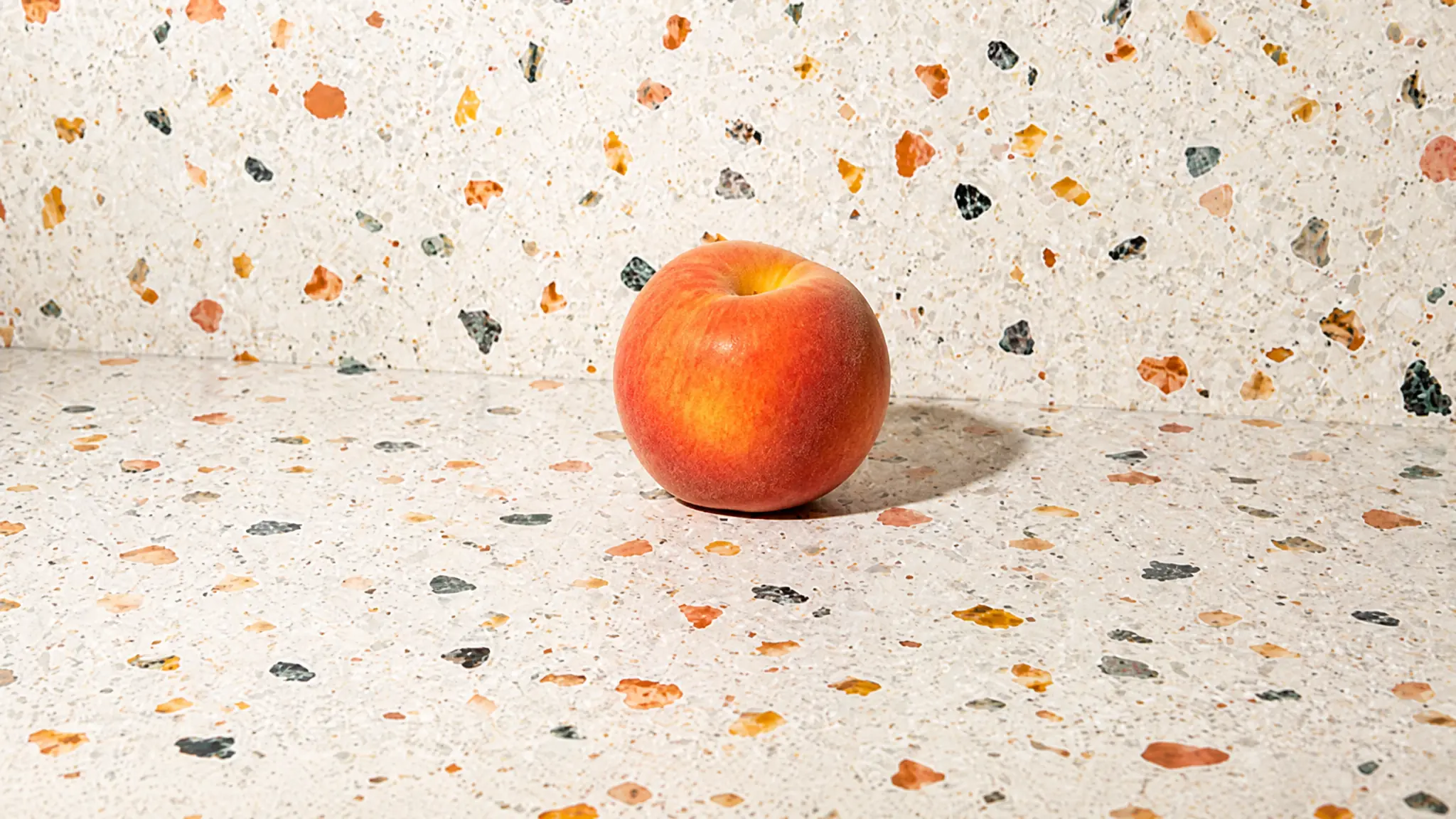
Peach
Fruit
Last updated July 5, 2026. The Tummi Food Team maintains this Can I Feed This safety guide guide. Supporting links appear in Sources when available.



Clinically reviewed by Andria Procopio and Arefa Mohamed
Direct answer
Can babies eat Peach?
Yes, peaches can be introduced at around 6 months when ripe and soft, preferably cooked or pureed for easy digestion.
- Serve Age6+months
Most babies start solids around 6 months once they show readiness signs. Match the texture and serving size to your baby's skills.
- No Allergens
Peach is not flagged as one of the major allergens tracked in this database. Still watch your baby closely when serving any new food.
- Choking Risk123451
Lower choking risk when served in the right texture. Always supervise meals and adjust the shape for your baby.
This guide is for everyday food prep questions. Ask your pediatrician about medical concerns, feeding delays, allergy plans, or serious reactions.
How Do You Serve Peach?
How to serve Peach to babies 6 months and older
- 1Choose a very ripe peach—press gently near the stem; it should give and be soft enough to mash with light pressure.
- 2Remove the pit and halve the fruit, then slice the half into long, thin wedges or leave as a soft half; small and soft pieces are easiest for baby to gum or chew.
- 3Leave the skin on to help baby grip, or peel it if you prefer. If the peach is slippery, roll pieces in shredded coconut or finely ground seeds or nuts for grip — avoid nuts if there are allergy concerns.
- 4Serve mashed or mixed into porridge or yogurt, or offer soft strips for self-feeding—always stay close and supervise to reduce choking risk.
How to serve Peach to babies 9 months and older
- 1Slice very ripe, soft peaches into thin wedges that compress easily when pressed between fingers; the skin can stay on or be removed based on texture preference.
- 2Cut pieces into short, finger-length sticks or wedges no thicker than about 1/2 inch and always remove the pit before serving.
- 3Reduce slipperiness by gently rolling slices in shredded coconut or finely ground nuts; for nut allergies, use crushed cereal or finely ground seeds instead.
- 4Always supervise during eating and test a small piece first — if it’s firm, steam or microwave briefly until it compresses between fingers.
How to serve Peach to babies 12 months and older
- 1Choose a very ripe, soft peach, remove the pit, and cut into small pieces about 1/2 inch so they’re easy to mash with gums.
- 2Offer thin slices, halved pitted peaches, or small cubes—avoid large, firm chunks and tough skins that are hard to chew.
- 3Pre-load one or two small pieces on a child-safe fork or offer finger-size pieces to practice self-feeding; stay within arm’s reach and supervise every bite.
- 4Serve at room temperature and check texture first; discard any stringy or overly firm bits that could be difficult to chew.
- 5If the peach is underripe or still a bit firm, briefly steam or lightly mash pieces to soften, then cool before serving.
How to serve Peach: Varies
- 1Serve peaches only when very soft or after cooking until tender; remove the pit completely, then mash or cut into small, manageable pieces.
- 2For finger foods, slice into thin strips or mash/puree to a soft texture that matches your child's chewing ability.
- 3Always supervise at arm’s reach during meals to reduce choking risk.
- 4Offer a small initial amount and watch closely for oral allergy signs (hives, swelling, vomiting, difficulty breathing). Seek medical help if symptoms are severe.
- 5Avoid giving peach juice as a drink until your child's care provider says it's okay; prefer whole fruit or puree to keep fiber and reduce concentrated sugars.
Is Peach a Common Allergen?
Peaches are not a common major allergen for most children, but raw peaches can trigger oral allergy syndrome (itching or swelling of the mouth/throat) in people with pollen allergies. Cross‑reactivity is possible with other Rosaceae fruits (apple, plum, apricot, cherry). Peeling or cooking the fruit often reduces reactions. Introduce peaches cautiously to infants or children with known pollen or fruit sensitivities and seek medical care for hives, widespread swelling, breathing difficulty, or vomiting.
Is Peach a Choking Hazard?
Low Choking Risk
Peaches can be slippery and, when underripe, relatively firm—both traits increase choking risk for young babies. Stay within arm’s reach during meals and remove pits, since large pieces or the hard pit can quickly block the airway. Be prepared: know infant/toddler choking first aid and call emergency services if the airway is obstructed.
Have More Questions?
Yes, parents can store peach puree in an airtight container in the refrigerator for up to 24 hours or freeze it for longer storage, typically up to 3 months.
Yes, freezing peach purees in small portions is a good way to prepare for future meals; ensure the puree is cooled before freezing in airtight containers or freezer bags.
Yes, choosing organic peaches can reduce exposure to pesticides, but conventional peaches are safe to feed as long as they are thoroughly washed and ripe.
Yes, you can combine peaches with other fruits or vegetables to create balanced purees or meals, ensuring all ingredients are suitable and prepared appropriately for your baby’s age.
Yes, portion sizes depend on your baby’s age and appetite but generally start with a few teaspoons of mashed or pureed peaches, gradually increasing as tolerated.
Save Peach to your food log
Track foods, reactions, and prep notes in Tummi when you want to keep your baby's feeding history in one place.
Sources
- American Academy of Allergy, Asthma & Immunology — Oral Allergy Syndrome (OAS) aaaai.org
- Kim JH et al. (2018) — Oral Allergy Syndrome in Birch Pollen-Sensitized Patients doi.org
- Rodriguez J. et al. (2000) — Clinical cross-reactivity among foods of the Rosaceae family doi.org
- Costa J., Mafra I. (2022) — Rosaceae food allergy: a review doi.org
- Kashyap RR & Kashyap RS (2015) — Oral Allergy Syndrome: An Update for Stomatologists doi.org
- World Health Organization (2023) — WHO Guideline for complementary feeding of infants and young children 6-23 months who.int
- ESPGHAN Committee on Nutrition (2017) — Sugar in Infants, Children and Adolescents: Position Paper doi.org
What Other Fruit Can Babies Eat?
See all →





Source-Linked Guidance
See the evidence behind the guide.
Food guides show direct links to public-health guidance and research when supporting references are available. Source inclusion does not imply endorsement.
 Centers for Disease Control and Prevention
Developmental milestones, nutrition guidelines, and allergen introduction timelines.
 American Academy of Pediatrics
Evidence-based feeding recommendations from the leading pediatric authority.
 National Institutes of Health
Peer-reviewed research on infant nutrition, allergies, and food safety.