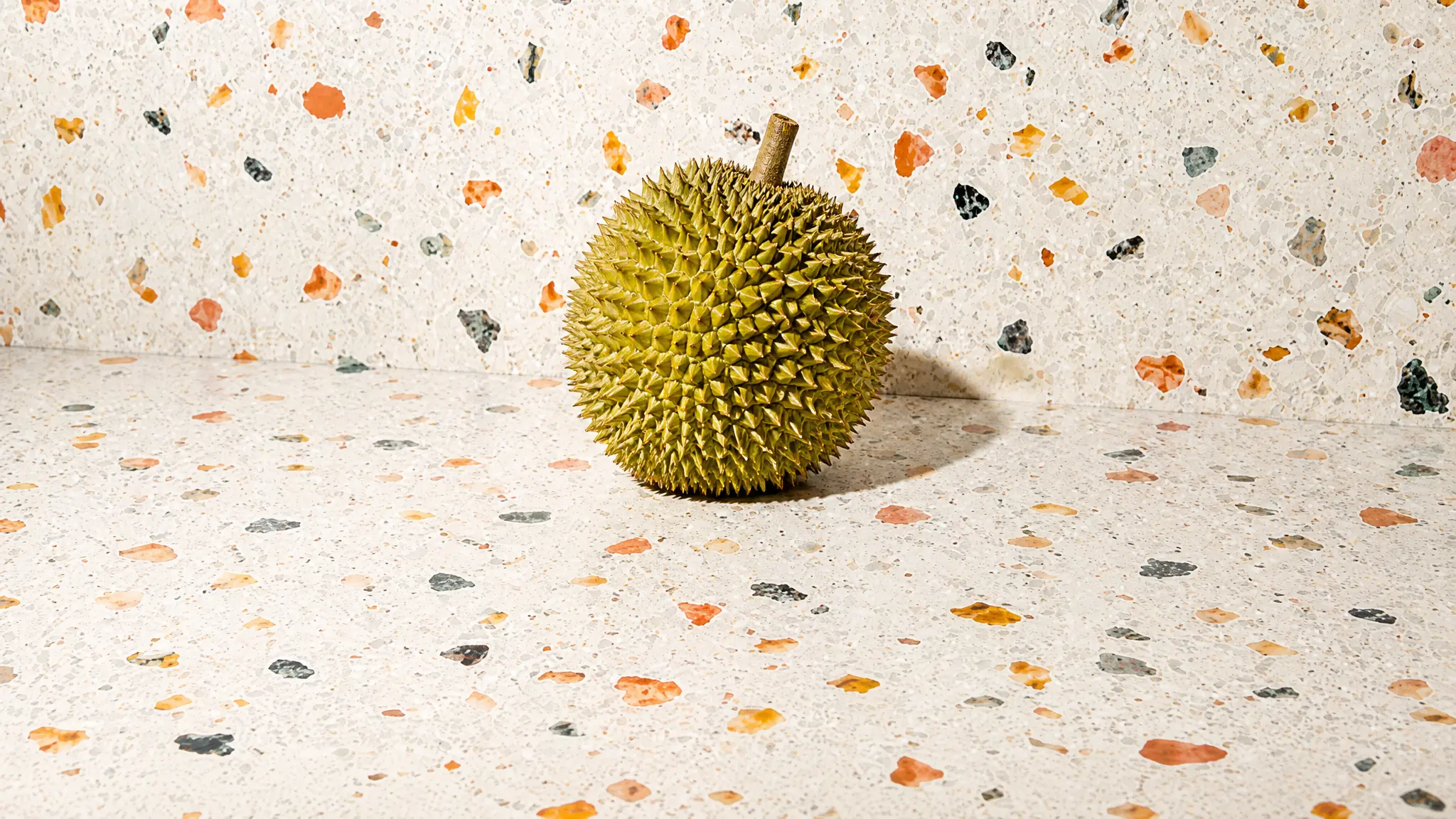
Durian
Fruit
Last updated July 5, 2026. The Tummi Food Team maintains this Can I Feed This safety guide guide. Supporting links appear in Sources when available.



Clinically reviewed by Andria Procopio and Arefa Mohamed
Direct answer
Can babies eat Durian?
Yes, durian can be introduced to babies around 6 months of age once they are ready for solids; ensure it is served in appropriate, age-appropriate forms.
- Serve Age6+months
Most babies start solids around 6 months once they show readiness signs. Match the texture and serving size to your baby's skills.
- No Allergens
Durian is not flagged as one of the major allergens tracked in this database. Still watch your baby closely when serving any new food.
- Choking Risk123451
Lower choking risk when served in the right texture. Always supervise meals and adjust the shape for your baby.
This guide is for everyday food prep questions. Ask your pediatrician about medical concerns, feeding delays, allergy plans, or serious reactions.
How Do You Serve Durian?
How to serve Durian to babies 6 months and older
- 1Remove all seeds and any stringy membranes, then mash ripe durian flesh until mostly smooth with only small soft lumps so baby can scoop safely.
- 2Serve a small portion in a shallow, stable bowl to encourage self-feeding and supervise every bite from arm's reach.
- 3Ensure the texture is thick enough to prevent drips; if it's too runny, mix in a little mashed banana or plain full-fat yogurt, and make sure it's lukewarm or room temperature before offering.
- 4Do not give whole seeds or large pieces — they are a choking hazard unless cooked and processed safely by an adult.
How to serve Durian to babies 9 months and older
- 1Continue offering mashed durian and introduce larger soft clumps (about the size of a tennis ball) for baby to hold and bite.
- 2Offer small, bite-sized pieces of ripe durian to practice the pincer grasp; ensure pieces are soft enough to mash with gums.
- 3Remove all seeds and trim away any tough fibers or hard bits before serving to reduce choking risk. Always remove seeds.
- 4Serve one small piece at a time, seat baby upright, and supervise closely; introduce durian alone and wait 2–3 days before offering another new food to monitor for reactions.
How to serve Durian to babies 12 months and older
- 1Cut durian into soft, bite-sized pieces or mash it so pieces are easy to gum or chew—avoid sticky clumps.
- 2Remove every seed and any tough fibres before serving to eliminate choking hazards.
- 3Serve small portions and consider mixing with yogurt, porridge, or mashed banana to soften texture and mellow the flavor.
- 4Always supervise meals, keep the child seated upright, offer one small spoonful at a time, and stop if the child coughs or gags.
Is Durian a Common Allergen?
Durian is not a common food allergen and true allergic reactions are uncommon, though case reports exist. Some people—particularly those with pollen-related oral allergy syndrome (for example birch pollen allergy)—may experience mouth or throat itching from durian, so cross-reactivity is possible. If your child has known fruit, pollen, or latex allergies, introduce durian cautiously and watch for hives, swelling, breathing changes, or persistent vomiting; seek medical care for any worrying reaction. Also note the fruit’s strong smell can upset sensitive children even without an allergic reaction.
Is Durian a Choking Hazard?
Low Choking Risk
Durian can be a choking hazard because its flesh may be firm and slippery and the fruit contains large, hard seeds that are particularly dangerous for young children. Underripe durian is often firmer, which increases the risk and means extra caution is warranted while baby is eating. Stay within arm’s reach, watch for signs of choking, and be prepared to respond quickly with appropriate first aid.
Have More Questions?
It depends. Durian can be introduced to babies around 6 months old, once they are developmentally ready for solids, but should be offered in small amounts and carefully monitored for reactions.
Yes. Durian provides healthy fats, fiber, vitamins, and antioxidants beneficial for a baby’s overall health, but should be served in appropriate textures and amounts for their age and chewing ability.
No. Allergies to durian are uncommon, but as with any new food, start with a small amount and observe your baby for any signs of allergy or adverse reactions.
Yes. Due to its firm, slippery flesh and large seeds, durian can pose a choking risk; all seeds must be removed, and the fruit should be served in age-appropriate, manageable pieces.
It depends. When serving durian to babies, ensure the flesh is mashed or pureed to a smooth consistency suitable for their developmental stage and avoid large seed pieces.
Save Durian to your food log
Track foods, reactions, and prep notes in Tummi when you want to keep your baby's feeding history in one place.
Sources
- Bioactive Compounds, Nutritional Value, and Potential Health Benefits of Indigenous Durian (Durio Zibethinus Murr.): A Review pubmed.ncbi.nlm.nih.gov
- Durian Fruits Discovered as Superior Folate Sources frontiersin.org
- Cycloproprene fatty acid in some Malaysian edible seeds and nuts. I Durian (Durio zibethinus, Murr.) link.springer.com
- Allergy to durian pubmed.ncbi.nlm.nih.gov
- Eriksson et al. (2003), Allergology International (PDF) core.ac.uk
What Other Fruit Can Babies Eat?
See all →


Source-Linked Guidance
See the evidence behind the guide.
Food guides show direct links to public-health guidance and research when supporting references are available. Source inclusion does not imply endorsement.
 Centers for Disease Control and Prevention
Developmental milestones, nutrition guidelines, and allergen introduction timelines.
 American Academy of Pediatrics
Evidence-based feeding recommendations from the leading pediatric authority.
 National Institutes of Health
Peer-reviewed research on infant nutrition, allergies, and food safety.