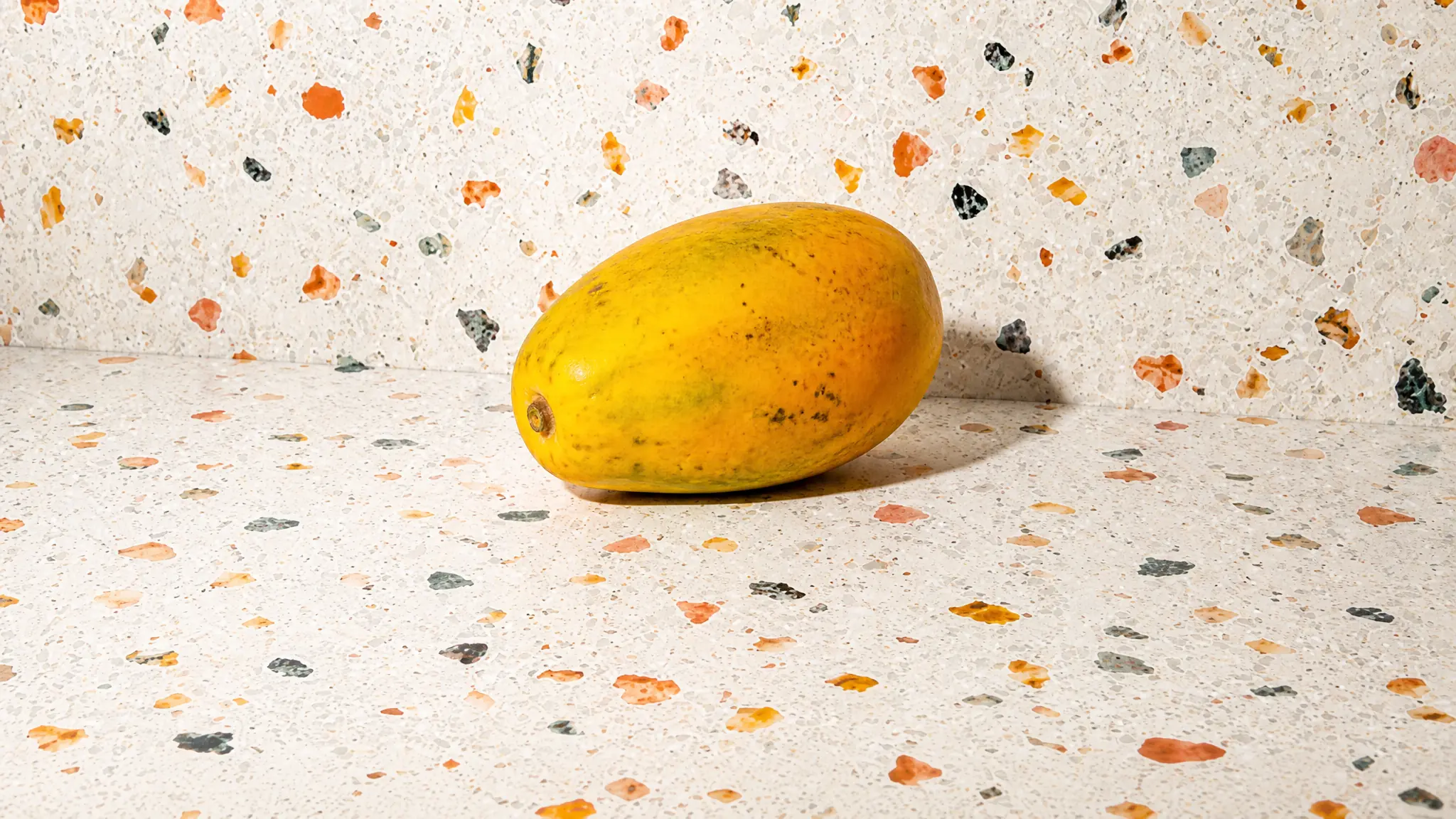
Pawpaw
Fruit
Last updated July 5, 2026. The Tummi Food Team maintains this Can I Feed This safety guide guide. Supporting links appear in Sources when available.



Clinically reviewed by Andria Procopio and Arefa Mohamed
Direct answer
Can babies eat Pawpaw?
Yes, babies can eat ripe pawpaw fruit from around 6 months, avoiding skin and seeds, and introducing it in small amounts to monitor for any reaction.
- Serve Age6+months
Most babies start solids around 6 months once they show readiness signs. Match the texture and serving size to your baby's skills.
- No Allergens
Pawpaw is not flagged as one of the major allergens tracked in this database. Still watch your baby closely when serving any new food.
- Choking Risk123451
Lower choking risk when served in the right texture. Always supervise meals and adjust the shape for your baby.
This guide is for everyday food prep questions. Ask your pediatrician about medical concerns, feeding delays, allergy plans, or serious reactions.
How Do You Serve Pawpaw?
How to serve Pawpaw: 3 years +
- 1Cut the pawpaw into large sections (halves or quarters) so the child can hold the piece and clearly see the seeds.
- 2Demonstrate how to find and remove each large seed using fingers or a small spoon, and explain that seeds are not safe to eat.
- 3Allow the child to practice scooping out flesh and extracting seeds while you watch closely; provide a shallow bowl to collect seeds and reduce mess.
- 4If seed-spitting is part of the activity, have the child spit seeds into a cup under supervision and wash hands afterwards.
How to serve Pawpaw to babies 6 months and older
- 1Choose a ripe pawpaw that yields slightly to gentle pressure and has a sweet aroma.
- 2Wash thoroughly, peel and remove all seeds, then mash until smooth or with very soft small lumps so it's easy to scoop.
- 3Offer a small first portion (about 1–2 teaspoons) and let the baby self-feed with fingers or a small spoon; watch how they handle the texture and swallowing.
- 4Avoid unripe, cooked, or dried pawpaw. Introduce the fruit by itself and wait 3–5 days before offering other new foods to monitor for any reactions.
How to serve Pawpaw to babies 9 months and older
- 1Select a ripe pawpaw — it should smell sweet and give slightly to gentle pressure; remove the skin and scoop out all seeds before serving.
- 2For early self-feeding, mash the flesh until smooth; as fine motor skills improve, offer very soft, pea-sized pieces or thin strips that are easy to grasp.
- 3If pieces fall apart when baby picks them up, pre-load a small spoon or fork so they can still practice feeding independently. Pre-loading the utensil keeps them engaged while reducing frustration.
- 4Always supervise closely and check texture by pressing with your thumb and forefinger — it should squash easily to lower choking risk.
How to serve Pawpaw to babies 12 months and older
- 1Remove skin and seeds, then cut ripe pawpaw into firm, fingertip-sized pieces (thin strips or small cubes) that hold their shape and don't turn to mush.
- 2Pre-load a spoon or fork with a single piece to encourage independent feeding while limiting how much is in each bite.
- 3Offer pieces the child can grasp easily—choose firmer, not overly soft fruit to reduce slipping and gagging.
- 4Supervise at all times; give small servings and pause between bites so the child can chew and swallow safely.
Is Pawpaw a Common Allergen?
Pawpaw (papaya) is not one of the common top‑8 allergens (milk, eggs, peanuts, tree nuts, soy, wheat/gluten, fish, shellfish) but can cause reactions in some people—especially those with a latex allergy (latex‑fruit syndrome). Papaya contains the enzyme papain and proteins that can trigger contact dermatitis or, rarely, systemic allergic reactions. If your child has a known latex allergy or reacts to banana, avocado, or kiwi, avoid papaya and check with your allergist or pediatrician before introducing it.
Is Pawpaw a Choking Hazard?
Low Choking Risk
Ripe pawpaw is very soft and generally presents a low choking risk for babies because it gives under gentle pressure. Still, any food can pose a choking hazard, so stay within arm’s reach during meals, supervise closely, and know the signs of choking and basic first aid.
Have More Questions?
Yes, it is safe for babies when ripe and with skin and seeds removed. Ensure it is offered in moderation to prevent stomach upset, especially if cooked or in large quantities.
Yes, but only when the pawpaw is ripe and the skin and seeds are carefully removed, as seeds are toxic and skin can be difficult for babies to handle.
It depends — freezing pureed pawpaw is safe and can be stored in an airtight container for up to three months to ensure freshness and convenience.
Yes, organic pawpaw can be given to babies just as conventional pawpaw can, but ensure it is ripe and properly prepared; organic options may reduce pesticide exposure.
It depends — combining pawpaw with other fruits that your baby has tried and tolerated well can be a good way to introduce new flavors and nutrients in a balanced diet.
Save Pawpaw to your food log
Track foods, reactions, and prep notes in Tummi when you want to keep your baby's feeding history in one place.
Sources
- Hummer, K. E. (2020). Asimina Genetic Resources. USDA Agricultural Research Service ars.usda.gov
- Peterson, R. N. (1991). Pawpaw (Asimina). Genetic resources of temperate fruit and nut trees. Acta Horticulturae, 290:567–600 kysu.edu
- Potts, L.F., Luzzio, F.A., Smith, S.C., Hetman, M., Champy, P., et al. (2012). Annonacin in Asimina triloba fruit: implication for neurotoxicity. Neurotoxicology, 33(1):53-58 pubmed.ncbi.nlm.nih.gov
- Kaas, B., Hillis, A. E., & Pantelyat, A. (2020). Progressive supranuclear palsy and pawpaw. Neurology: Clinical Practice, 10(2), e17–e18 pmc.ncbi.nlm.nih.gov
What Other Fruit Can Babies Eat?
See all →



Source-Linked Guidance
See the evidence behind the guide.
Food guides show direct links to public-health guidance and research when supporting references are available. Source inclusion does not imply endorsement.
 Centers for Disease Control and Prevention
Developmental milestones, nutrition guidelines, and allergen introduction timelines.
 American Academy of Pediatrics
Evidence-based feeding recommendations from the leading pediatric authority.
 National Institutes of Health
Peer-reviewed research on infant nutrition, allergies, and food safety.