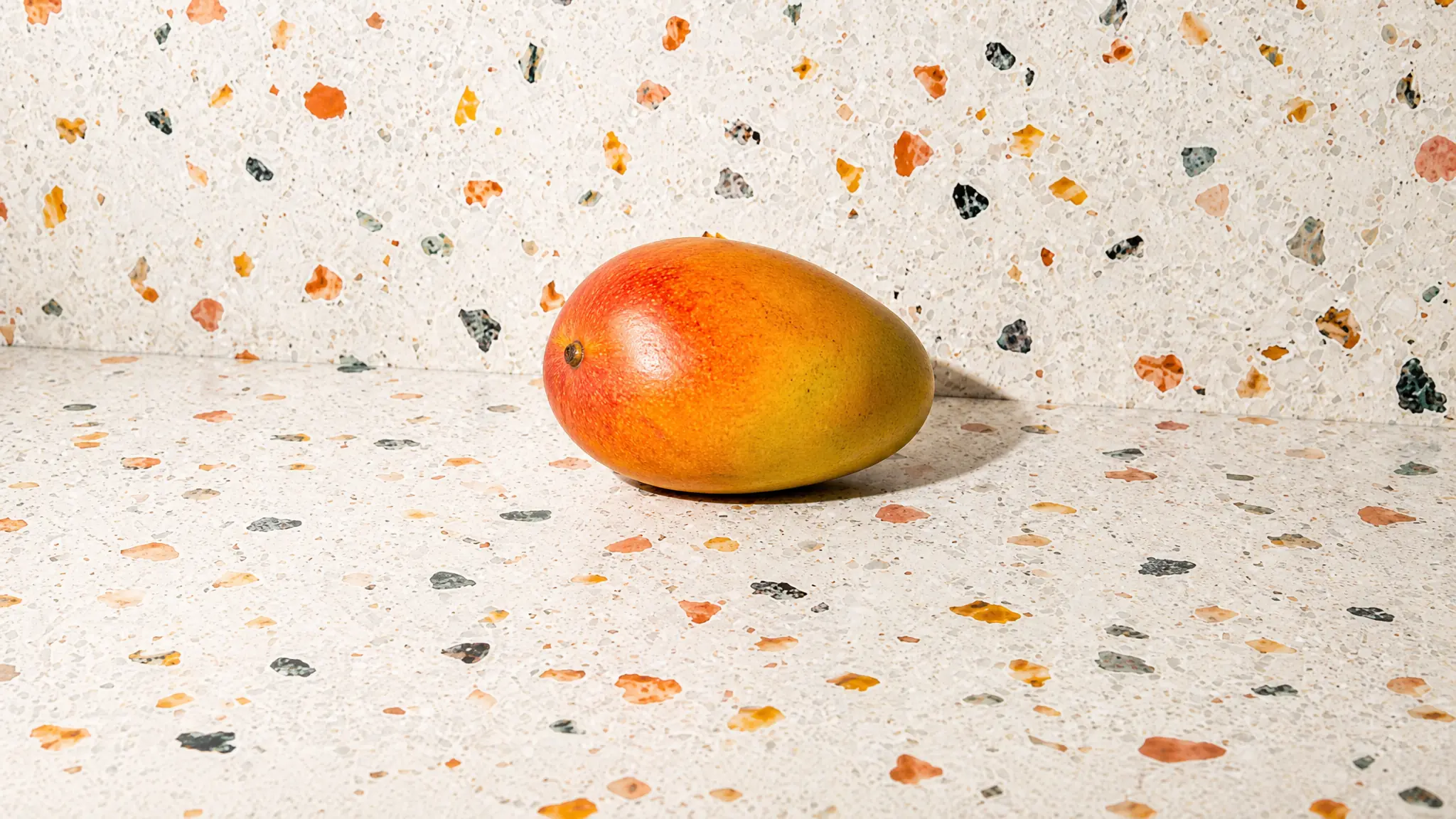
Mango
Fruit
Last updated July 5, 2026. The Tummi Food Team maintains this Can I Feed This safety guide guide. Supporting links appear in Sources when available.



Clinically reviewed by Andria Procopio and Arefa Mohamed
Direct answer
Can babies eat Mango?
Yes, babies can have mango starting at around 6 months when they are ready to start solids, ensuring it's ripe, peeled, and pureed for safe eating.
- Serve Age6+months
Most babies start solids around 6 months once they show readiness signs. Match the texture and serving size to your baby's skills.
- No Allergens
Mango is not flagged as one of the major allergens tracked in this database. Still watch your baby closely when serving any new food.
- Choking Risk123452
Lower choking risk when served in the right texture. Always supervise meals and adjust the shape for your baby.
This guide is for everyday food prep questions. Ask your pediatrician about medical concerns, feeding delays, allergy plans, or serious reactions.
How Do You Serve Mango?
How to serve Mango to babies 6 months and older
- 1Peel the mango and remove most of the flesh so a pit or short spear remains; make sure the remaining flesh is very soft and can be mashed between your thumb and forefinger.
- 2Serve the pit upright or cut into short spears for gnawing; if pieces are slippery, roll them in grated coconut or finely ground nuts or dry infant cereal for a better grip.
- 3For a safer, spoon-fed option, finely mince mango and spoon a small amount onto plain yogurt or ricotta.
- 4Always supervise at arm’s reach during eating and immediately discard any pieces that become hard, break off, or could fit wholly in a child’s mouth.
How to serve Mango to babies 9 months and older
- 1Serve mango as long, thin spears or wedges for finger-feeding; remove the pit and slice the flesh away from it so pieces are safe to handle.
- 2Cut into small, soft, bite-sized pieces once your baby shows a pincer grasp so they can pick them up and chew safely.
- 3Choose ripe, soft mangoes so the flesh mashes easily against gums; if mangoes are firmer, briefly cook or steam to soften.
- 4Reduce slipperiness and choking risk by mincing mango over yogurt or oatmeal, or tossing pieces with finely grated coconut or crushed cereal for extra texture.
How to serve Mango to babies 12 months and older
- 1Cut ripe mango into small, soft cubes about 1/2 inch so they’re easy for little hands to pick up and safe to chew.
- 2Offer pieces on a child-safe fork (pre-speared) or on fingers to encourage utensil practice—demonstrate how to hold the fork and let the child try.
- 3Make sure each piece is soft and easily squishable; remove any hard or fibrous bits and avoid slippery wedges that may cause gagging.
- 4Stay within arm’s reach and supervise every bite; take over feeding if the child struggles or shows signs of choking.
Is Mango a Common Allergen?
Mango is not a common top-9 food allergen and is safe for most children; however, the skin and sap contain urushiol and can cause contact dermatitis, and rare immediate (IgE) reactions or oral allergy syndrome can occur—especially in people sensitized to birch pollen, latex, or related tree nuts (e.g., cashew/pistachio). To reduce risk, peel and wash mango before serving and avoid letting children handle or eat the skin; be extra cautious if your child has known tree-nut, latex, or pollen allergies. Seek medical advice if a child has hives, swelling, breathing difficulty, or any concerning reaction after contact or ingestion.
Is Mango a Choking Hazard?
Low Choking Risk
Mango can be firm and slippery, which increases the risk of choking for babies as they learn to handle new textures. Closely watch your child and stay within arm’s reach when introducing mango so you can quickly respond if they gag or choke. If you’re unsure whether your baby is ready for more textured foods, consult your pediatrician or a feeding specialist.
Have More Questions?
Yes. Mango can be stored in an airtight container in the refrigerator for up to 2 days, but it’s best to serve it fresh for optimal flavor and texture.
Yes. Freeze mango puree in small portions in an airtight container, and thaw in the refrigerator as needed, to extend shelf life and preserve nutrients.
It depends. Choosing organic mangoes may reduce exposure to pesticides, but conventional mangoes are also safe if washed thoroughly before preparation.
Yes. You can combine mango with other fruits or vegetables in purees or finger foods, but introduce each new ingredient separately to monitor for reactions.
Yes. Typical portion sizes for a baby starting solids around 6 months are about 1-2 teaspoons of mashed or pureed mango, gradually increasing based on appetite.
Save Mango to your food log
Track foods, reactions, and prep notes in Tummi when you want to keep your baby's feeding history in one place.
Sources
- Anaphylactic reaction in patient allergic to mango doi.org
- Hypersensitivity manifestations to the fruit mango doi.org
- Mango contact allergy doi.org
- Exposure assessment of food preservatives (sulphites, benzoic and sorbic acid) in Austria doi.org
- Sulfite oxidase activity of cytochrome c: Role of hydrogen peroxide doi.org
- A test of four evolutionary hypotheses of pregnancy food cravings: evidence for the social bargaining model doi.org
- Nutritional composition and bioactive compounds in three different parts of mango fruit doi.org
- The nature of raw starch digestion doi.org
- Sugar in Infants, Children and Adolescents: A Position Paper of the European Society for Paediatric Gastroenterology, Hepatology and Nutrition Committee on Nutrition doi.org
What Other Fruit Can Babies Eat?
See all →



Source-Linked Guidance
See the evidence behind the guide.
Food guides show direct links to public-health guidance and research when supporting references are available. Source inclusion does not imply endorsement.
 Centers for Disease Control and Prevention
Developmental milestones, nutrition guidelines, and allergen introduction timelines.
 American Academy of Pediatrics
Evidence-based feeding recommendations from the leading pediatric authority.
 National Institutes of Health
Peer-reviewed research on infant nutrition, allergies, and food safety.