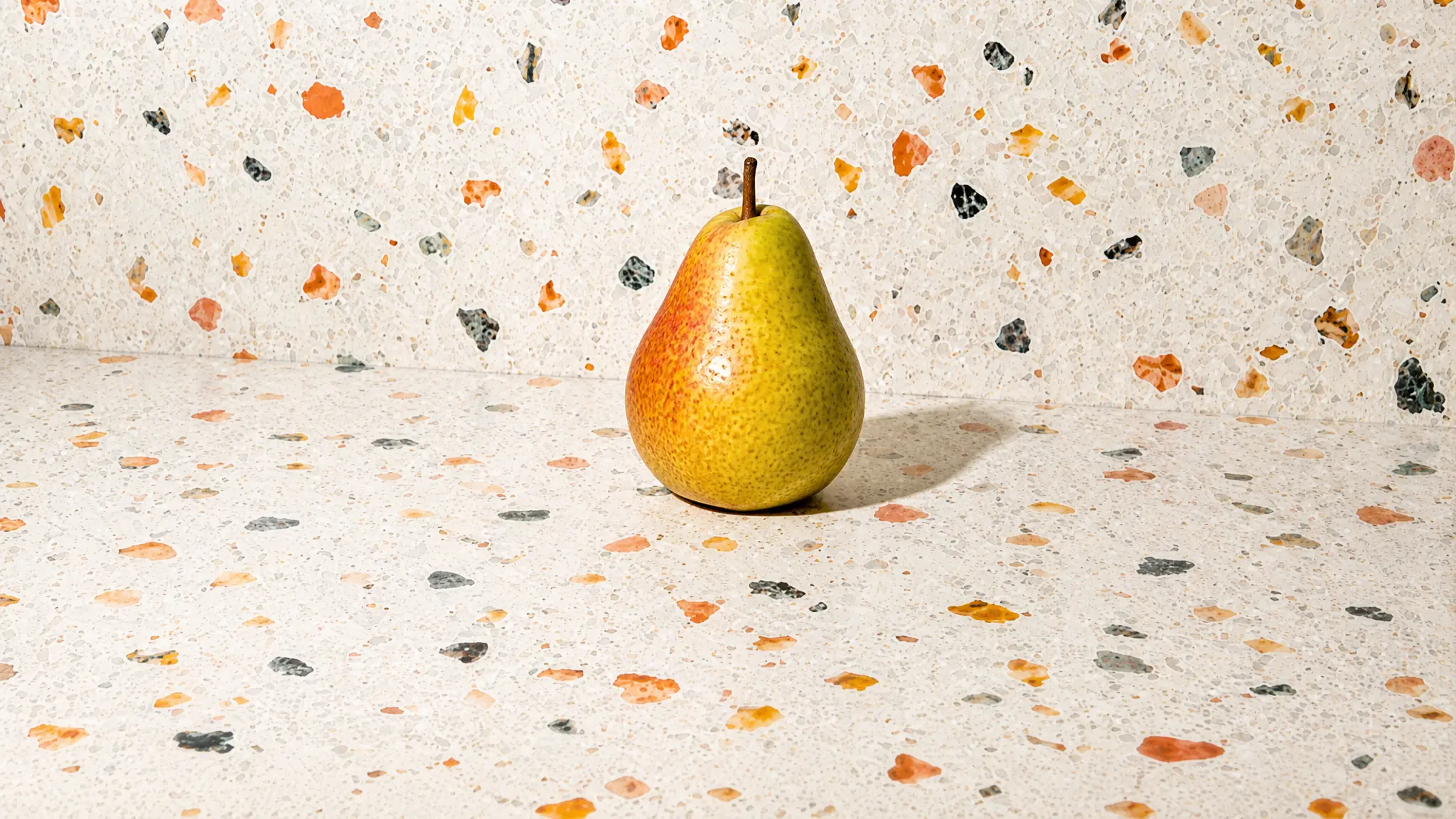
Pear
Fruit
Last updated July 5, 2026. The Tummi Food Team maintains this Can I Feed This safety guide guide. Supporting links appear in Sources when available.



Clinically reviewed by Andria Procopio and Arefa Mohamed
Direct answer
Can babies eat Pear?
Yes, pears can be introduced to babies around 6 months old when they are ready to start solids, ensuring they are prepared safely.
- Serve Age6+months
Most babies start solids around 6 months once they show readiness signs. Match the texture and serving size to your baby's skills.
- No Allergens
Pear is not flagged as one of the major allergens tracked in this database. Still watch your baby closely when serving any new food.
- Choking Risk123453
Some choking risk. Use the prep section to change the size, shape, or texture before serving.
This guide is for everyday food prep questions. Ask your pediatrician about medical concerns, feeding delays, allergy plans, or serious reactions.
How Do You Serve Pear?
How to serve Pear to babies 6 months and older
- 1Select ripe pears or cook until very soft; test by pressing the flesh — it should give easily.
- 2Remove the core and halve the pear, then steam, simmer, or bake until very soft (about 8–12 minutes steaming or 15–20 minutes baking depending on size).
- 3Leave the skin on if the pear is very soft, or peel if it feels grainy. Peeling reduces chewiness.
- 4For self-feeding offer a whole very soft half (core removed); for spoon-feeding grate or mash and mix into cereal or yogurt, check there are no firm lumps, cool to a safe temperature, and always supervise while the baby eats.
How to serve Pear to babies 9 months and older
- 1Cut pears into thin wedges or small, flat, bite-sized pieces; remove the core and seeds — skin is optional.
- 2If a pear is firm, steam or simmer briefly until very soft; test by pressing with your thumb—it should yield easily.
- 3Offer thin slices, half-moons, or flattened pieces rather than cubes so babies can pick them up and mash with gums.
- 4Serve lukewarm or cool and stay within arm’s reach to supervise each bite and reduce choking risk.
How to serve Pear to babies 12 months and older
- 1Remove the core and seeds, then cut a soft, ripe pear into quarters or small, bite-sized pieces for easy chewing.
- 2For confident self-feeders, offer a whole, soft pear to hold and bite while you watch closely.
- 3Trim away any firm, grainy, or slippery sections (especially near the core or overripe spots) to reduce choking risk.
- 4Expect some skin to be pushed out while chewing. Keep close supervision and be ready to remove stubborn pieces to lower choking hazards.
Is Pear a Common Allergen?
Pears are not a common allergen and are usually safe for most children. Some people with birch pollen allergy may experience oral allergy syndrome (itchy or tingling mouth/throat) after eating raw pears. Pears are not one of the top allergens (milk, egg, peanut, tree nuts, soy, wheat, fish, shellfish, sesame), but introduce new foods one at a time and monitor for reactions. For infants, serve pears in age-appropriate, soft or mashed forms to reduce choking risk.
Is Pear a Choking Hazard?
Moderate Choking Risk
Pears can be a choking hazard—especially when underripe, since firm, slippery pieces are harder for babies to manage. Be aware of this increased risk and always supervise meals within arm’s reach, never leaving a baby unattended while eating. Learn the difference between gagging and choking and be familiar with basic infant choking first aid.
Have More Questions?
Yes, pear puree can be frozen for a baby. Freeze freshly prepared puree promptly in a clean, covered container, and discard food left over from the baby's serving rather than storing it again.
Store homemade pear baby food promptly in a clean, covered container in the refrigerator for 1 to 2 days, or freeze it for longer storage. Discard food left over from the baby's serving rather than returning it to storage.
Organic pear is not required; either organic or conventional pear can be offered to a baby. Wash the pear thoroughly under running water before cutting or peeling it, and choose whichever option works for your family.
Yes, you can mix pear with other fruits for your baby's meal once your baby is ready for solids. Prepare every fruit in a texture your baby can manage; foods that commonly trigger allergies are best introduced one at a time so a reaction can be identified.
There is no single pear portion that suits every baby. Offer a small amount in an appropriate texture and let your baby's hunger and fullness cues guide how much they eat without pressuring them to finish.
Save Pear to your food log
Track foods, reactions, and prep notes in Tummi when you want to keep your baby's feeding history in one place.
Sources
- Birch Pollen Related Pear Allergy: A Single-Blind Oral Challenge TRIAL with 2 Pear Cultivars (Nutrients, 2021) mdpi.com
- Oral Allergy Syndrome (OAS) Defined (American Academy of Allergy, Asthma & Immunology) aaaai.org
- Oral Allergy Syndrome in Birch Pollen-Sensitized Patients (Journal of Korean Medical Science, 2018) pmc.ncbi.nlm.nih.gov
- Clinical cross-reactivity among foods of the Rosaceae family (Journal of Allergy and Clinical Immunology, 2000) pubmed.ncbi.nlm.nih.gov
- Rosaceae food allergy: a review (Critical Reviews in Food Science and Nutrition, 2022) tandfonline.com
- WHO Guideline for complementary feeding of infants and young children 6–23 months of age (2023) who.int
- Sugar in Infants, Children and Adolescents: A Position Paper (J Pediatr Gastroenterol Nutr, 2017) pubmed.ncbi.nlm.nih.gov
What Other Fruit Can Babies Eat?
See all →

Source-Linked Guidance
See the evidence behind the guide.
Food guides show direct links to public-health guidance and research when supporting references are available. Source inclusion does not imply endorsement.
 Centers for Disease Control and Prevention
Developmental milestones, nutrition guidelines, and allergen introduction timelines.
 American Academy of Pediatrics
Evidence-based feeding recommendations from the leading pediatric authority.
 National Institutes of Health
Peer-reviewed research on infant nutrition, allergies, and food safety.