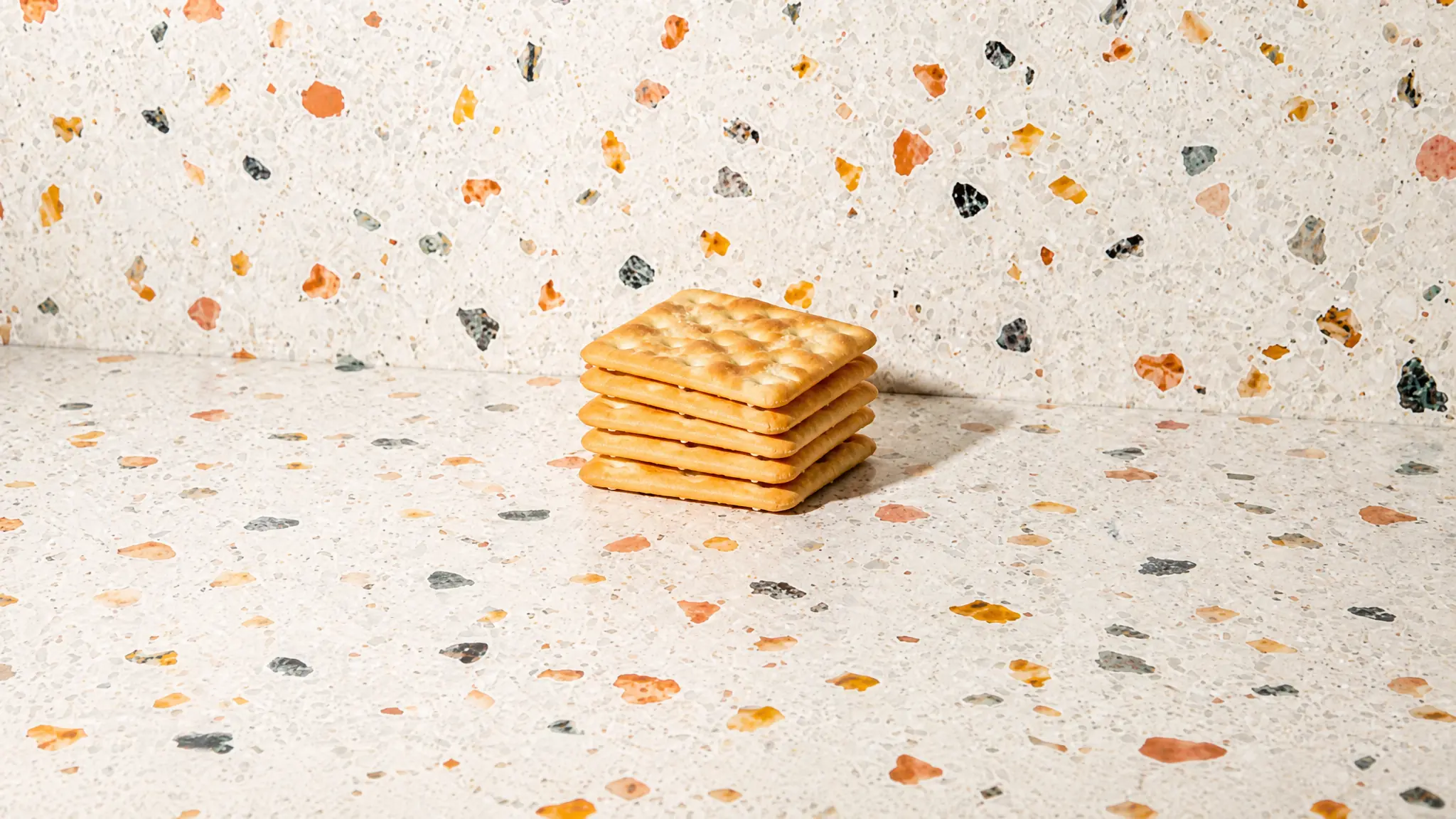
Crackers
Grain
Last updated July 5, 2026. The Tummi Food Team maintains this Can I Feed This safety guide guide. Supporting links appear in Sources when available.



Clinically reviewed by Andria Procopio and Arefa Mohamed
Direct answer
Can babies eat Crackers?
Crackers may be offered from around 6 months, once a baby shows developmental readiness for solid foods, provided they are soft enough to chew and prepared in a shape and size appropriate for the baby's abilities; avoid hard varieties and crackers containing seeds, nut pieces, or whole-grain kernels.
- Serve Age6+months
Most babies start solids around 6 months once they show readiness signs. Match the texture and serving size to your baby's skills.
- Allergens
Crackers is flagged for wheat or gluten. Introduce common allergens in a baby-safe form and follow your clinician's advice if your baby is higher risk.
- Choking Risk123453
Some choking risk. Use the prep section to change the size, shape, or texture before serving.
This guide is for everyday food prep questions. Ask your pediatrician about medical concerns, feeding delays, allergy plans, or serious reactions.
How Do You Serve Crackers?
How to serve Crackers to babies 6 months and older
- 1Choose very thin teething rusks or thin puffed rice cakes that soften quickly in saliva, and break them into several very small pieces before offering.
- 2Spread a very thin layer of mashed avocado, pureed beans, or hummus for extra nutrition, using only a small amount to reduce gagging.
- 3Always seat the baby upright and supervise closely, giving only one small piece at a time to lower choking risk.
- 4Avoid crackers containing honey, whole nuts, or any allergens the baby hasn’t tried; always check ingredient labels first.
How to serve Crackers to babies 12 months and older
- 1Break crackers into small, manageable pieces and remove any sharp or hard edges before serving.
- 2Choose soft, melt-in-the-mouth varieties (cream crackers, Saltines, Goldfish-style) and serve them fresh to lower choking risk.
- 3Seat the child upright and supervise closely while they eat; stay within arm’s reach and avoid distractions.
- 4Offer a thin layer of soft spread (hummus, mashed avocado, yogurt) to boost nutrition, and check the package for added salt or common allergens before serving.
How to serve Crackers: Varies
- 1Avoid giving hard, brittle, or sharp-edged crackers (bagel chips, thick tortilla chips, Triscuit-style) until your child chews reliably.
- 2Break crackers into small, bite-sized pieces and offer only one piece at a time to reduce choking risk.
- 3Check freshness before serving—inspect texture and smell. Discard if soft or crumbly.
- 4Serve seated at a table, remove distractions, and supervise every bite.
- 5Consider softer alternatives or a thin spread to make crackers easier to chew, and keep water nearby.
Is Crackers a Common Allergen?
Crackers commonly contain gluten — this product is marked as a gluten allergen. While the sheet shows no egg, dairy, peanut, tree nut, soy, sesame, fish, or shellfish allergens, flavored varieties or different brands can include those ingredients or be produced in facilities that handle them. Always read the ingredient list and look for “may contain” or “made in a facility that processes…” statements to assess cross-contact risk. If your child has celiac disease or a severe allergy, choose crackers labeled certified gluten-free or allergen-free.
Is Crackers a Choking Hazard?
Moderate Choking Risk
Crackers are a common choking hazard — many varieties are firm, brittle, or have sharp edges that can be hard for young children to chew and swallow. Stale crackers can be especially difficult to break down, and harder or sharp crackers remain higher-risk until a child develops more mature chewing skills. Eating while distracted or moving increases choking risk, so stay close and keep mealtime focused.
Have More Questions?
Babies may start eating suitable crackers from around 6 months, once they show developmental readiness for solid foods. Choose a form that is soft enough to chew and appropriate for the baby's current eating abilities.
Some crackers can be a choking hazard for babies and toddlers, especially when they are hard or contain seeds, nut pieces, or whole-grain kernels. Choose a texture, shape, and size appropriate for the child's development, keep the child seated upright, and watch them throughout eating.
When choosing crackers for a baby, check the label for salt, honey, wheat, and any other relevant allergens, and choose a texture and form appropriate for the baby's development. Avoid honey before the child is over 1 year old and avoid hard crackers or varieties containing seeds, nut pieces, or whole-grain kernels.
Crackers can be combined with other foods, such as a soft spread, if every ingredient is appropriate for the baby's development. Check labels for wheat and other relevant allergens, avoid honey before the child is over 1 year old, and keep the final texture easy for the baby to manage.
There is no single cracker portion that is right for every baby. Start with a small amount and let the baby show whether they want more or have had enough; manage choking risk through appropriate texture and preparation, upright seating, and close supervision rather than relying on portion size.
Save Crackers to your food log
Track foods, reactions, and prep notes in Tummi when you want to keep your baby's feeding history in one place.
Sources
- Choking Hazards cdc.gov
What Other Grain Can Babies Eat?
See all →
Source-Linked Guidance
See the evidence behind the guide.
Food guides show direct links to public-health guidance and research when supporting references are available. Source inclusion does not imply endorsement.
 Centers for Disease Control and Prevention
Developmental milestones, nutrition guidelines, and allergen introduction timelines.
 American Academy of Pediatrics
Evidence-based feeding recommendations from the leading pediatric authority.
 National Institutes of Health
Peer-reviewed research on infant nutrition, allergies, and food safety.