Corn
Grain
Last updated July 5, 2026. The Tummi Food Team maintains this Can I Feed This safety guide guide. Supporting links appear in Sources when available.



Clinically reviewed by Andria Procopio and Arefa Mohamed
Direct answer
Can babies eat Corn?
Yes, cooked corn can be introduced around 6 months, with whole corn on the cob preferred over loose kernels for safety.
- Serve Age6+months
Most babies start solids around 6 months once they show readiness signs. Match the texture and serving size to your baby's skills.
- No Allergens
Corn is not flagged as one of the major allergens tracked in this database. Still watch your baby closely when serving any new food.
- Choking Risk123455
Higher choking risk. Watch the prep steps closely, especially because this food can be small and round, hard, and slippery.
This guide is for everyday food prep questions. Ask your pediatrician about medical concerns, feeding delays, allergy plans, or serious reactions.
How Do You Serve Corn?
How to serve Corn to babies 6 months and older
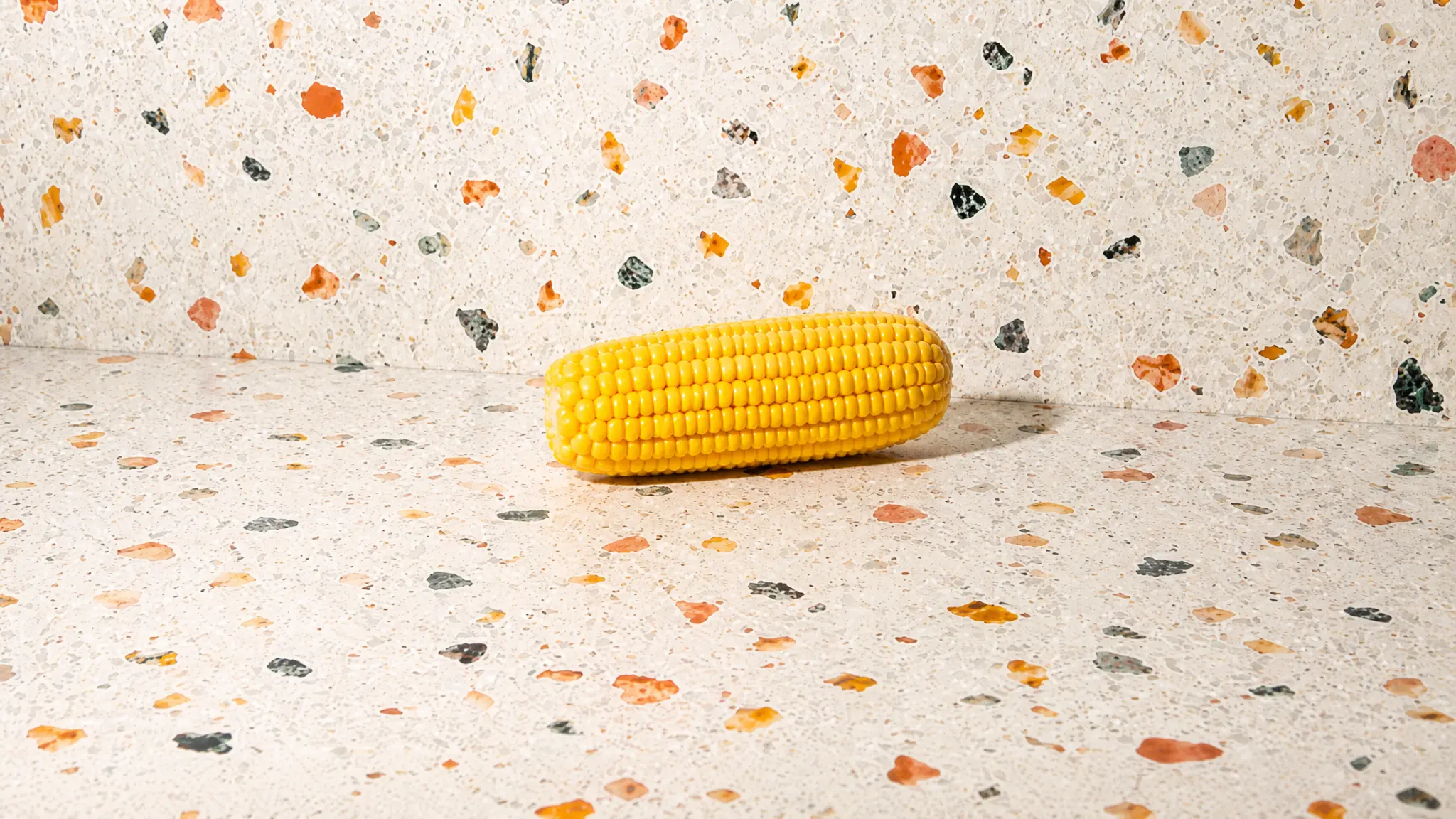
- 1Cook the corn until tender and cut the cob into 2-inch (5 cm) rounds so your baby can hold and gnaw the cob safely.
- 2Remove all loose kernels before serving — loose kernels are a choking hazard.
- 3If you want oral-motor practice, shave most of the kernels off the cob and leave a few for nibbling. They may eat little but will gain jaw strength.
- 4Always supervise closely and keep your baby sitting upright while they handle the cob; offer a small cup of water if needed.
How to serve Corn to babies 9 months and older
- 1Cook corn until very soft (steam, boil, or grill), then let it cool to a lukewarm temperature before serving to avoid burns.
- 2Serve a small round of cob so kernels are easy to reach, or offer a whole larger cob if you prefer to give a firmer grip.
- 3Allow self-feeding — they may hold the cob vertically and nibble from the tip as they develop feeding skills.
- 4Supervise closely while they eat and make sure kernels are soft to reduce choking risk. Avoid hard, raw kernels and remove any silk or husk before serving.
How to serve Corn to babies 12 months and older
- 1Offer only a few loose kernels at a time on a spoon or small plate and supervise every bite. Discourage scooping large handfuls by removing excess immediately.
- 2Mix kernels into mashed or chopped foods (like purees, yogurt, or soft vegetables) so they’re easier to chew and less likely to be swallowed whole.
- 3When serving on the cob, hold it steady for your child and encourage small bites rather than letting them bite across the width; this prevents large pieces coming off.
- 4For canned baby corn, slice lengthwise to remove round shapes that can be hard to chew and present a choking risk.
Is Corn a Common Allergen?
Corn is not one of the common “top 9” allergens and is naturally gluten-free, so it’s generally safe for many children—but true corn allergy does exist. Corn proteins can trigger symptoms from hives and GI upset to, rarely, severe reactions, and corn appears in many hidden ingredients (corn syrup, cornstarch, dextrose, maltodextrin). If your child has a diagnosed corn allergy, avoid products listing corn-derived ingredients and follow your allergist’s advice, including carrying emergency medication if prescribed.
Is Corn a Choking Hazard?
High Choking Risk
Whole, loose corn kernels are small, rounded, and sometimes firm, making them a notable choking hazard—particularly for younger babies. Stay within arm’s reach, keep baby seated upright and attentive during feeding, and be prepared by learning infant choking first aid. Watch closely for signs of choking such as silent coughing, difficulty breathing, or inability to cry.
Have More Questions?
It depends. You can store cooked corn in an airtight container in the refrigerator for up to 2 days or freeze it for longer storage, ensuring it's properly cooled before freezing.
It depends. For homemade purees, you can freeze small portions in ice cube trays, then transfer to a freezer bag for up to 3 months, making quick and easy servings for your baby.
It depends. When choosing corn, opt for organic if possible to avoid pesticides, but conventional corn without additives is also safe for babies when prepared properly.
It depends. When combining foods, introduce corn separately first to monitor for allergies, then you can mix it with other baby-safe foods to diversify their diet.
It depends. Portion sizes vary with age and developmental stage; start with a few spoonfuls and observe your baby’s hunger and tolerance, then adjust accordingly.
Save Corn to your food log
Track foods, reactions, and prep notes in Tummi when you want to keep your baby's feeding history in one place.
Sources
- Choking Hazards | Infant and Toddler Nutrition - CDC cdc.gov
- Maize food allergy: a double-blind placebo-controlled study (2008) pubmed.ncbi.nlm.nih.gov
- Other Food Allergens - Food Allergy Research & Education foodallergy.org
- The maize major allergen is a lipid transfer protein (Pastorello et al., 2000) pubmed.ncbi.nlm.nih.gov
- Chitinases as Food Allergens (Leoni et al., 2019) mdpi.com
- Immunologic cross-reactivity among cereal grains and grasses (Jones et al., 1995) pubmed.ncbi.nlm.nih.gov
What Other Grain Can Babies Eat?
See all →
Source-Linked Guidance
See the evidence behind the guide.
Food guides show direct links to public-health guidance and research when supporting references are available. Source inclusion does not imply endorsement.
 Centers for Disease Control and Prevention
Developmental milestones, nutrition guidelines, and allergen introduction timelines.
 American Academy of Pediatrics
Evidence-based feeding recommendations from the leading pediatric authority.
 National Institutes of Health
Peer-reviewed research on infant nutrition, allergies, and food safety.