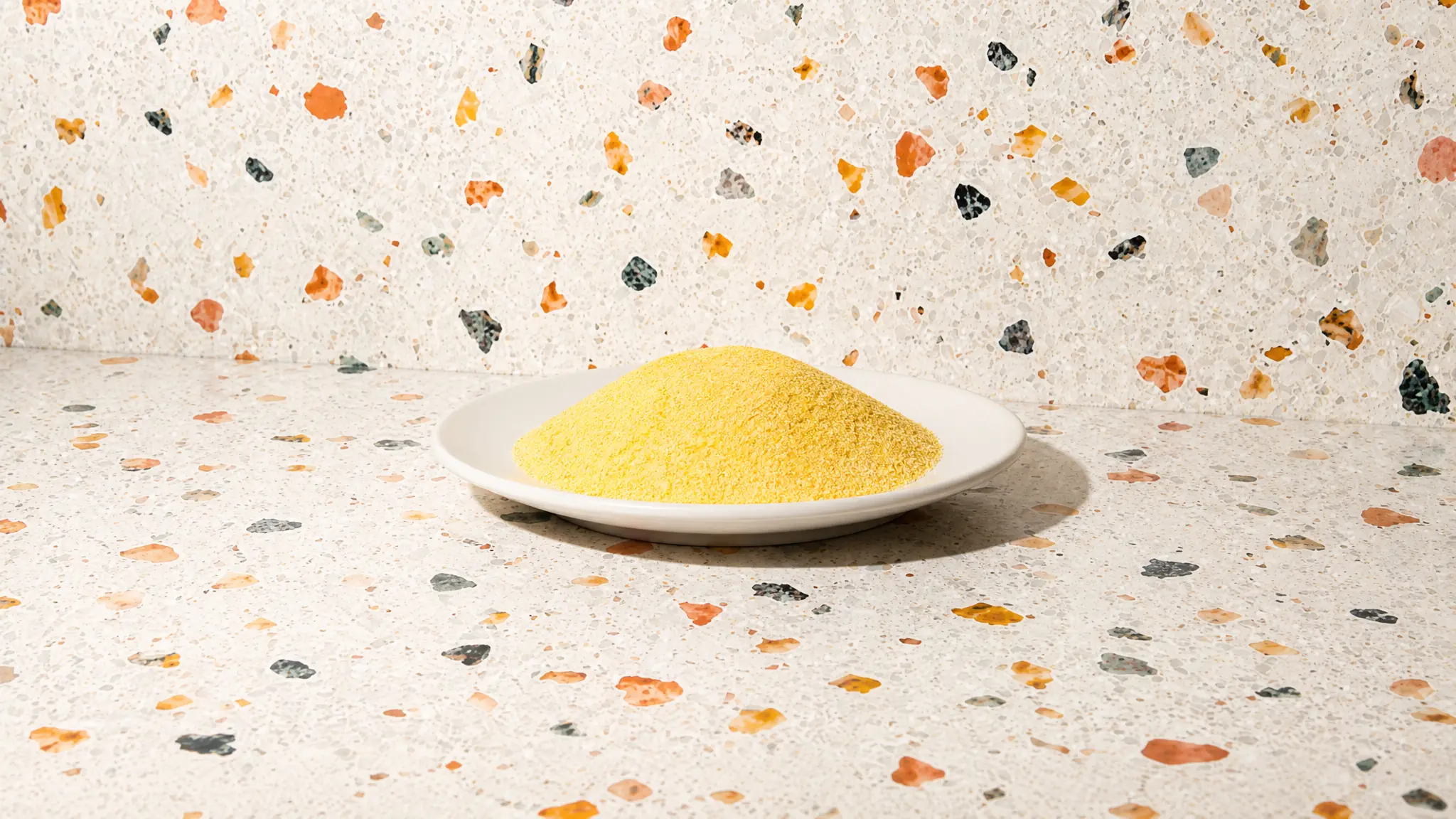
Cornmeal (Polenta)
Grain
Last updated July 5, 2026. The Tummi Food Team maintains this Can I Feed This safety guide guide. Supporting links appear in Sources when available.



Clinically reviewed by Andria Procopio and Arefa Mohamed
Direct answer
Can babies eat Cornmeal (Polenta)?
Yes, cornmeal can be introduced around 6 months when a baby is ready for solids; serve it cooked and in age-appropriate textures.
- Serve Age6+months
Most babies start solids around 6 months once they show readiness signs. Match the texture and serving size to your baby's skills.
- No Allergens
Cornmeal (Polenta) is not flagged as one of the major allergens tracked in this database. Still watch your baby closely when serving any new food.
- Choking Risk123451
Lower choking risk when served in the right texture. Always supervise meals and adjust the shape for your baby.
This guide is for everyday food prep questions. Ask your pediatrician about medical concerns, feeding delays, allergy plans, or serious reactions.
How Do You Serve Cornmeal (Polenta)?
How to serve Cornmeal (Polenta) to babies 6 months and older
- 1Cook grits, porridge, or thin polenta with extra liquid until very soft and creamy so baby can scoop with a spoon or pick up small pieces; avoid dry, firm, or crispy textures that are hard to mash.
- 2When using cornmeal in pancakes, breads, or muffins, keep the batter and crumbs moist and tender — add a little milk, yogurt, or oil if they seem dry to prevent sticking to the roof of the mouth.
- 3If serving set polenta, slice it very thin and reheat briefly with a splash of water, milk, or broth to soften. Ensure pieces are mashable before offering.
- 4Test texture by pressing with a spoon or between finger and thumb, cut into small soft pieces for self-feeding, and always supervise while the baby eats.
How to serve Cornmeal (Polenta) to babies 9 months and older
- 1Offer scoopable, soft textures like grits, soft polenta, porridge, or stews — provide a pre-loaded spoon or let baby self-feed to practice scooping.
- 2As the pincer grasp develops, introduce small, bite-sized pieces of cornbread, muffins, pancakes, or torn thin polenta for picking up; ensure all pieces are soft and not crispy.
- 3To make slippery fruits easier to grasp, lightly coat slices of avocado or mango in cornmeal for extra grip.
- 4Always supervise during feeding and cut pieces to a size that's safe for your child; avoid hard edges and sticky textures that could increase choking risk.
How to serve Cornmeal (Polenta) to babies 12 months and older
- 1Cook cornmeal or polenta until very soft and creamy—use extra liquid so it’s easily scoopable; aim for a spoonable, porridge-like texture.
- 2Serve in small, bite-sized spoonfuls or soft strips for finger-feeding and provide a shallow spoon for self-feeding; offer manageable pieces and stay within arm’s reach while they eat.
- 3Avoid hard crusts or large, firm chunks that can cause choking—cut, mash, or soften thicker preparations and let food cool to a warm (not hot) temperature before serving.
- 4Mix with familiar mild flavors like breastmilk, formula, yogurt, pureed vegetables, or fold into soups and stews to add nutrients and variety without strong spices.
Is Cornmeal (Polenta) a Common Allergen?
Cornmeal (polenta) is naturally free of dairy, eggs, soy, nuts, sesame, fish, shellfish and is gluten-free when made from pure corn. However, cross-contact with wheat (gluten) or other allergens can occur during processing—always check packaging for 'gluten-free' certification and allergen statements. Prepared polenta or mixes may contain dairy (butter, cheese) or other additives, so verify ingredient lists before serving to children with allergies. Corn allergy is uncommon but possible—avoid if a child has a known corn allergy.
Is Cornmeal (Polenta) a Choking Hazard?
Very Low Choking Risk
Overall, cornmeal presents a low choking risk, but firm or crispy preparations (like very firm polenta cakes) can increase the danger. Always supervise meals and keep your baby within arm’s reach. Be familiar with the signs of choking and how to perform infant choking first aid so you can act quickly if needed.
Have More Questions?
Yes. Cornmeal can be stored in an airtight container in a cool, dry place for several months, but it's best to check the expiration date on the package.
Yes. You can freeze pureed or cooked cornmeal in an airtight container for up to 3 months, making it convenient to prepare in advance.
Yes. Organic cornmeal is available and can be a good choice, but both organic and conventional cornmeal are safe for babies when prepared properly.
Yes. You can combine cornmeal with other baby-safe foods like vegetables or mashed fruits to introduce different flavors and textures.
The appropriate portion size varies, but generally 1-2 tablespoons of cooked cornmeal per feeding is suitable for babies around 6-8 months old, gradually increasing as they grow.
Save Cornmeal (Polenta) to your food log
Track foods, reactions, and prep notes in Tummi when you want to keep your baby's feeding history in one place.
Sources
- Maize food allergy: a double-blind placebo-controlled study onlinelibrary.wiley.com
- The maize major allergen, which is responsible for food-induced allergic reactions, is a lipid transfer protein pubmed.ncbi.nlm.nih.gov
- Chitinases as Food Allergens pmc.ncbi.nlm.nih.gov
- Immunologic cross-reactivity among cereal grains and grasses in children with food hypersensitivity pubmed.ncbi.nlm.nih.gov
- Other Food Allergens - Food Allergy Research & Education foodallergy.org
What Other Grain Can Babies Eat?
See all →
Source-Linked Guidance
See the evidence behind the guide.
Food guides show direct links to public-health guidance and research when supporting references are available. Source inclusion does not imply endorsement.
 Centers for Disease Control and Prevention
Developmental milestones, nutrition guidelines, and allergen introduction timelines.
 American Academy of Pediatrics
Evidence-based feeding recommendations from the leading pediatric authority.
 National Institutes of Health
Peer-reviewed research on infant nutrition, allergies, and food safety.