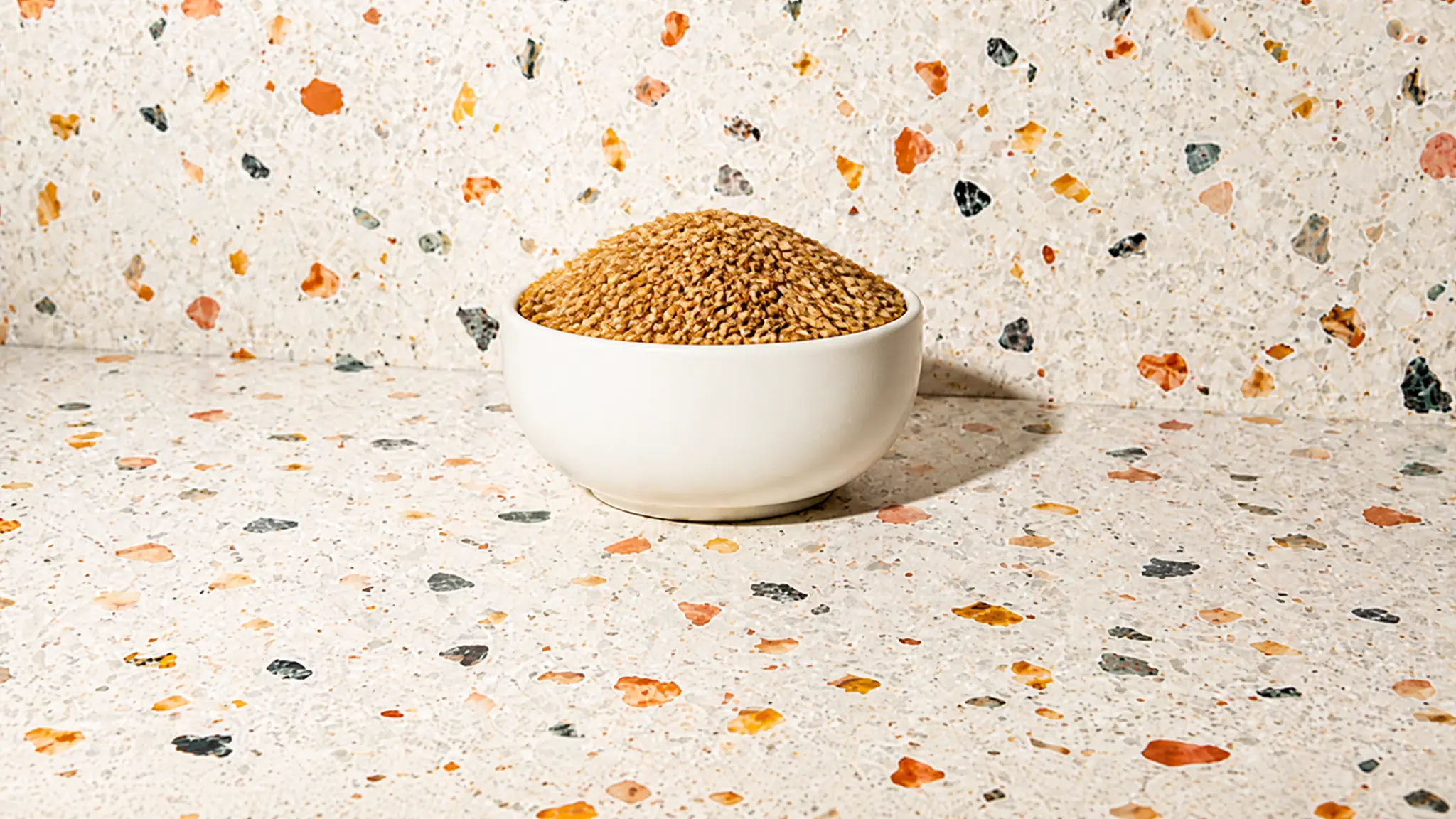
Einkorn
Grain
Last updated July 5, 2026. The Tummi Food Team maintains this Can I Feed This safety guide guide. Supporting links appear in Sources when available.


Clinically reviewed by Andria Procopio and Arefa Mohamed
Direct answer
Can babies eat Einkorn?
Einkorn can be introduced around 6 months, once your baby shows the developmental signs of readiness for solid foods. Einkorn is a type of wheat and a major food allergen, so introduce a small amount on its own at first and do not offer it to a child with a diagnosed wheat allergy unless their clinician has advised otherwise.
- Serve Age6+months
Most babies start solids around 6 months once they show readiness signs. Match the texture and serving size to your baby's skills.
- Allergens
Einkorn is flagged for wheat or gluten. Introduce common allergens in a baby-safe form and follow your clinician's advice if your baby is higher risk.
- Choking Risk123451
Lower choking risk when served in the right texture. Always supervise meals and adjust the shape for your baby.
This guide is for everyday food prep questions. Ask your pediatrician about medical concerns, feeding delays, allergy plans, or serious reactions.
How Do You Serve Einkorn?
How to serve Einkorn to babies 6 months and older
- 1Cook einkorn grains in water or milk until very soft and breaking apart—about 20–40 minutes—stirring occasionally to prevent sticking.
- 2Thin to a smooth, spoonable porridge using breastmilk, formula, or plant milk so it’s easy to swallow.
- 3Season lightly with a small smear of butter or ghee or a pinch of cinnamon; avoid adding salt or sugar.
- 4For finger foods, mash or finely flake the cooked einkorn and mix with soft cooked vegetables or ground meat, then form into soft balls, small fritters, or thick pancake strips that baby can grasp.
- 5Always check temperature and texture; it should be soft and easily squashed between your fingers—remove hard pieces before serving.
How to serve Einkorn to babies 9 months and older
- 1Offer soft, cooked einkorn in familiar shapes like porridge, fritters, or small meatballs; make sure the grains are fully cooked and softened so pieces bind together for easier self-feeding.
- 2Flatten cooked einkorn with a fork or stir it into yogurt or mashed vegetables to create a cohesive texture that’s simple for little fingers to pick up.
- 3Serve pancakes or waffles made with einkorn in strips or bite-size pieces, removing any hard edges and checking the temperature before serving.
- 4When your baby shows a pincer grasp, try small-grain salads using cooked, cooled einkorn mixed with soft veggies and a mild dressing—start with small, moist pieces to reduce choking risk.
How to serve Einkorn to babies 12 months and older
- 1Cook einkorn berries until very tender (roughly 20–30 minutes simmer), then drain and lightly mash or press so grains stick together and are easy to pick up.
- 2Serve small portions as finger food—small piles, patties, or flattened mounds—cooled to lukewarm so babies can grasp and scoop.
- 3Fold cooked einkorn into grain salads or stir into yogurt and mashed vegetables; combine with softer ingredients to reduce choking risk.
- 4For baked goods and pasta made with einkorn flour, cut bread and pancakes into strips or cubes and choose short pasta shapes or chop long pasta into bite-sized pieces.
- 5Make extra portions and freeze in serving-sized containers; reheat thoroughly and check temperature before serving.
How to serve Einkorn to babies 18 months and older
- 1Cook einkorn until the grains are very tender and mostly separate so they can be scooped easily.
- 2Serve small, manageable portions—offer spoonfuls of cooked einkorn or bite-sized, soft pieces to practice scooping or spearing with a fork.
- 3Continue offering einkorn breads, pancakes, and pasta as part of varied meals to build familiarity and flavor variety.
- 4Supervise mealtimes and model utensil use; encourage independent practice by guiding their hand briefly, then letting them try.
Is Einkorn a Common Allergen?
Einkorn is an ancient wheat and contains gluten, so it should be avoided by infants or individuals with celiac disease, gluten intolerance, or wheat allergy. It is not inherently a dairy, egg, peanut, tree nut, soy, sesame, fish, or shellfish allergen, but check packaging for cross-contact warnings as processing facilities may handle other allergens. If introducing to a child with a family history of allergies, consult your pediatrician before offering einkorn-based foods.
Is Einkorn a Choking Hazard?
Very Low Choking Risk
Einkorn isn’t typically a common choking hazard, but individual whole grains can be an aspiration risk for young babies. Stay within arm’s reach and watch closely for gagging, persistent coughing, or any signs of airway distress so you can respond quickly if swallowing becomes difficult. If your baby has known swallowing issues or you’re unsure about their feeding skills, consult your pediatrician or a feeding specialist before offering grains.
Have More Questions?
Yes, cooked einkorn prepared as baby food can be frozen in portions. FoodSafety.gov advises refrigerating homemade baby food for 1 to 2 days or freezing it for 1 to 2 months.
Yes, you can prepare cooked einkorn baby food in advance and freeze it in portions. FoodSafety.gov advises using frozen homemade baby food within 1 to 2 months.
No, organic einkorn has not been shown to be nutritionally better for babies than conventional einkorn. Choose either type based on availability and preference, and prepare it in a developmentally appropriate form.
Yes, you can mix einkorn with other foods after your baby has tried and tolerated it. Because einkorn is wheat and therefore a potential allergen, introduce a small amount on its own at first so any reaction is easier to identify; once tolerated, it can be included in varied meals.
There is no single appropriate portion of einkorn for every baby. When solids begin, offer a small amount, such as a few teaspoons, and let your baby's appetite and fullness cues guide how much they eat without pressure.
Save Einkorn to your food log
Track foods, reactions, and prep notes in Tummi when you want to keep your baby's feeding history in one place.
What Other Grain Can Babies Eat?
See all →
Source-Linked Guidance
See the evidence behind the guide.
Food guides show direct links to public-health guidance and research when supporting references are available. Source inclusion does not imply endorsement.
 Centers for Disease Control and Prevention
Developmental milestones, nutrition guidelines, and allergen introduction timelines.
 American Academy of Pediatrics
Evidence-based feeding recommendations from the leading pediatric authority.
 National Institutes of Health
Peer-reviewed research on infant nutrition, allergies, and food safety.