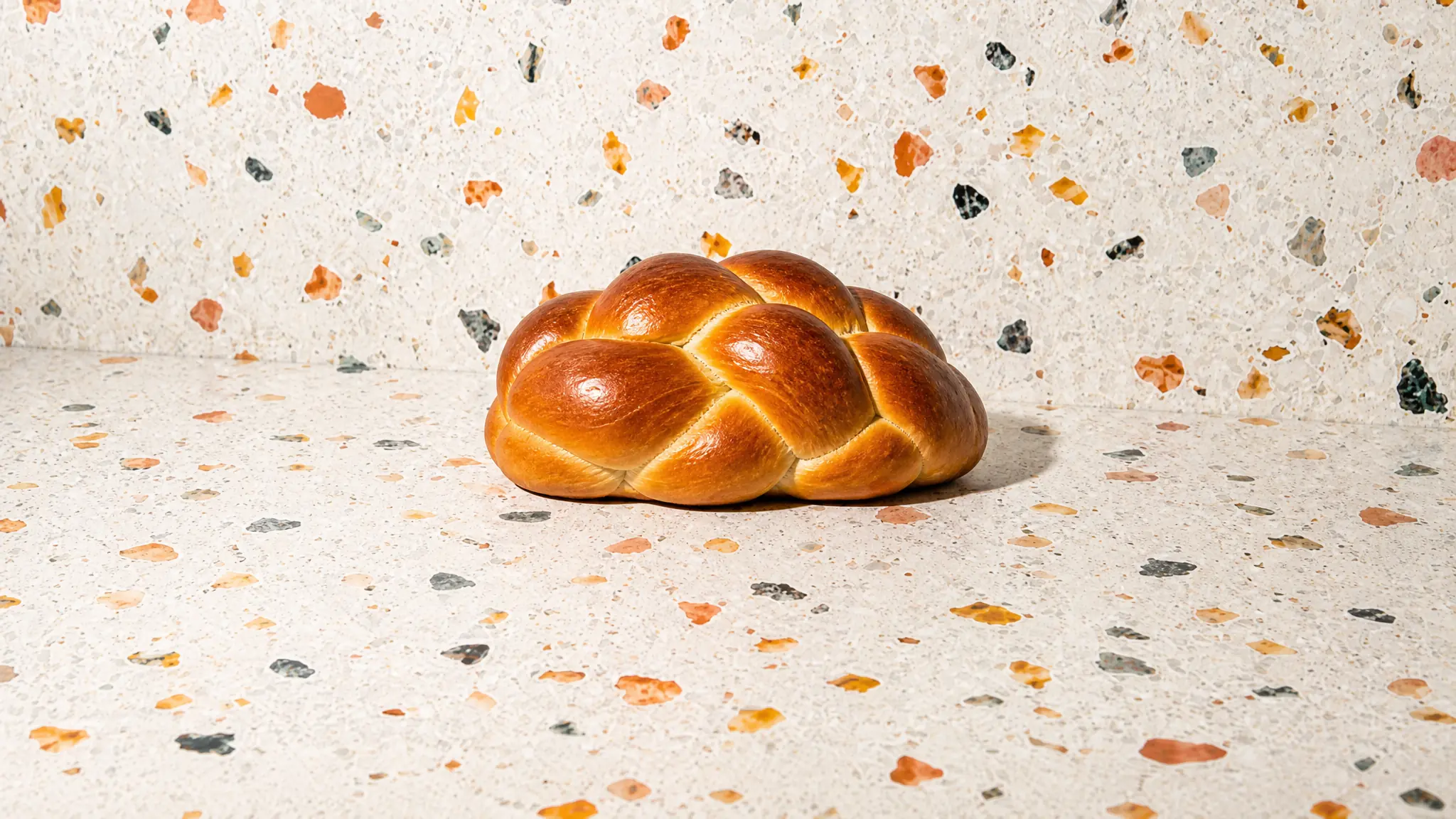
Challah
Grain
Last updated July 5, 2026. The Tummi Food Team maintains this Can I Feed This safety guide guide. Supporting links appear in Sources when available.



Clinically reviewed by Andria Procopio and Arefa Mohamed
Direct answer
Can babies eat Challah?
Yes, challah can be introduced around 6 months old when baby is ready for solids, ensuring it is prepared safely and free of choking hazards.
- Serve Age6+months
Most babies start solids around 6 months once they show readiness signs. Match the texture and serving size to your baby's skills.
- Allergens
Challah is flagged for egg, wheat or gluten, and sesame. Introduce common allergens in a baby-safe form and follow your clinician's advice if your baby is higher risk.
- Choking Risk123451
Lower choking risk when served in the right texture. Always supervise meals and adjust the shape for your baby.
This guide is for everyday food prep questions. Ask your pediatrician about medical concerns, feeding delays, allergy plans, or serious reactions.
How Do You Serve Challah?
How to serve Challah to babies 6 months and older
- 1Cut a long strip from the outer edge including the crust so the piece holds together; make it about the width of two adult fingers pressed together and offer it vertically so baby can grasp and gnaw.
- 2If the challah becomes too sticky or mushy in the mouth, lightly toast the strip to firm it up before offering.
- 3Do not use challah made with honey.
- 4Remove all potential choking hazards—dried fruit, large seeds, whole nuts, and whole olives should be taken out before serving.
- 5Always keep baby seated upright and within arm’s reach while they explore and eat.
How to serve Challah to babies 9 months and older
- 1Tear or pull challah into very thin shreds or short, thin strips so the soft interior is easy to gum.
- 2Offer only 1–2 small pieces at a time and wait until they swallow before giving more to prevent overfilling the mouth.
- 3If your baby tends to stuff their mouth, give a single small strip or lightly mash pieces to reduce bite size.
- 4Remove or avoid added ingredients that are choking risks (nuts, whole seeds, large fruit pieces). Do not give honey and always supervise while they're eating.
How to serve Challah to babies 12 months and older
- 1Cut or pull challah into thin strips or small, bite-sized pieces — slices are fine if trimmed to manageable sizes.
- 2Honey challah is okay to offer; serve in small pieces and avoid overly sticky portions.
- 3Remove choking hazards like dried fruit, large seeds, whole nuts, or whole olives before serving. Pick out or finely chop any small mix-ins you want to include.
- 4Always supervise at mealtimes and have children sit while eating; when unsure, make pieces smaller and softer.
Is Challah a Common Allergen?
Challah is a traditional enriched bread that contains gluten (wheat) and eggs, and is often topped with sesame seeds—avoid if your child has wheat/gluten, egg, or sesame allergies. Typical recipes do not include dairy, peanuts, tree nuts, soy, shellfish, or fish, but cross-contact can occur in bakeries, so always check ingredient labels or ask the baker. For children with severe allergies, choose products made in dedicated allergen-free facilities or bring a homemade alternative.
Is Challah a Choking Hazard?
Low Choking Risk
Challah can be a choking risk because soft breads often soften and form sticky clumps that can cling to the tongue and roof of the mouth, making them hard for babies to manage. Always supervise babies closely (stay within arm’s reach) and watch for signs of gagging or choking. Caregivers should know basic infant choking first aid and feel comfortable performing rescue maneuvers.
Have More Questions?
Yes. Challah can be introduced to babies around 6 months old when they start solids, but avoid honey-based styles under 12 months due to botulism risk.
Yes. Challah provides carbohydrates, protein, fats, and micronutrients like calcium and B vitamins that support growth and development in babies.
Yes. Challah often contains wheat, eggs, and sesame, which are common allergens; always introduce these allergens separately before serving challah.
Yes. Soft bread like challah can be a choking hazard due to its sticky texture; serve it in small, manageable pieces and supervise eating.
Start by offering small pieces and observe your baby's interest and cues, increasing portions gradually as they become more comfortable with eating challah.
Save Challah to your food log
Track foods, reactions, and prep notes in Tummi when you want to keep your baby's feeding history in one place.
Sources
- Infant Botulism and Honey - CDC cdc.gov
- Choking Prevention - HealthyChildren (American Academy of Pediatrics) healthychildren.org
- Challah - Britannica britannica.com
- Challah - Wikipedia en.wikipedia.org
- Starting Solid Foods - HealthyChildren (introducing allergens guidance) healthychildren.org
- USDA FoodData Central fdc.nal.usda.gov
What Other Grain Can Babies Eat?
See all →
Source-Linked Guidance
See the evidence behind the guide.
Food guides show direct links to public-health guidance and research when supporting references are available. Source inclusion does not imply endorsement.
 Centers for Disease Control and Prevention
Developmental milestones, nutrition guidelines, and allergen introduction timelines.
 American Academy of Pediatrics
Evidence-based feeding recommendations from the leading pediatric authority.
 National Institutes of Health
Peer-reviewed research on infant nutrition, allergies, and food safety.