
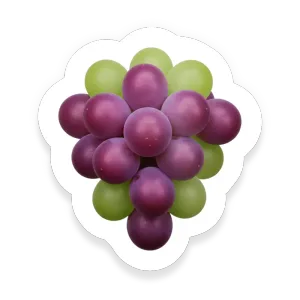
Grape
Fruit
Last updated July 5, 2026. The Tummi Food Team maintains this Can I Feed This safety guide guide. Supporting links appear in Sources when available.



Clinically reviewed by Andria Procopio and Arefa Mohamed
Direct answer
Can babies eat Grape?
Yes, grapes can be introduced at around 6 months old when properly prepared to reduce choking hazards.
- Serve Age6+months
Most babies start solids around 6 months once they show readiness signs. Match the texture and serving size to your baby's skills.
- No Allergens
Grape is not flagged as one of the major allergens tracked in this database. Still watch your baby closely when serving any new food.
- Choking Risk123455
Higher choking risk. Watch the prep steps closely, especially because this food can be small and round, hard, and slippery.
This guide is for everyday food prep questions. Ask your pediatrician about medical concerns, feeding delays, allergy plans, or serious reactions.
How Do You Serve Grape?
How to serve Grape to babies 6 months and older
- 1Cook grapes until the skins split and the flesh is very soft — this makes them easier to mash and reduces choking risk.
- 2Puree or mash into a smooth sauce; press through a fine mesh if you want to remove skins and seeds.
- 3Mix the thick sauce into scoopable foods (warm cereal, yogurt, or ricotta) so it clings to the spoon and can be scooped easily.
- 4Cool to lukewarm, check texture and temperature, remove any whole seeds, and always supervise while baby tries new textures.
How to serve Grape to babies 9 months and older
- 1Quarter grapes lengthwise (stem to tip) so pieces are long and narrow and easier to gum or pick up.
- 2Choose larger, oblong grapes when possible and always remove stems and any visible seeds before serving.
- 3Offer chilled pieces to make them firmer and place cut side up on the plate to make picking easier.
- 4If your baby struggles to grasp or chew, soften grapes by cooking them briefly and then mash or mix into yogurt or porridge until skills improve.
- 5Always supervise eating and give one piece at a time to reduce choking risk.
How to serve Grape to babies 12 months and older
- 1Halve grapes lengthwise for safer self-feeding; if preferred, cut into quarters to make pieces smaller.
- 2Leave the skin on to preserve nutrients and grip, but remove any large seeds before serving.
- 3Choose larger, oblong grapes rather than small round ones to lower choking risk.
- 4Serve plain (no toothpicks or skewers) and at a comfortable bite-size for the child.
- 5Stay within arm's reach while they eat. Never leave them unattended.
How to serve Grape: Varies
- 1Confirm readiness: Offer whole grapes only after the child reliably chews with molars and swallows without gagging; do not proceed if the child coughs, gags, or cannot sit still.
- 2Prepare grapes: Choose large, oblong grapes on the stem, wash them thoroughly, and either serve on the stem for supervised handling or cut each grape lengthwise into quarters to remove the round choking shape.
- 3Teach and coach: Model taking a bite and chewing with the molars, then hold the grape so the child can practice biting and chewing while you give gentle coaching.
- 4Supervise and seating: Only offer grapes when the child is seated and attentive, stay within arm’s reach, and never give grapes while the child is walking, in a car, or unsupervised; be prepared to respond quickly in an emergency.
Is Grape a Common Allergen?
Grapes are not a common allergen, though rare allergic reactions (including oral allergy syndrome in pollen‑allergic people) can occur. The primary safety concern is choking—always cut grapes lengthwise (and remove seeds) before serving to young children, especially under five. Wash grapes thoroughly to remove surface residues. Seek medical help if you notice hives, swelling, vomiting, or breathing difficulties after eating.
Is Grape a Choking Hazard?
High Choking Risk
Grapes are a common choking hazard because they’re round, firm, and slippery, which makes them particularly likely to block a child’s airway. Always keep babies sitting upright and within arm’s reach during meals, watch closely for signs of choking or gagging, and be prepared to administer choking first aid if needed. Only offer whole grapes once the child shows mature chewing and swallowing skills and is closely supervised.
Have More Questions?
Yes. Store washed, cut grapes promptly in a clean, covered container in the refrigerator, and discard any pieces that look bruised, damaged, or spoiled.
Yes, grapes can be frozen for storage, but do not serve them frozen to a baby. Thaw them fully, then mash or completely chop them into tiny pieces appropriate for the child’s development, because hard, round, or uncut grapes are choking hazards.
No, organic grapes are not required for a baby. Both organic and conventional grapes are acceptable choices; wash them thoroughly under running water and prepare them in an age-appropriate form that reduces choking risk.
Yes, grapes can be mixed with other foods for a baby’s meal. Mash them into the food or completely chop them into tiny pieces appropriate for the child’s development, and supervise the child while eating; mixing grapes with another food does not remove their choking risk.
Offer a small amount of appropriately prepared grape and let your baby’s hunger and fullness cues guide how much they eat. For early eaters, use mashed grape or grapes completely chopped into tiny pieces rather than whole or round pieces.
Save Grape to your food log
Track foods, reactions, and prep notes in Tummi when you want to keep your baby's feeding history in one place.
Sources
- Anaphylaxis resulting from selective sensitization to Americana grapes jacionline.org
- WHO Guideline for complementary feeding of infants and young children 6–23 months of age (2023) who.int
- Sugar in Infants, Children and Adolescents: A Position Paper of the ESPGHAN Committee on Nutrition (2017) pubmed.ncbi.nlm.nih.gov
What Other Fruit Can Babies Eat?
See all →





Source-Linked Guidance
See the evidence behind the guide.
Food guides show direct links to public-health guidance and research when supporting references are available. Source inclusion does not imply endorsement.
 Centers for Disease Control and Prevention
Developmental milestones, nutrition guidelines, and allergen introduction timelines.
 American Academy of Pediatrics
Evidence-based feeding recommendations from the leading pediatric authority.
 National Institutes of Health
Peer-reviewed research on infant nutrition, allergies, and food safety.