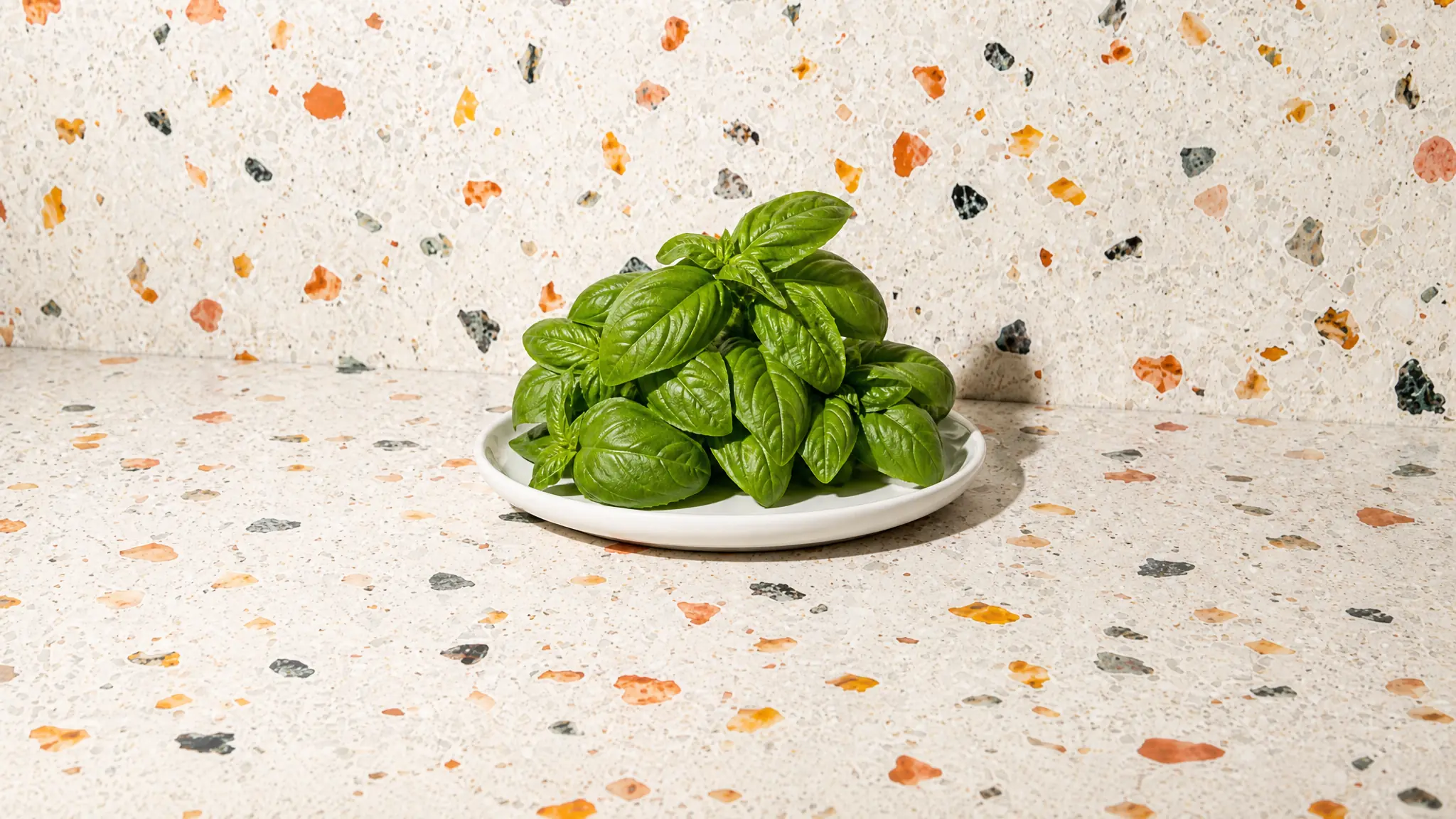
Basil
Herb/Spice
Last updated July 5, 2026. The Tummi Food Team maintains this Can I Feed This safety guide guide. Supporting links appear in Sources when available.



Clinically reviewed by Andria Procopio and Arefa Mohamed
Direct answer
Can babies eat Basil?
Yes, basil can be introduced around 6 months old when baby is ready for solids, prepared in an appropriate, safe manner.
- Serve Age6+months
Most babies start solids around 6 months once they show readiness signs. Match the texture and serving size to your baby's skills.
- No Allergens
Basil is not flagged as one of the major allergens tracked in this database. Still watch your baby closely when serving any new food.
- Choking Risk123451
Lower choking risk when served in the right texture. Always supervise meals and adjust the shape for your baby.
This guide is for everyday food prep questions. Ask your pediatrician about medical concerns, feeding delays, allergy plans, or serious reactions.
How Do You Serve Basil?
How to serve Basil to babies 6 months and older
- 1Rinse basil leaves, remove thick stems, then finely chop or tear into very small pieces so they blend smoothly into soft foods.
- 2Stir a small pinch of chopped basil into scoopable foods like yogurt, mashed avocado, or ricotta; start with a little and adjust to taste.
- 3For soft finger foods (large meatballs, patties), mix the basil into the center or knead gently into the mixture so no large leaf pieces remain.
- 4If making mild sauces (simple pesto or chimichurri), puree until smooth and serve separately from any allergenic ingredients, introducing those ingredients on their own in appropriate forms.
How to serve Basil to babies 9 months and older
- 1Finely chop or chiffonade basil into very small pieces and stir into soft foods (mashed vegetables, yogurt, soft pasta) so baby can taste the herb without large leaf fragments.
- 2Lightly wilt or cook basil when adding it to hot dishes to soften the texture and reduce stringiness.
- 3Start with a small amount mixed into familiar foods and watch for coughing or gagging. If gagging occurs, stay within arm's reach and offer a small sip of water; don’t force-feed.
- 4Remove tough stems before chopping and never give whole leaves; always supervise meals and cut portions into small, manageable pieces.
How to serve Basil to babies 18 months and older
- 1Finely chop fresh basil leaves into small, soft pieces so they blend easily with food and are simple for little mouths to handle.
- 2Stir basil into warm dishes like sauces, scrambled eggs, or soft pasta — mixing it in helps children accept the leaf flavor.
- 3Supervise every bite. Cut or mash any larger pieces to match your child's chewing ability to reduce the risk of gagging, coughing, or choking.
- 4Start with small amounts and watch for any reactions; increase portions gradually as chewing improves.
How to serve Basil to babies 24 months and older
- 1Offer basil in different forms—chopped, torn, or small whole leaves—mixed into sauces, dressings, or served on the side so the child can explore texture.
- 2Prepare pieces that are easy to handle: cut or tear into bite-sized pieces; when serving whole leaves, place them alongside chopped basil to avoid large pieces.
- 3Always supervise during meals and have the child sit while eating; encourage small bites and thorough chewing.
- 4Rinse leaves well, discard wilted or tough parts, and remove thick stems before serving to reduce choking and hygiene risks.
Is Basil a Common Allergen?
Plain basil is not a common food allergen for most children, but some people can have contact or IgE‑mediated reactions to basil or its pollen. Reactions may include oral allergy symptoms (itchy mouth or lips), skin rashes, or, rarely, more significant respiratory or systemic symptoms. Be cautious with prepared foods like pesto, which can contain pine nuts or cheese—common allergens that may cause reactions. If your child develops hives, swelling, difficulty breathing, or persistent vomiting after eating basil-containing foods, seek immediate medical care.
Is Basil a Choking Hazard?
Very Low Choking Risk
Basil is generally a low choking risk, but the leaf’s texture can cause bits to stick in a baby’s mouth and trigger gagging or coughing. Expect spitting and gag reflexes as babies learn to manage basil’s challenging texture. Stay within arm’s reach during meals and be prepared to respond if gagging or choking occurs—know infant/toddler rescue steps.
Have More Questions?
Yes. Basil can typically be introduced to babies around 6 months old when they are ready for solids, but ensure it is served in an appropriate, small, and safe manner for their developmental stage.
Yes. Basil contains various nutrients that support eye health, blood clotting, and immune function, making it a healthy addition when introduced appropriately to your baby's diet.
Yes, but basil allergies are rare. However, if your baby is sensitive to mint, which is in the same family, observe for reactions when adding basil to their diet.
No, basil is not a choking hazard if prepared correctly. Serve it finely chopped or as a small, age-appropriate puree, and always supervise your baby during eating.
It depends. Start with small amounts, such as a tiny leaf or a sprinkle of chopped basil, and observe your baby's response, increasing gradually as they get used to the flavor and texture.
Save Basil to your food log
Track foods, reactions, and prep notes in Tummi when you want to keep your baby's feeding history in one place.
Sources
What Other Herb/Spice Can Babies Eat?
See all →



Source-Linked Guidance
See the evidence behind the guide.
Food guides show direct links to public-health guidance and research when supporting references are available. Source inclusion does not imply endorsement.
 Centers for Disease Control and Prevention
Developmental milestones, nutrition guidelines, and allergen introduction timelines.
 American Academy of Pediatrics
Evidence-based feeding recommendations from the leading pediatric authority.
 National Institutes of Health
Peer-reviewed research on infant nutrition, allergies, and food safety.