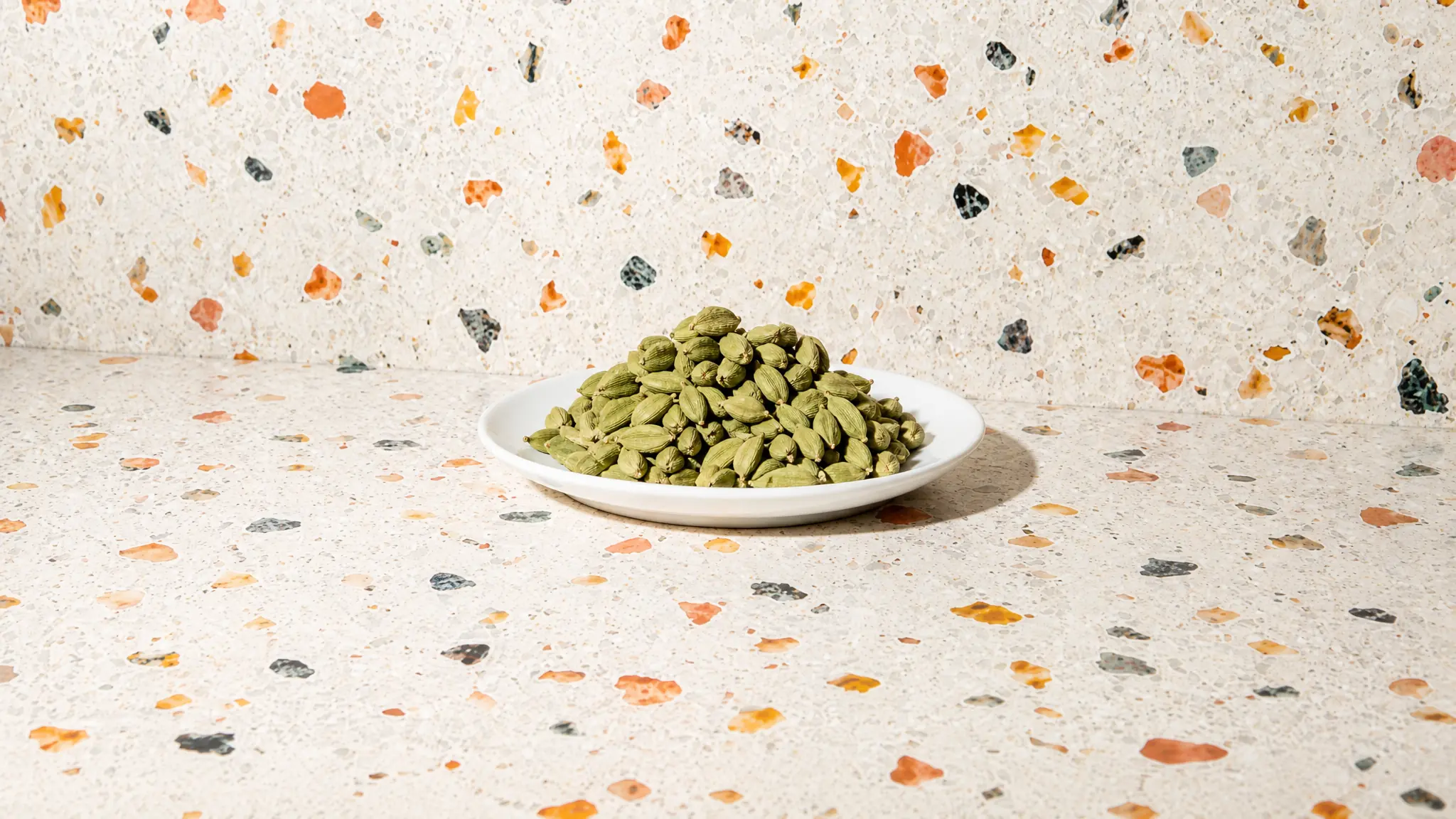

Cardamom
Herb/Spice
Last updated July 5, 2026. The Tummi Food Team maintains this Can I Feed This safety guide guide. Supporting links appear in Sources when available.



Clinically reviewed by Andria Procopio and Arefa Mohamed
Direct answer
Can babies eat Cardamom?
Yes, baby can have ground or cooked cardamom as early as 6 months, when they start solid foods, in small, safe amounts.
- Serve Age6+months
Most babies start solids around 6 months once they show readiness signs. Match the texture and serving size to your baby's skills.
- No Allergens
Cardamom is not flagged as one of the major allergens tracked in this database. Still watch your baby closely when serving any new food.
- Choking Risk123451
Lower choking risk when served in the right texture. Always supervise meals and adjust the shape for your baby.
This guide is for everyday food prep questions. Ask your pediatrician about medical concerns, feeding delays, allergy plans, or serious reactions.
How Do You Serve Cardamom?
How to serve Cardamom to babies 6 months and older
- 1Start with a pinch of freshly ground cardamom (a very small amount) and mix it into soft foods like mashed mango, dal, yogurt, or into idli/pancake batter so the flavor is mild and even.
- 2Add the cardamom while stirring or blending so it disperses evenly through the food.
- 3Never offer whole pods or seeds—remove any whole pods used in family cooking before serving the child's portion.
- 4Introduce the spice slowly, offer only tiny amounts at first, and supervise closely while watching for any signs of allergy or upset after the meal.
How to serve Cardamom to babies 12 months and older
- 1Grind a very small pinch of cardamom seeds to a fine powder and stir into cooked vegetables, purees, batters, or baked goods; increase the amount slowly over time.
- 2To make a mild drink, lightly crush a pod and simmer briefly in water, then strain and discard all pods and seeds; cool completely and offer caffeine-free in an open cup.
- 3Always remove or strain out any whole pods, seeds, or large fragments before serving to prevent choking.
- 4Introduce cardamom-containing foods one at a time, watch closely for rash, vomiting, swelling, or breathing changes, and stop use and seek medical advice if any concerning reaction occurs.
Is Cardamom a Common Allergen?
Cardamom is not a common major food allergen and does not contain milk, egg, peanut, tree‑nut, soy, wheat, fish, or shellfish proteins. Rare allergic reactions (contact dermatitis, respiratory symptoms, or oral‑allergy/pollen‑food syndrome) have been reported in sensitized individuals. Check labels for processed spice blends (cross‑contamination with nuts/peanuts is possible) and avoid if your child has known spice or pollen-related allergies. If your child develops hives, swelling, vomiting, or breathing difficulty after exposure, stop and seek medical care immediately.
Is Cardamom a Choking Hazard?
Very Low Choking Risk
Cardamom can be a choking hazard when given whole—pods and whole seeds are firm and rounded and may block a baby’s airway. Remove any whole pods or seeds from foods and keep your baby seated and closely supervised during meals to reduce risk. Be ready to respond if coughing or gagging occurs and review infant choking first-aid steps.
Have More Questions?
It depends. Small amounts of ground or powdered cardamom are generally safe for babies, but it's best to introduce it gradually to monitor for any adverse reactions and to ensure safe consumption.
It depends. Whole cardamom pods can be a choking hazard for babies and should be removed before serving, while ground cardamom is safer but should still be introduced with caution.
Yes. Cardamom can be stored in an airtight container in a cool, dark place to maintain its flavor and potency for use in baby and family dishes.
It depends. Organic and conventional cardamom are nutritionally similar, but choosing organic may reduce pesticide exposure if that's a concern for you.
Yes. You can combine small amounts of cardamom with mild, familiar flavors when introducing new foods to your baby to enhance taste variety and assess for any sensitivities.
Save Cardamom to your food log
Track foods, reactions, and prep notes in Tummi when you want to keep your baby's feeding history in one place.
Sources
- U.S. Food & Drug Administration — Substances generally recognized as safe fda.gov
- Cárdenas Garza et al. (2021) — Benefits of Cardamom and Turmeric (Plants) doi.org
- Natural Medicines Database — Cardamom naturalmedicines.therapeuticresearch.com
- Mobacken & Fregert (1975) — Allergic contact dermatitis from cardamom doi.org
- Kids With Food Allergies — Spices and food allergy kidswithfoodallergies.org
- American Academy of Allergy Asthma & Immunology — Can Spices Cause an Allergic Reaction? aaaai.org
What Other Herb/Spice Can Babies Eat?
See all →




Source-Linked Guidance
See the evidence behind the guide.
Food guides show direct links to public-health guidance and research when supporting references are available. Source inclusion does not imply endorsement.
 Centers for Disease Control and Prevention
Developmental milestones, nutrition guidelines, and allergen introduction timelines.
 American Academy of Pediatrics
Evidence-based feeding recommendations from the leading pediatric authority.
 National Institutes of Health
Peer-reviewed research on infant nutrition, allergies, and food safety.