Chamomile
Herb/Spice
Last updated July 5, 2026. The Tummi Food Team maintains this Can I Feed This safety guide guide. Supporting links appear in Sources when available.



Clinically reviewed by Andria Procopio and Arefa Mohamed
Direct answer
Can babies eat Chamomile?
Yes, chamomile may be introduced to babies at 12 months and older, preferably in tea bag form to avoid botulism spores present in dried varieties.
- Serve Age12+months
Most babies start solids around 6 months once they show readiness signs. Match the texture and serving size to your baby's skills.
- No Allergens
Chamomile is not flagged as one of the major allergens tracked in this database. Still watch your baby closely when serving any new food.
- Choking Risk123451
Lower choking risk when served in the right texture. Always supervise meals and adjust the shape for your baby.
This guide is for everyday food prep questions. Ask your pediatrician about medical concerns, feeding delays, allergy plans, or serious reactions.
How Do You Serve Chamomile?
How to serve Chamomile to a 12-month-old baby
- 1Do not give chamomile tea unless a pediatric healthcare provider specifically advises it; discuss benefits, risks, and safer alternatives first.
- 2If a clinician recommends it, use only commercially prepared, labeled infant-safe products—avoid homemade infusions that may carry contamination risk.
- 3Follow the provider’s dosage instructions exactly: offer very small amounts only as directed and stop if you notice allergic reactions, rash, vomiting, or unusual sleepiness.
- 4Do not add honey, sugar, or other herbs; prepare and cool as instructed, refrigerate prepared portions, and discard any leftovers after 24 hours.
How to serve Chamomile to a 24-month-old baby
- 1Offer no more than 4 ounces of chamomile tea per day; serve it lukewarm and check the temperature before giving it to your child.
- 2Use bagged or commercially prepared chamomile tea rather than loose dried leaves to reduce botulism risk.
- 3Make a weak infusion: steep one tea bag in 4–6 oz boiling water for 1–2 minutes, remove the bag, then dilute with cooled water to lukewarm; avoid adding honey.
- 4Give a small amount first and watch closely for allergic signs, and always supervise drinking—stop and seek care if rash, vomiting, or breathing changes occur.
Is Chamomile a Common Allergen?
Chamomile is not a common food allergen but can cause allergic reactions in people sensitized to plants in the Asteraceae/Compositae family (eg, ragweed, daisies, chrysanthemums). Topical products or ingestion may trigger contact dermatitis, hives, or respiratory symptoms in susceptible children. Avoid giving chamomile tea or products to infants without pediatrician approval, and be cautious if your child has known pollen/plant allergies. Seek urgent care for signs of anaphylaxis (difficulty breathing, facial swelling, widespread hives).
Is Chamomile a Choking Hazard?
Very Low Choking Risk
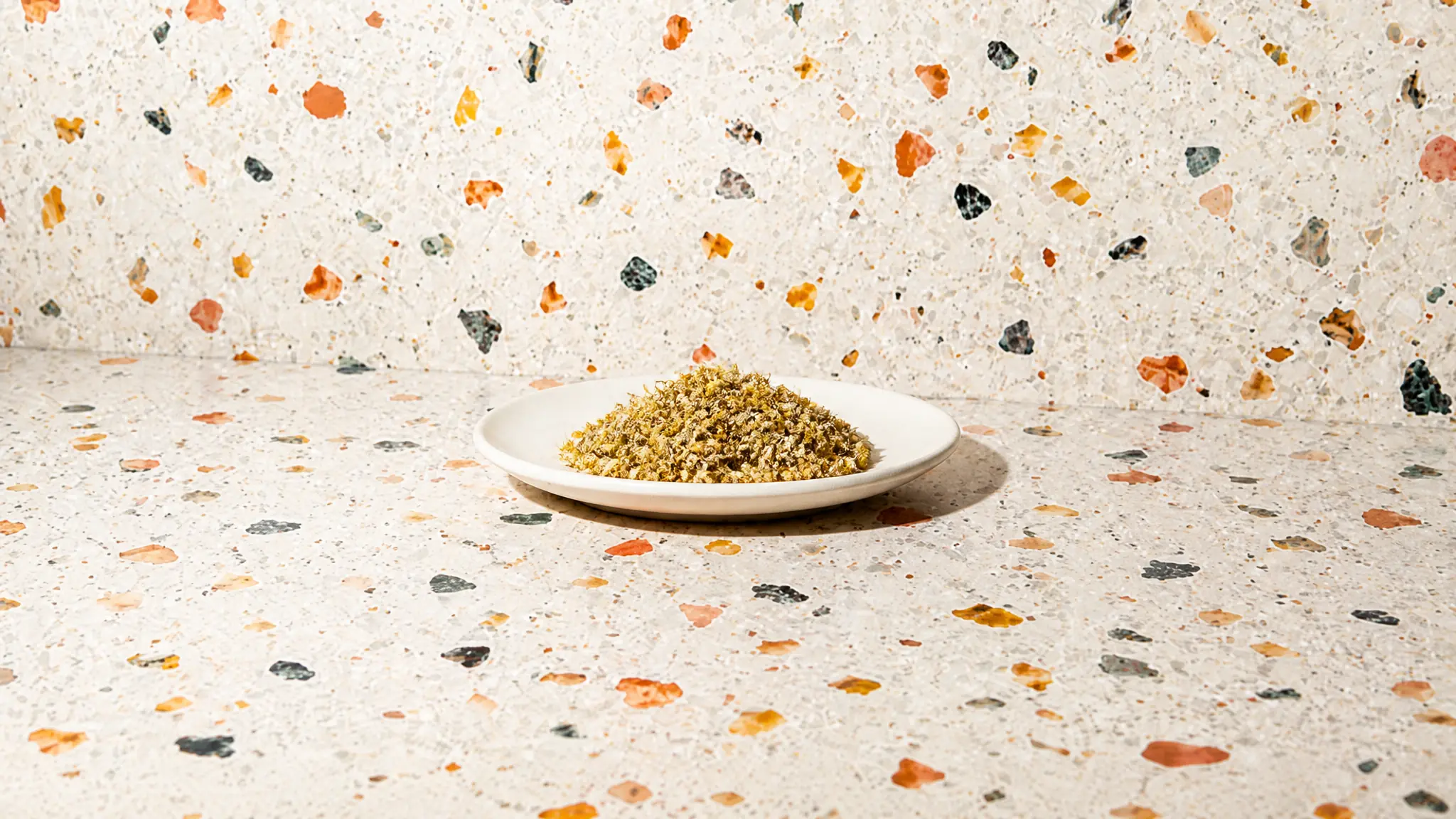
Chamomile in tea form is not a common choking hazard, though any food or liquid can theoretically cause choking. Avoid giving babies loose dried flowers themselves and keep small pieces or loose herbs out of reach. Always stay close and attentive during meals so you can respond quickly if gagging or choking occurs.
Have More Questions?
Yes, babies who are 12 months and older can generally have chamomile in small, appropriate amounts. It is important to choose tea bags over dried, loose forms due to botulism spore risk.
Yes, chamomile can be used in cooking or beverages for toddlers, such as in teas or flavorings. Always ensure the product is safe and prepared appropriately before giving it to young children.
It depends. While chamomile is generally recognized as safe for children over 12 months, its use should be cautious and preferably under medical guidance, especially due to potential allergenicity or contaminants.
Yes, chamomile is often used to help soothe digestive issues and promote relaxation in children over 12 months. However, consult your healthcare provider before use, especially if your child has allergies or sensitivities.
Yes, you can store chamomile tea bags in a cool, dry place away from direct sunlight to maintain their quality. Proper storage helps prevent mold or spoilage.
Save Chamomile to your food log
Track foods, reactions, and prep notes in Tummi when you want to keep your baby's feeding history in one place.
Sources
- Drugs and Lactation Database (LactMed) — Chamomile ncbi.nlm.nih.gov
- Bianco MI et al., Presence of Clostridium botulinum spores in Matricaria chamomilla (Int J Food Microbiol, 2008) doi.org
- U.S. Food & Drug Administration — CFR Title 21 Part 182 (GRAS) ecfr.gov
- Srivastava JK et al., Chamomile: A herbal medicine of the past with bright future (Molecular Medicine Reports, 2010) doi.org
- National Center for Complementary and Integrative Health (NCCIH) — Chamomile nccih.nih.gov
- Martinelli M et al., Efficacy of a standardized extract... in infantile colic (Neurogastroenterol Motil, 2017) doi.org
- Savino F et al., ColiMil randomized trial (Phytother Res, 2005) doi.org
- Becker B et al., Apple pectin-chamomile extract trial (Arzneimittelforschung, 2006) doi.org
What Other Herb/Spice Can Babies Eat?
See all →



Source-Linked Guidance
See the evidence behind the guide.
Food guides show direct links to public-health guidance and research when supporting references are available. Source inclusion does not imply endorsement.
 Centers for Disease Control and Prevention
Developmental milestones, nutrition guidelines, and allergen introduction timelines.
 American Academy of Pediatrics
Evidence-based feeding recommendations from the leading pediatric authority.
 National Institutes of Health
Peer-reviewed research on infant nutrition, allergies, and food safety.