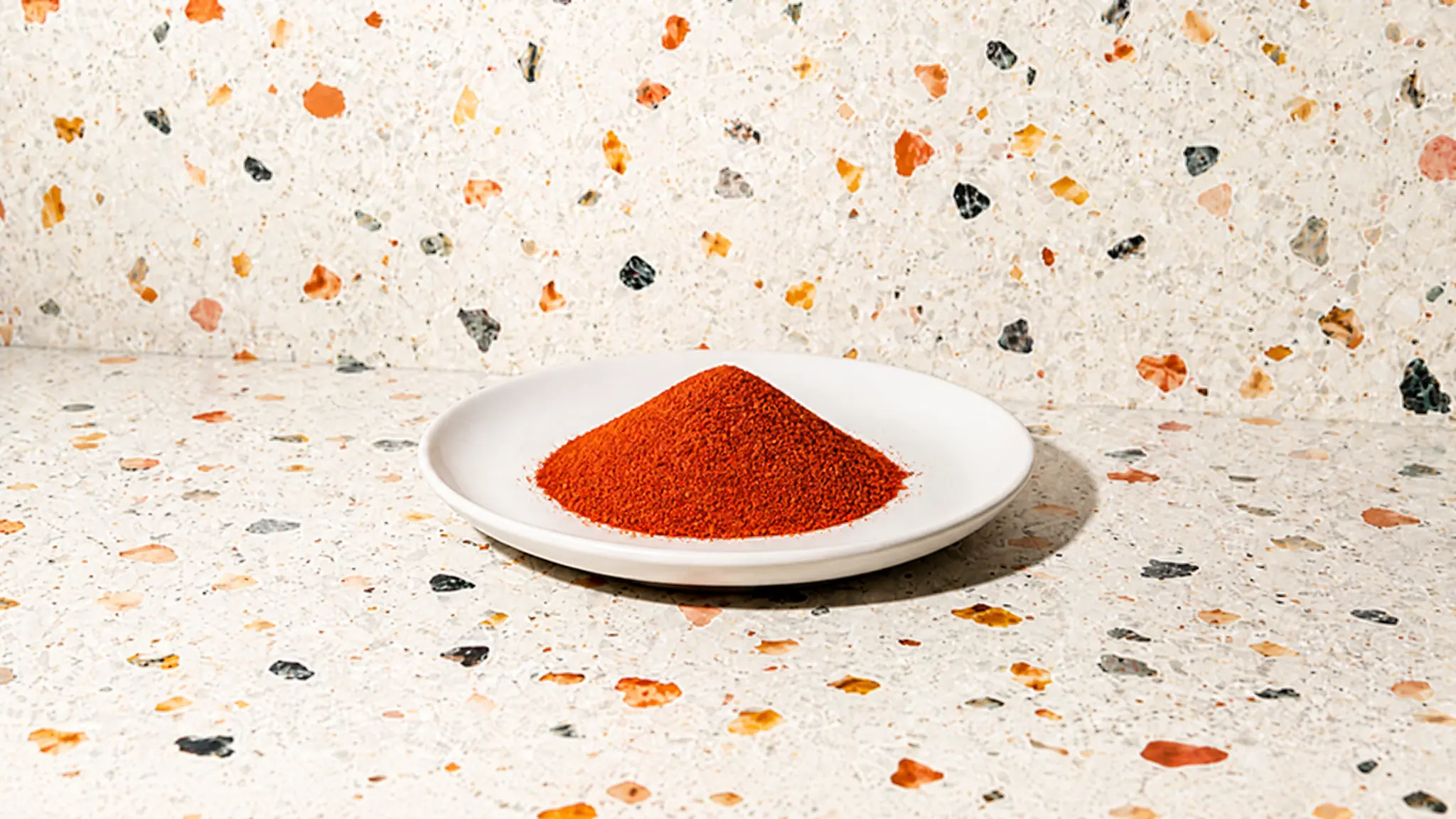
Cayenne Pepper
Herb/Spice
Last updated July 5, 2026. The Tummi Food Team maintains this Can I Feed This safety guide guide. Supporting links appear in Sources when available.



Clinically reviewed by Andria Procopio and Arefa Mohamed
Direct answer
Can babies eat Cayenne Pepper?
Yes, a very small amount of cayenne pepper may be mixed into food from around 6 months, once your baby shows the developmental signs of readiness for solid foods. Capsaicin can irritate the mouth and digestive tract or trigger coughing, so stop if it causes discomfort.
- Serve Age6+months
Most babies start solids around 6 months once they show readiness signs. Match the texture and serving size to your baby's skills.
- No Allergens
Cayenne Pepper is not flagged as one of the major allergens tracked in this database. Still watch your baby closely when serving any new food.
- Choking Risk123451
Lower choking risk when served in the right texture. Always supervise meals and adjust the shape for your baby.
This guide is for everyday food prep questions. Ask your pediatrician about medical concerns, feeding delays, allergy plans, or serious reactions.
How Do You Serve Cayenne Pepper?
How to serve Cayenne Pepper to babies 6 months and older
- 1Start with a very tiny amount — a light pinch of powdered cayenne mixed into one spoonful of a bland food (for example mashed banana, plain mashed avocado, or plain yogurt).
- 2Offer a single small taste and watch closely for at least 10–15 minutes for coughing, unusual fussiness, rash, vomiting, or breathing changes.
- 3Serve the spicy bite together with a creamy or cooling food (mashed avocado, plain yogurt, or a little breast milk/formula) to help soften the heat and soothe the mouth.
- 4Keep textures soft and easy to swallow and avoid hard or sticky pieces; remain within arm’s reach during the entire feeding.
- 5If any concerning reaction occurs (trouble breathing, persistent vomiting, hives, or prolonged coughing), stop feeding and seek medical help immediately.
How to serve Cayenne Pepper to babies 12 months and older
- 1Start with a very small pinch of cayenne mixed into familiar foods and increase gradually only if the child accepts the flavor.
- 2Serve spicy items with a creamy or cooling side such as mashed avocado, plain yogurt, or milk to help balance the heat.
- 3Avoid pairing spicy foods with highly acidic or watery accompaniments (for example, citrus juices or thin broths) because they can intensify the burn.
- 4Do not use cayenne extracts or supplements; add ground cayenne to foods in small amounts and mix it in evenly.
- 5Introduce new servings one at a time and stop if your child shows discomfort. Seek medical advice if there are signs of swelling, hives, vomiting, or breathing difficulty.
Is Cayenne Pepper a Common Allergen?
Cayenne pepper is not one of the common top‑8 food allergens, but spices (including chili peppers) can cause allergic reactions in sensitive people, producing skin (contact dermatitis/urticaria), respiratory, oral, or gastrointestinal symptoms. Cayenne is a nightshade—people with nightshade sensitivities may react, and capsaicin can irritate skin and mucous membranes, so avoid giving spicy peppers to infants and young children. For processed spice blends, check labels for cross‑contamination or added allergens (nuts, sesame, dairy), and discontinue use and seek medical care if allergic signs appear.
Is Cayenne Pepper a Choking Hazard?
Very Low Choking Risk
Low — ground cayenne powder presents a low choking risk when introduced appropriately, though any food could potentially cause choking. Spicy powders can trigger coughing or gagging in some babies, so stay close and monitor their reactions during and after the first tastes.
Have More Questions?
Yes, a very small amount of cayenne pepper may be mixed into food from around 6 months, once your baby shows the developmental signs of readiness for solid foods. Stop offering it if the heat causes discomfort or coughing.
Cayenne pepper is best treated as an optional seasoning rather than an important source of nutrition for babies. If offered, mix only a very small amount into food because its capsaicin can irritate the mouth and digestive tract.
No, cayenne pepper is not one of the nine major food allergens recognized by the FDA. This does not rule out an individual reaction, and capsaicin irritation such as mouth burning or coughing is not necessarily an allergy.
Ground cayenne pepper mixed evenly into developmentally appropriate food is not a typical shape-based choking hazard. Avoid offering loose powder, have your baby sit upright, and watch them throughout the meal because cayenne can provoke coughing and any food may be difficult to manage.
Serve only a very small amount of cayenne pepper mixed evenly into food when first offering it to your baby. There is no need to increase the heat; stop if it causes mouth discomfort, coughing, vomiting, or diarrhea.
Save Cayenne Pepper to your food log
Track foods, reactions, and prep notes in Tummi when you want to keep your baby's feeding history in one place.
Sources
- Minimal Influence of Cayenne Pepper on the Human Gastrointestinal Microbiota and Intestinal Inflammation in Healthy Adult Humans — Bu et al. (2022) doi.org
- Putting out the fire - Efficacy of common beverages in reducing oral burn from capsaicin — Nolden et al. (2019) doi.org
- Bell Pepper Allergy: Different Sensitization Profiles — Callero et al. (2018) doi.org
- Anaphylactic reaction to bell pepper (Capsicum annuum) in a patient with a latex-fruit syndrome — Garcia-Menaya et al. (2014) doi.org
- Allergic sensitization and clinical reactions to latex, food and pollen — Levy et al. (2000) doi.org
- Characterization of cross-reactive bell pepper allergens involved in the latex-fruit syndrome — Wagner et al. (2004) doi.org
- Oral Allergy Syndrome: An Update for Stomatologists — Kashyap (2015) doi.org
- Contact allergy to spices — van den Akker et al. (1990) doi.org
- Capsaicin: An Uncommon Exposure and Unusual Treatment — Yenigun & Thanassi (2019) doi.org
- Capsaicin: Current Understanding of Its Mechanisms and Therapy — Fattori et al. (2016) doi.org
What Other Herb/Spice Can Babies Eat?
See all →





Source-Linked Guidance
See the evidence behind the guide.
Food guides show direct links to public-health guidance and research when supporting references are available. Source inclusion does not imply endorsement.
 Centers for Disease Control and Prevention
Developmental milestones, nutrition guidelines, and allergen introduction timelines.
 American Academy of Pediatrics
Evidence-based feeding recommendations from the leading pediatric authority.
 National Institutes of Health
Peer-reviewed research on infant nutrition, allergies, and food safety.