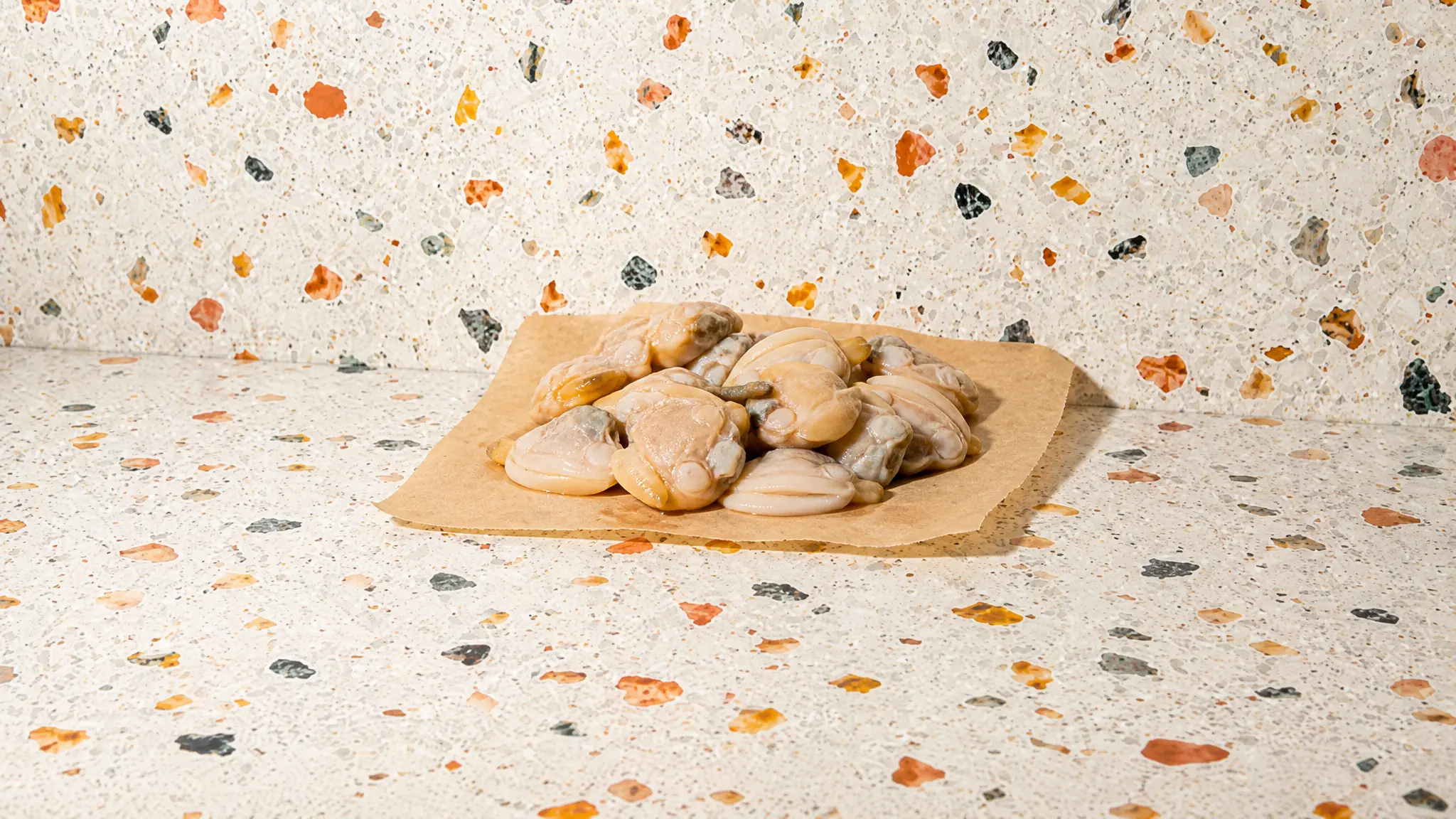
Clams
Shellfish
Last updated July 5, 2026. The Tummi Food Team maintains this Can I Feed This safety guide guide. Supporting links appear in Sources when available.



Clinically reviewed by Andria Procopio and Arefa Mohamed
Direct answer
Can babies eat Clams?
Babies can be offered thoroughly cooked clams from around 6 months, once they show the developmental signs of readiness for solid food. Do not serve raw or lightly cooked clams, and finely mince or puree the cooked clam meat into a texture the baby can manage.
- Serve Age6+months
Most babies start solids around 6 months once they show readiness signs. Match the texture and serving size to your baby's skills.
- No Allergens
Clams is not flagged as one of the major allergens tracked in this database. Still watch your baby closely when serving any new food.
- Choking Risk123454
Higher choking risk. Watch the prep steps closely, especially because this food can be hard, slippery, and fibrous or stringy.
This guide is for everyday food prep questions. Ask your pediatrician about medical concerns, feeding delays, allergy plans, or serious reactions.
How Do You Serve Clams?
How to serve Clams to babies 6 months and older
- 1Use only thoroughly cooked or canned clams—remove shells, drain well, and finely chop or puree before mixing into a smooth, scoopable base like mashed vegetables, plain yogurt, or sour cream.
- 2Offer a very small amount (about ½ teaspoon) on a spoon the first time and wait 2–3 days before giving more to monitor for allergic reactions.
- 3Keep all pieces tiny and very soft—no threads or visible chunks; cut or mash whole clams well to eliminate choking hazards.
- 4If there’s a family history of shellfish allergy or past reactions, check with your pediatrician before offering clams. Seek emergency care for difficulty breathing, swelling, hives, or other severe symptoms.
How to serve Clams to babies 9 months and older
- 1Finely chop or thinly slice fully cooked clams into very small, bite-sized pieces to reduce slipperiness and choking risk.
- 2Serve plain or gently stir into warm pasta, rice, or stews so the clam pieces are spread out and easier to handle.
- 3Offer small portions on a shallow dish and supervise while the child eats. Check for chewy pieces and remove them before serving.
- 4Introduce clams gradually and watch closely for any signs of an allergic reaction, especially on first exposures.
How to serve Clams to babies 18 months and older
- 1Thoroughly cook and cool clams: steam or simmer until fully cooked, remove shells and any tough bits, then let cool to lukewarm before serving.
- 2Cut into soft, pea-sized pieces (about half the width of a little finger) so they’re easy to chew.
- 3Seat the child upright in a high chair and offer a small fork or spoon to encourage self-feeding; stay within arm’s reach and supervise closely.
- 4Serve with a soft accompaniment (mashed potato, soft pasta, or plain yogurt) to help with chewing and adjust texture as needed.
- 5Offer clams alone first and wait 2–3 days before introducing other new foods to monitor for reactions; consult your pediatrician if there’s any family history of seafood allergy.
How to serve Clams to babies 24 months and older
- 1Cook clams thoroughly—steam or boil until shells open and the meat is opaque and firm; discard any that don’t open.
- 2Begin with small, soft pieces and only offer a whole cooked clam after you’ve demonstrated placing food on the back teeth and the child reliably chews with their molars.
- 3Always seat the child upright and supervise closely. Offer one at a time and wait until they’re chewing well before giving another.
- 4Avoid raw clams and prefer well-cooked clams to reduce foodborne illness risk, and check with your pediatrician if there’s any family or personal history of shellfish allergy.
Is Clams a Common Allergen?
Clams are mollusk shellfish and can trigger shellfish allergies. People with shellfish allergy may react to clams, and reactions can be severe (including anaphylaxis); some individuals allergic to crustaceans tolerate mollusks, but cross-reactions are possible. If a child has a known shellfish allergy, avoid clams and watch for cross-contact; consult an allergist for testing and personalized guidance.
Is Clams a Choking Hazard?
Elevated Choking Risk
Clams are rubbery, slippery, and often round, which increases their choking risk for young children. Stay within an arm’s reach and closely supervise any time clams are offered, watching for signs of gagging or choking. Parents should refresh their knowledge of choking first aid so they’re ready to act quickly if needed.
Have More Questions?
No, do not serve raw or lightly cooked clams to a baby because they increase the risk of food poisoning. Offer only thoroughly cooked clam meat in a texture the baby can manage.
No, raw or lightly cooked clams should not be served to babies because they increase the risk of food poisoning. Thoroughly cooked clams may be introduced from around 6 months once the baby shows the developmental signs of readiness for solid food, with the meat prepared in a texture the baby can manage.
Yes, thoroughly cooked clam puree can be frozen for later use. Transfer it promptly to a tightly sealed freezer-safe container, and discard any puree that has already been served from the baby's bowl.
Offer a small amount of thoroughly cooked clam when introducing it, without relying on a fixed portion. Introduce shellfish separately from other new allergenic foods so a reaction is easier to identify; seek individual advice before introduction if the baby has a diagnosed food allergy or eczema, or there is a family history of allergic disease.
To reduce choking risk, remove the shell and finely mince or puree thoroughly cooked clam meat into a soft food, adjusting the texture to the baby's current eating skills. Keep the baby upright and supervise closely throughout the meal.
Save Clams to your food log
Track foods, reactions, and prep notes in Tummi when you want to keep your baby's feeding history in one place.
Sources
- Foods That Can Cause Food Poisoning | Food Safety - CDC cdc.gov
- Developmental toxicity of cadmium in infants and children: a review pmc.ncbi.nlm.nih.gov
- About Vibrio Infection - CDC cdc.gov
- Shellfish allergy (Lopata et al., 2010) pubmed.ncbi.nlm.nih.gov
- Questions and Answers Regarding Food Allergen Labeling (Edition 5) - FDA fda.gov
- Choosing and Making Safe Foods - Kids With Food Allergies kidswithfoodallergies.org
- Shellfish - FoodAllergy.org (Food Allergy Research & Education) foodallergy.org
- Clinical Relevance of Cross-Reactivity in Food Allergy (Cox et al., 2021) pubmed.ncbi.nlm.nih.gov
What Other Shellfish Can Babies Eat?
See all →

Source-Linked Guidance
See the evidence behind the guide.
Food guides show direct links to public-health guidance and research when supporting references are available. Source inclusion does not imply endorsement.
 Centers for Disease Control and Prevention
Developmental milestones, nutrition guidelines, and allergen introduction timelines.
 American Academy of Pediatrics
Evidence-based feeding recommendations from the leading pediatric authority.
 National Institutes of Health
Peer-reviewed research on infant nutrition, allergies, and food safety.