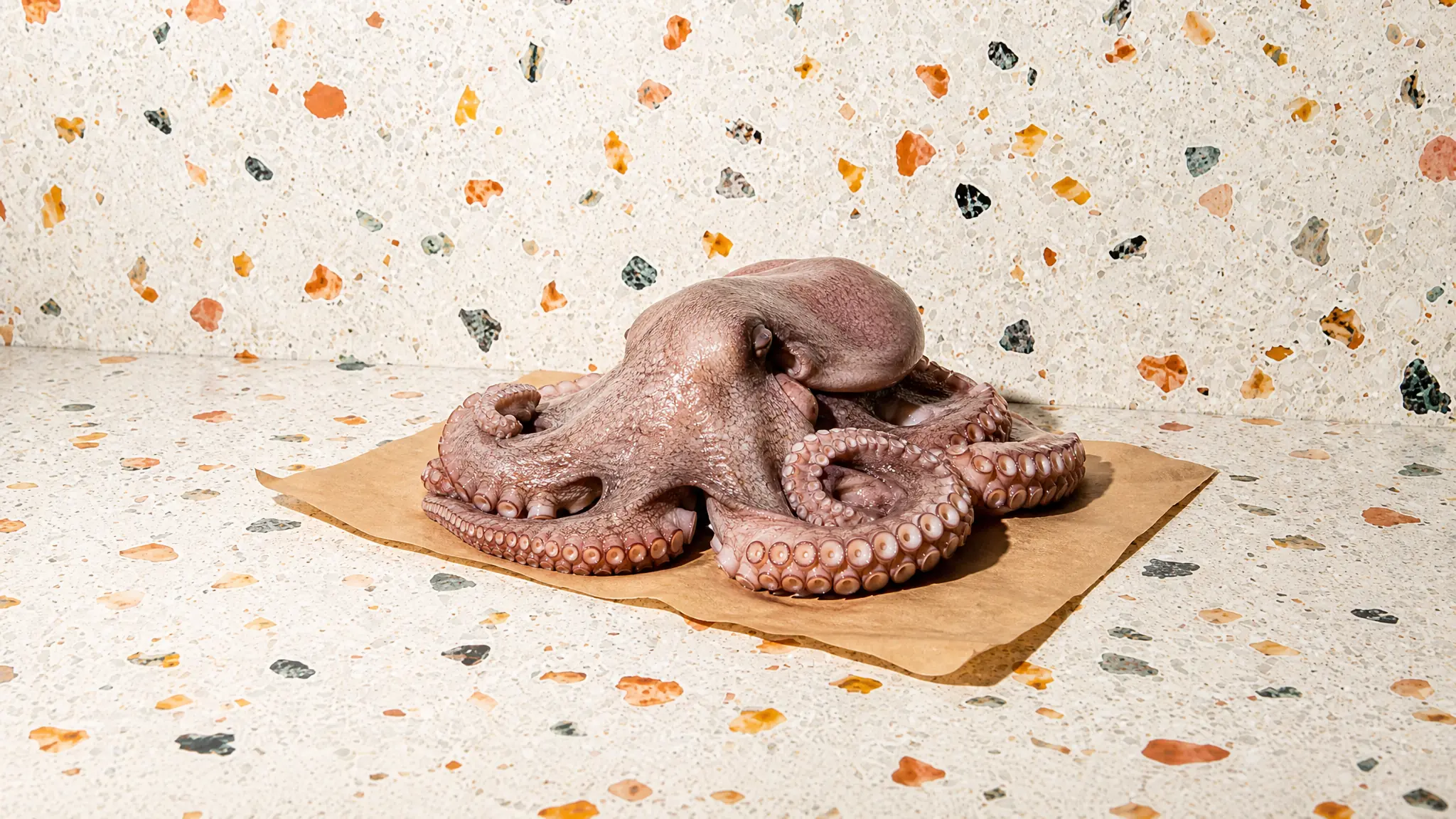
Octopus
Shellfish
Last updated July 5, 2026. The Tummi Food Team maintains this Can I Feed This safety guide guide. Supporting links appear in Sources when available.



Clinically reviewed by Andria Procopio and Arefa Mohamed
Direct answer
Can babies eat Octopus?
Octopus can be offered from around 6 months once a baby is developmentally ready for solid foods, provided it is thoroughly cooked until tender and mashed or finely chopped to match the baby's eating skills.
- Serve Age6+months
Most babies start solids around 6 months once they show readiness signs. Match the texture and serving size to your baby's skills.
- No Allergens
Octopus is not flagged as one of the major allergens tracked in this database. Still watch your baby closely when serving any new food.
- Choking Risk123452
Lower choking risk when served in the right texture. Always supervise meals and adjust the shape for your baby.
This guide is for everyday food prep questions. Ask your pediatrician about medical concerns, feeding delays, allergy plans, or serious reactions.
How Do You Serve Octopus?
How to serve Octopus to babies 12 months and older
- 1Slice cooked octopus arms lengthwise into thin matchstick shapes so pieces lie flat and cannot roll or be swallowed whole.
- 2Do not offer whole tentacles or cylindrical slices—these can be a choking hazard.
- 3Cook until tender: either simmer slowly until soft or briefly sear after tenderizing; test tenderness by piercing with a fork to ensure it’s easy to chew.
- 4Stay within arm’s reach while the child eats, offer small portions, and remove any long or slippery pieces immediately.
How to serve Octopus to babies 18 months and older
- 1Cook octopus until very tender—simmer or braise about 45–60 minutes or until a fork pierces easily to reduce chewiness.
- 2Slice lengthwise into thin, flat, bite-sized pieces with irregular shapes (avoid round or tubular pieces) so they lie flat and are easier to chew.
- 3Remove any tough skin or connective tissue and test a piece yourself before serving. Avoid chewy pieces.
- 4Serve small portions, supervise closely while eating, and consider a soft dipping sauce or lightly mashed accompaniment to help swallowing if needed.
How to serve Octopus: Varies
- 1Match the serving texture to your child’s chewing ability: offer whole tentacles only if they can chew confidently, otherwise slice lengthwise into thin strips to reduce choking risk.
- 2Cook until tender—octopus can be chewy, so slow-simmer or braise it until soft, then cool before serving.
- 3Offer a small first portion and watch for any allergic reaction for a suitable observation period before giving more.
- 4Limit frequency because of potential mercury and sodium; always supervise meals and ensure the child is seated and focused while eating.
Is Octopus a Common Allergen?
Octopus is a molluscan shellfish and can cause shellfish allergy reactions in susceptible people; some individuals allergic to shellfish may react to octopus. Cross‑reactivity with other mollusks and sometimes crustaceans is possible, and reactions can be severe (including anaphylaxis). If a child has a known shellfish allergy, avoid octopus and be cautious about cross‑contact in restaurants; consult an allergist for testing and advice.
Is Octopus a Choking Hazard?
Low Choking Risk
Cooked octopus can be firm and rubbery and—because many pieces are cylindrical or round—poses a notable choking risk for young children. Stay within an arm’s reach and watch closely for gagging or signs of trouble so you can quickly remove any unsafe pieces. Offer cautiously and only when your child shows the chewing skills to handle chewy textures.
Have More Questions?
Octopus can be part of a baby's varied diet from around 6 months once the baby is developmentally ready. Serve it thoroughly cooked and in a tender, mashed or finely chopped form the baby can manage.
Babies can try octopus from around 6 months once they are developmentally ready for solid foods. Offer only thoroughly cooked, tender octopus in a mashed or finely chopped form suited to the baby's eating skills.
Canned octopus can be offered, but choose a low-sodium or no-salt-added product when available. Before serving, ensure the octopus is thoroughly cooked, tender, and mashed or finely chopped into a texture the baby can manage.
Cooked octopus can be a choking hazard if it remains tough or is served in large pieces. Cook it until tender, mash or finely chop it to suit the child's eating skills, seat the child upright, and watch throughout the meal.
Yes, octopus can cause an allergic reaction because it is a mollusc allergen. When introducing it, offer a small amount on its own so a reaction is easier to identify; seek individual medical advice first if the baby has a diagnosed food allergy or eczema.
Save Octopus to your food log
Track foods, reactions, and prep notes in Tummi when you want to keep your baby's feeding history in one place.
Sources
- U.S. Environmental Protection Agency — Mercury Emissions: Global Context epa.gov
- Environmental Defense Fund — EFF Seafood Selector: Octopus edf.org
- Lopata AL, O'Hehir RE, Lehrer SB (2010) — Shellfish allergy doi.org
- U.S. Food & Drug Administration — Questions and answers regarding food allergens (2022) fda.gov
- Kids with Food Allergies — Food allergen labeling kidswithfoodallergies.org
- Food Allergy Research & Education — Shellfish & Fish Allergy foodallergy.org
What Other Shellfish Can Babies Eat?
See all →
Source-Linked Guidance
See the evidence behind the guide.
Food guides show direct links to public-health guidance and research when supporting references are available. Source inclusion does not imply endorsement.
 Centers for Disease Control and Prevention
Developmental milestones, nutrition guidelines, and allergen introduction timelines.
 American Academy of Pediatrics
Evidence-based feeding recommendations from the leading pediatric authority.
 National Institutes of Health
Peer-reviewed research on infant nutrition, allergies, and food safety.