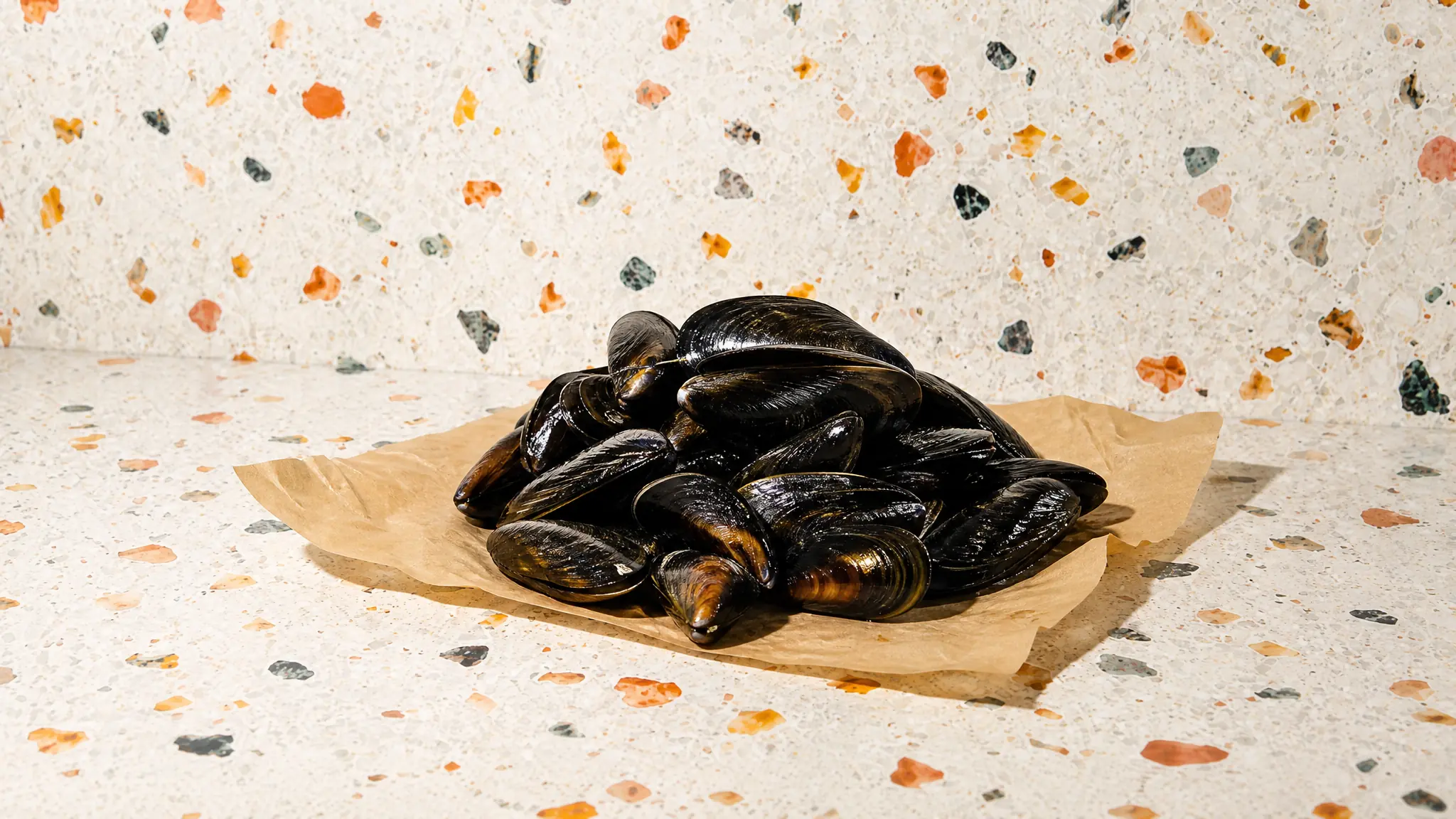

Mussels
Shellfish
Last updated July 5, 2026. The Tummi Food Team maintains this Can I Feed This safety guide guide. Supporting links appear in Sources when available.



Clinically reviewed by Andria Procopio and Arefa Mohamed
Direct answer
Can babies eat Mussels?
Yes. Babies can eat thoroughly cooked mussels from around 6 months, once they show the developmental signs of readiness for solid foods, served in a soft, manageable form.
- Serve Age6+months
Most babies start solids around 6 months once they show readiness signs. Match the texture and serving size to your baby's skills.
- No Allergens
Mussels is not flagged as one of the major allergens tracked in this database. Still watch your baby closely when serving any new food.
- Choking Risk123451
Lower choking risk when served in the right texture. Always supervise meals and adjust the shape for your baby.
This guide is for everyday food prep questions. Ask your pediatrician about medical concerns, feeding delays, allergy plans, or serious reactions.
How Do You Serve Mussels?
How to serve Mussels to babies 6 months and older
- 1Use only thoroughly cooked or well-rinsed canned mussels with all shells removed; check carefully for any tiny shell fragments and discard any pieces with shells.
- 2Finely chop or mash the mussels and blend into a soft, scoopable base such as mashed vegetables, avocado, yogurt, or purees so pieces are easy to swallow.
- 3Serve a very small initial portion to watch for reactions and ensure the texture is safe for your child.
- 4Refrigerate leftovers within 2 hours and use within 24–48 hours. Reheat until hot before serving and let cool to a safe temperature.
How to serve Mussels to babies 9 months and older
- 1Cook mussels until the meat is tender and remove all shells; discard any shell fragments before serving.
- 2Cut the mussel meat into very small, thin pieces or finely chop so pieces aren’t slippery or clumped together, and test a piece to ensure it’s soft enough to mash with a fork.
- 3Offer plain on the tray or mix into small pasta, rice, or stews so pieces stick together and are easier to pick up.
- 4Always check the temperature before serving and stay within arm’s reach while the baby eats to quickly respond to any choking risk.
How to serve Mussels to babies 18 months and older
- 1Use fully cooked mussels and cut them into very small pieces (pea-sized) or thin strips that are easy for a toddler to chew.
- 2Remove all shells and check for fragments by running pieces between your fingers. Do not serve any mussels with shell pieces.
- 3If the mussels are still firm, finely chop or mash them and mix into spoonable foods (e.g., mashed potatoes, yogurt, or soft pasta) so the texture is easier to handle.
- 4Serve at a warm, not hot, temperature and offer only small bites while supervising closely to encourage chewing before swallowing.
- 5Introduce mussels as an allergen at home when the child is well: give a small initial amount, watch for reactions, and consult your pediatrician if you have concerns.
How to serve Mussels to babies 24 months and older
- 1Cook fresh mussels until shells open and the meat is opaque; if using canned mussels, rinse and drain them before serving.
- 2Remove all shells and check for small shell fragments, then cut mussel meat into small, soft pieces your child can manage.
- 3Demonstrate chewing on the back teeth and only offer mussels once your child reliably breaks soft foods into tiny pieces.
- 4Serve small portions at a cool, safe temperature, supervise every bite, and avoid added salt or high‑sodium canned varieties.
- 5Introduce mussels alone and wait 2–3 days to monitor for allergic reactions; seek immediate care for hives, swelling, vomiting, or breathing changes.
Is Mussels a Common Allergen?
Mussels are molluscan shellfish and are a known shellfish allergen; people with shellfish allergy can have mild to severe (including anaphylactic) reactions to mussels. Cross-reactivity between mollusks and other shellfish is possible, so avoid mussels if a shellfish allergy is suspected or confirmed, and follow emergency plans (antihistamines/epinephrine) as advised by your clinician. Also note occasional safety advisories for mussels (e.g., recalls or contamination) — check local guidance before serving.
Is Mussels a Choking Hazard?
Low Choking Risk
Mussels are firm, rubbery, and slippery, which raises their choking risk for infants and toddlers. Caregivers should stay within arm’s reach and be especially vigilant for signs of choking versus gagging when mussels are offered. Make sure anyone feeding the child knows infant and toddler choking first aid and how to respond quickly.
Have More Questions?
Yes. Mussels can be introduced from around 6 months once a baby shows the developmental signs of readiness for solid foods; cook them thoroughly and serve them in a soft, manageable form to reduce choking risk.
Yes. Thoroughly cooked mussels can be included as one of the varied foods offered after a baby starts solids, provided they are prepared in a soft, manageable form without added salt.
It depends. Mussels can trigger an allergic reaction, so a baby with a diagnosed mussel or shellfish allergy should not be given them; if the baby has another diagnosed food allergy, eczema, or a relevant family history, ask their GP or health visitor for individual advice before introduction.
Yes. Mussels are firm and slippery, which pose a choking risk, so they should be finely chopped or pureed when served to babies and always closely supervised.
No. Do not serve raw or lightly cooked mussels to a baby because they increase the risk of food poisoning; serve mussels thoroughly cooked.
Save Mussels to your food log
Track foods, reactions, and prep notes in Tummi when you want to keep your baby's feeding history in one place.
Sources
- Centers for Disease Control and Prevention — Foods that can cause food poisoning (2019) cdc.gov
- Chandravanshi L, Shiv K, Kumar S. — Developmental toxicity of cadmium in infants and children (2021) doi.org
- Centers for Disease Control and Prevention — Vibrio (2019) cdc.gov
- Lopata AL, O'Hehir RE, Lehrer SB — Shellfish allergy (2010) doi.org
- U.S. Food & Drug Administration — Questions and answers regarding food allergens; Guidance for industry (2022) fda.gov
- Kids With Food Allergies — Food allergen labeling kidswithfoodallergies.org
- Food Allergy Research & Education — Shellfish Allergy foodallergy.org
- Food Allergy Research & Education — Fish Allergy foodallergy.org
What Other Shellfish Can Babies Eat?
See all →
Source-Linked Guidance
See the evidence behind the guide.
Food guides show direct links to public-health guidance and research when supporting references are available. Source inclusion does not imply endorsement.
 Centers for Disease Control and Prevention
Developmental milestones, nutrition guidelines, and allergen introduction timelines.
 American Academy of Pediatrics
Evidence-based feeding recommendations from the leading pediatric authority.
 National Institutes of Health
Peer-reviewed research on infant nutrition, allergies, and food safety.