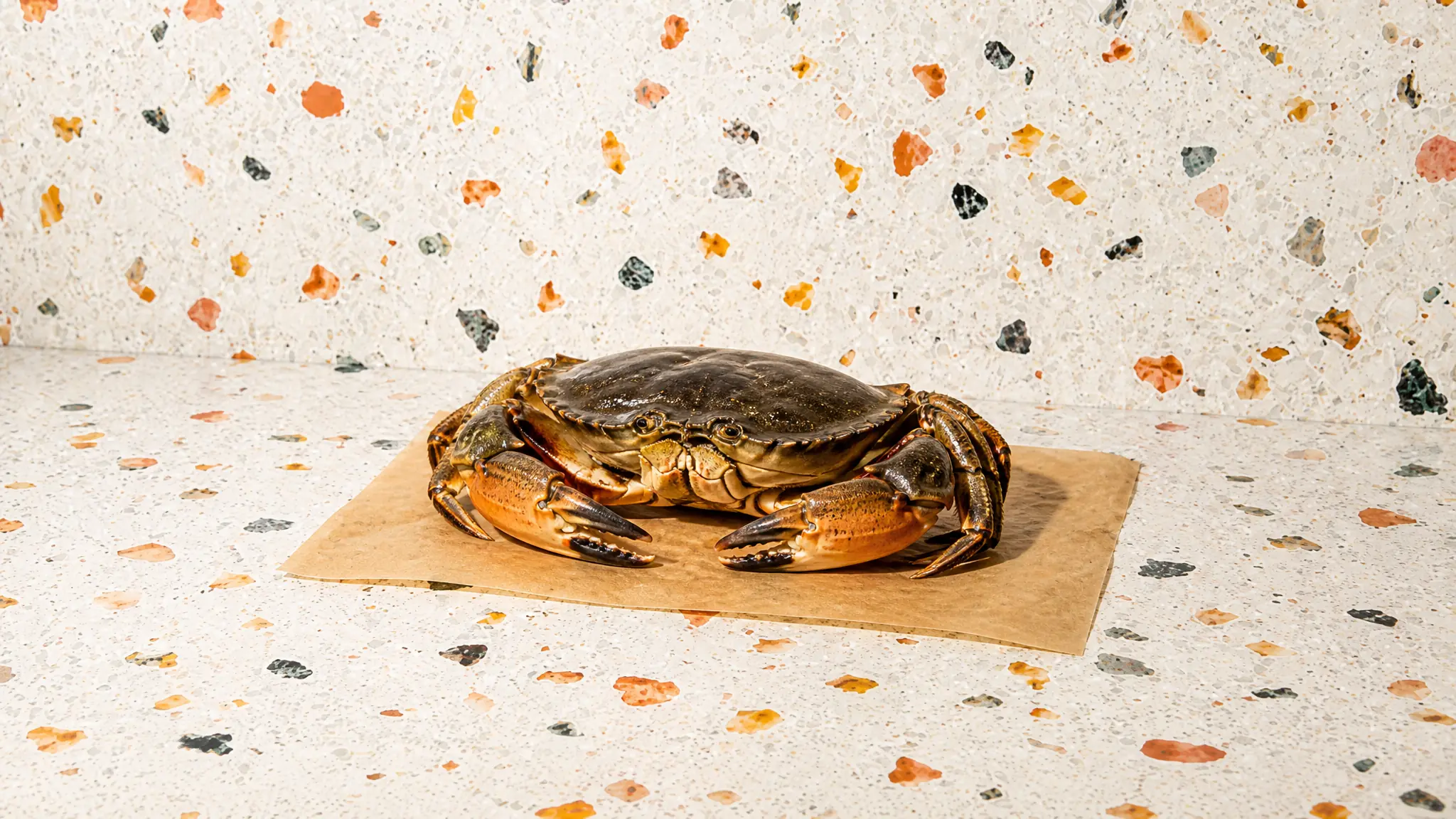
Crab
Shellfish
Last updated July 5, 2026. The Tummi Food Team maintains this Can I Feed This safety guide guide. Supporting links appear in Sources when available.



Clinically reviewed by Andria Procopio and Arefa Mohamed
Direct answer
Can babies eat Crab?
Yes, well-cooked crab can be introduced to babies around 6 months, ensuring it is thoroughly cooked to reduce foodborne illness risk.
- Serve Age6+months
Most babies start solids around 6 months once they show readiness signs. Match the texture and serving size to your baby's skills.
- Allergens
Crab is flagged for shellfish. Introduce common allergens in a baby-safe form and follow your clinician's advice if your baby is higher risk.
- Choking Risk123451
Lower choking risk when served in the right texture. Always supervise meals and adjust the shape for your baby.
This guide is for everyday food prep questions. Ask your pediatrician about medical concerns, feeding delays, allergy plans, or serious reactions.
How Do You Serve Crab?
How to serve Crab: 3 years +
- 1Offer fully cooked crab meat or small crab cakes and remove any shell fragments or bones; flake or chop into bite-sized, small pieces to reduce choking risk.
- 2Avoid firm, round, or cylindrical pieces (for example whole legs or dense patties) that are hard to chew; reshape or gently mash crab cakes so textures are soft and irregular.
- 3Let food cool to a safe temperature and serve on a stable surface; supervise practice removing meat from shells and offer a small fork or tweezers with calm coaching.
- 4Keep the eating area calm and seated, encourage slow, small bites, and always check each serving for stray shell pieces before eating.
How to serve Crab to babies 6 months and older
- 1Use fully cooked, shell-free crab meat finely chopped or shredded and mix it into soft, scoopable foods (e.g., mashed avocado, mashed potatoes, or pureed vegetables) so it’s easy to swallow.
- 2Offer one large, moist crab cake that’s very tender; cut into thin, flat pieces to avoid small, rounded, slippery shapes that increase choking risk.
- 3Remove all shells, cartilage, and stringy bits and avoid firm or whole chunks that could block the airway.
- 4Serve small amounts, watch closely while the baby eats, and introduce crab only after other first foods are tolerated — seek care if there are signs of an allergic reaction (hives, vomiting, swelling, or difficulty breathing).
How to serve Crab to babies 9 months and older
- 1Shred fully cooked crab meat and remove all shell fragments; serve as small, easy-to-pick pieces to encourage the pincer grasp.
- 2Finely chop crab and stir into scoopable foods (yogurt, mashed potato, soft pasta) so it holds together and is easy to pick up.
- 3For crab cakes, make them moist and gently flattened, then break into flat, bite-sized pieces—avoid rounded or slippery shapes that can roll and become a choking hazard.
- 4Check carefully for tiny shell pieces and supervise during meals; if this is the child's first shellfish exposure, consult your pediatrician about allergy risk.
How to serve Crab to babies 18 months and older
- 1Cook and clean: Steam or gently pan-cook crab until fully opaque and very tender, then pick out and discard all shell fragments, cartilage, and dark bits so only soft meat remains.
- 2Cut and serve: Flake or finely chop the meat into small, easy-to-chew pieces—soft shreds or bite-sized chunks are ideal; avoid long strands or firm, cylindrical pieces that increase choking risk.
- 3Texture check: Press a piece with a fork to confirm it breaks apart easily and feels very soft before offering it.
- 4Supervise and pace: Always watch during meals, give small amounts at a time, keep the child seated, and model slow, calm chewing.
Is Crab a Common Allergen?
Crab is a shellfish allergen and can cause severe allergic reactions (including anaphylaxis) in sensitized individuals. Parents of children with known shellfish allergy should avoid crab and other crustaceans, keep emergency medication available, and be cautious of cross-contact in restaurants and packaged foods. Cooking does not reliably eliminate the allergen; if your child has no history of shellfish allergy, crab is generally safe but introduce under guidance if there is a family history of allergies.
Is Crab a Choking Hazard?
Low Choking Risk
Crab can be a choking hazard for babies because the meat is often chewy, slippery, and can form rounded or firm pieces that may block the airway. Closely watch babies while they eat and be ready to respond quickly if they gag or show signs of choking.
Have More Questions?
Yes. For babies, be sure to cook crab thoroughly and remove the shell to reduce choking hazards and foodborne illness risks.
It depends. Crab can be part of a baby’s diet after 6 months if well-cooked, but always watch for potential allergic reactions and ensure the meat is tender and appropriately prepared.
Yes. Crab is rich in nutrients that support a baby’s growth and development, as long as it is cooked properly and introduced carefully.
It can be. Fresh or frozen crab generally has lower sodium than canned or processed crab products, but always check labels and serve in moderation.
Yes. Crab is a shellfish, which is a common allergen, and may cause reactions in sensitive babies. Consult an allergist if unsure about introducing shellfish.
Save Crab to your food log
Track foods, reactions, and prep notes in Tummi when you want to keep your baby's feeding history in one place.
Sources
- Centers for Disease Control and Prevention — Foods that can cause food poisoning cdc.gov
- Soliman G. A. (2018) — Dietary Cholesterol and the Lack of Evidence in Cardiovascular Disease mdpi.com
- USDA — Crustaceans, crab, dungeness, cooked, moist heat (FoodData Central) fdc.nal.usda.gov
- Lopata A.L., O'Hehir R.E., Lehrer S.B. (2010) — Shellfish allergy (Clinical and Experimental Allergy) doi.org
- Food Allergy Research & Education — Fish Allergy foodallergy.org
- Cleveland Clinic — Sulfite sensitivity my.clevelandclinic.org
- Centers for Disease Control and Prevention — Vibrio cdc.gov
- Centre for Food Safety — Crab roe and dioxins cfs.gov.hk
- Maine Department of Health & Human Services — Saltwater fish & lobster tomalley safe eating guidelines maine.gov
- EFSA — Consumption of brown crab meat efsa.europa.eu
What Other Shellfish Can Babies Eat?
See all →


Source-Linked Guidance
See the evidence behind the guide.
Food guides show direct links to public-health guidance and research when supporting references are available. Source inclusion does not imply endorsement.
 Centers for Disease Control and Prevention
Developmental milestones, nutrition guidelines, and allergen introduction timelines.
 American Academy of Pediatrics
Evidence-based feeding recommendations from the leading pediatric authority.
 National Institutes of Health
Peer-reviewed research on infant nutrition, allergies, and food safety.