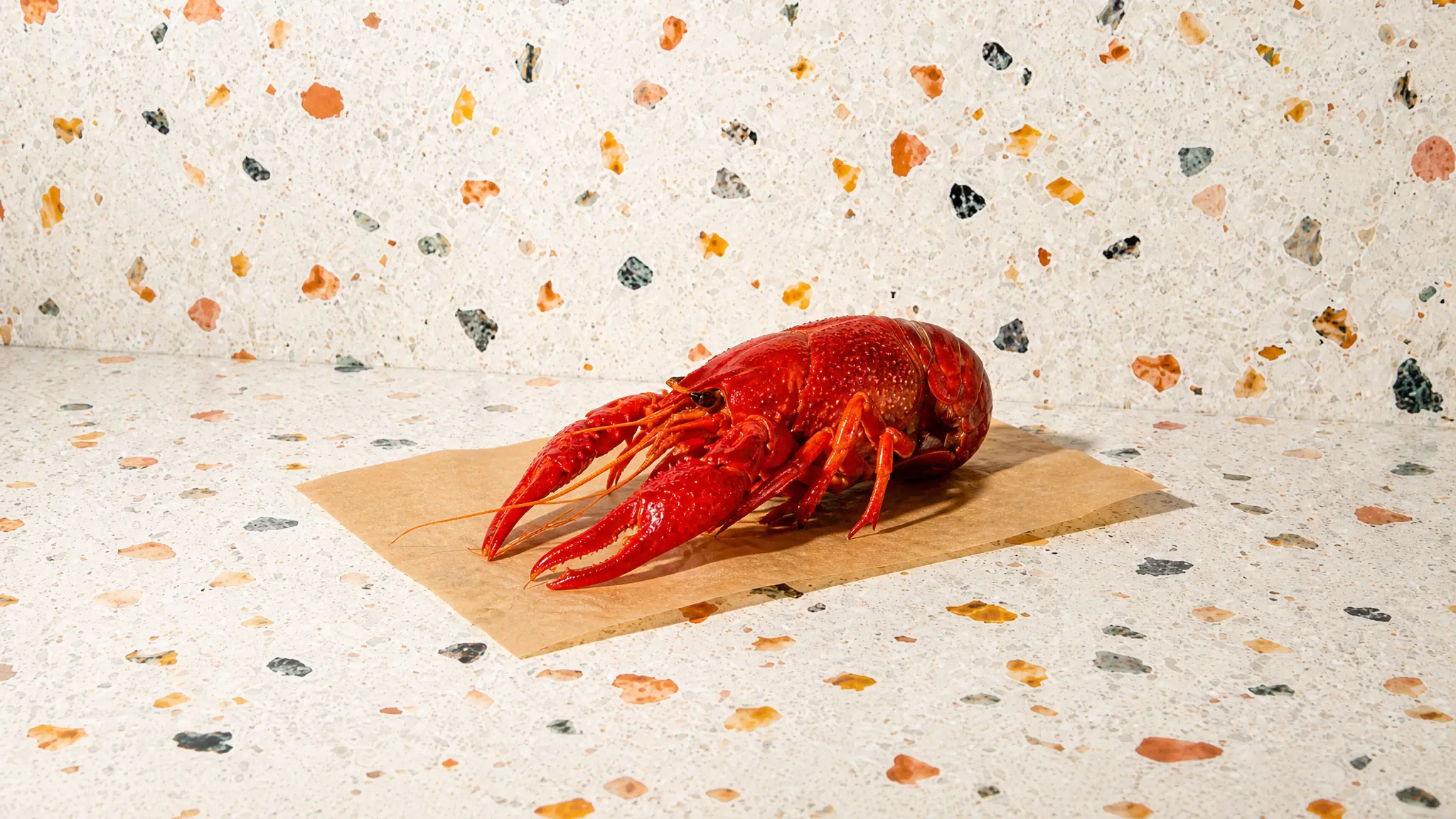

Crawfish (Crayfish)
Shellfish
Last updated July 5, 2026. The Tummi Food Team maintains this Can I Feed This safety guide guide. Supporting links appear in Sources when available.



Clinically reviewed by Andria Procopio and Arefa Mohamed
Direct answer
Can babies eat Crawfish (Crayfish)?
Babies can be offered crawfish around 6 months, once they are developmentally ready for solid foods. Serve only thoroughly cooked crawfish meat with every piece of shell removed, prepared in a texture appropriate for the baby's feeding skills.
- Serve Age6+months
Most babies start solids around 6 months once they show readiness signs. Match the texture and serving size to your baby's skills.
- Allergens
Crawfish (Crayfish) is flagged for shellfish. Introduce common allergens in a baby-safe form and follow your clinician's advice if your baby is higher risk.
- Choking Risk123452
Lower choking risk when served in the right texture. Always supervise meals and adjust the shape for your baby.
This guide is for everyday food prep questions. Ask your pediatrician about medical concerns, feeding delays, allergy plans, or serious reactions.
How Do You Serve Crawfish (Crayfish)?
How to serve Crawfish (Crayfish) to a 12-month-old baby
- 1Offer only thoroughly cooked crawfish meat, finely chopped or shredded; start with a very small taste to check tolerance.
- 2Give the plain meat first and watch for any allergic signs for 3–5 days before offering larger amounts or combining with other foods.
- 3Fold tiny pieces into soft, scoopable foods (mashed root vegetables, avocado, or full-fat yogurt) so bites are easy to swallow.
- 4Keep pieces very small to reduce choking risk, and do not use crawfish-boil liquid because it has very high sodium.
How to serve Crawfish (Crayfish) to a 18-month-old baby
- 1Peel and remove all shells, tails, and veins; serve only the soft tail meat formed into small balls, mini burgers, or patties to make them easy to grasp.
- 2Ensure crawfish is fully cooked and cut or mash into small, manageable pieces to reduce choking risk.
- 3Introduce seasonings gradually—use mild herbs and very little salt or spice. Keep salt low while you test tolerance.
- 4For softer textures, mix the meat into grains, pastas, or mashed vegetables; always supervise feeding and watch for signs of shellfish allergy.
How to serve Crawfish (Crayfish) to a 24-month-old baby
- 1Ensure crawfish are fully cooked and completely peeled, then remove all shells and tail bits so only soft meat remains and is easy to chew.
- 2Finely chop or shred the meat and mix into familiar dishes like pasta, rice, or vegetable blends to keep textures smooth and flavors mild.
- 3Use minimal seasoning—light salt and mild herbs work best. Avoid undercooked shellfish.
- 4Offer very small portions at first and watch closely for any signs of allergic reaction for 48–72 hours after introduction.
- 5If doing a brief supervised shell-cracking demonstration, only let the child handle pre-cleaned meat under close adult guidance and never let them eat while handling shells.
Is Crawfish (Crayfish) a Common Allergen?
Crawfish (crayfish) are crustacean shellfish and can trigger shellfish allergy; people allergic to shellfish often react to multiple crustaceans (shrimp, crab, lobster) due to shared proteins like tropomyosin. Allergic reactions can be severe (including anaphylaxis) and are not reliably prevented by cooking. Children with known shellfish allergy should avoid crawfish, watch for cross-contact at seafood boils or in mixed dishes, and carry/know how to use prescribed epinephrine—consult an allergist for testing and management.
Is Crawfish (Crayfish) a Choking Hazard?
Low Choking Risk
Crawfish are a common choking hazard for babies because the meat can be tough, stringy, and may form large pieces that are hard for young jaws to manage. Always supervise babies closely during meals, stay within arm’s reach, and be prepared to respond if your baby gags, coughs, or shows signs of choking.
Have More Questions?
Babies can be offered crawfish around 6 months, once they are developmentally ready for solid foods. Offer only thoroughly cooked crawfish meat, with all shell removed, and introduce it on its own in a small amount so a reaction is easier to identify.
Crawfish can contribute high-quality protein and other nutrients to a baby's varied diet. It is also a major crustacean-shellfish allergen and should be served thoroughly cooked, without any shell, in a texture appropriate for the baby's feeding skills.
Crawfish can pose a choking risk if shell remains or the meat is served in tough or large pieces. Remove every piece of shell, prepare the cooked meat in a texture suited to your baby's feeding skills, and watch your baby throughout the meal.
Yes, crawfish is a crustacean shellfish, one of the major food-allergen groups. Introduce thoroughly cooked crawfish on its own in a small amount and watch for a reaction; if your baby has a diagnosed food allergy or eczema, or there is a family history of allergic disease, speak with your GP or health visitor before introduction.
Serve crawfish thoroughly cooked, with every piece of shell removed, and prepare the meat in a texture appropriate for your baby's feeding skills. Avoid raw or undercooked crawfish, do not offer tough or large pieces, and watch your baby throughout the meal.
Save Crawfish (Crayfish) to your food log
Track foods, reactions, and prep notes in Tummi when you want to keep your baby's feeding history in one place.
Sources
- Mercury Exposure and Children's Health pmc.ncbi.nlm.nih.gov
- Mercury Levels in Commercial Fish and Shellfish (1990-2012) - FDA fda.gov
- Mercury and Trace Elements in Crayfish from Northern California pubmed.ncbi.nlm.nih.gov
- Red swamp crayfish - Seafood Watch seafoodwatch.org
- Shellfish allergy (Clin Exp Allergy, 2010) pubmed.ncbi.nlm.nih.gov
- Shellfish - Food Allergy Research & Education (FARE) foodallergy.org
What Other Shellfish Can Babies Eat?
See all →





Source-Linked Guidance
See the evidence behind the guide.
Food guides show direct links to public-health guidance and research when supporting references are available. Source inclusion does not imply endorsement.
 Centers for Disease Control and Prevention
Developmental milestones, nutrition guidelines, and allergen introduction timelines.
 American Academy of Pediatrics
Evidence-based feeding recommendations from the leading pediatric authority.
 National Institutes of Health
Peer-reviewed research on infant nutrition, allergies, and food safety.