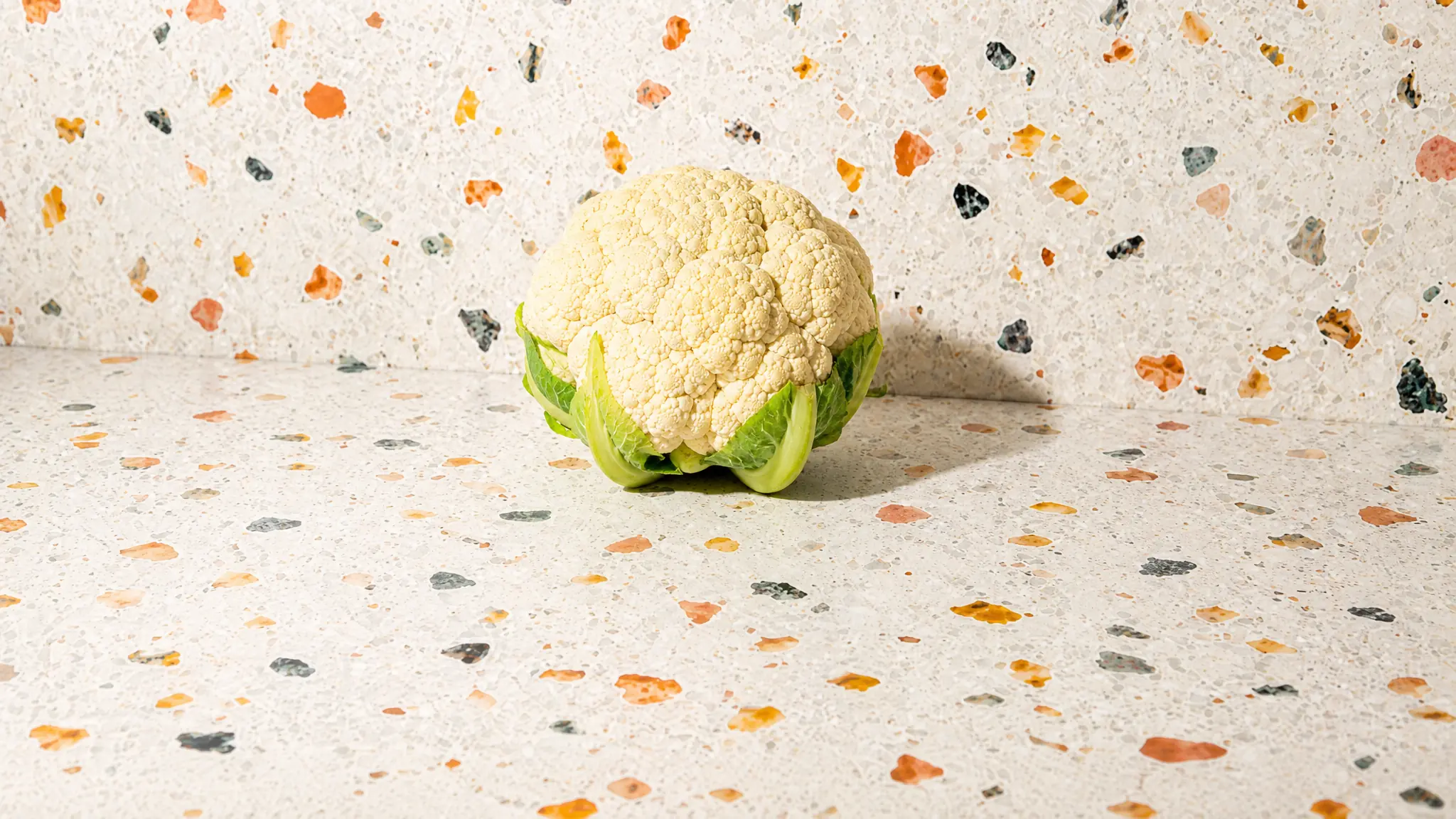
Cauliflower
Vegetable
Last updated July 5, 2026. The Tummi Food Team maintains this Can I Feed This safety guide guide. Supporting links appear in Sources when available.



Clinically reviewed by Andria Procopio and Arefa Mohamed
Direct answer
Can babies eat Cauliflower?
Yes, cauliflower can be introduced around 6 months of age, prepared in an age-appropriate soft texture for babies starting solids.
- Serve Age6+months
Most babies start solids around 6 months once they show readiness signs. Match the texture and serving size to your baby's skills.
- No Allergens
Cauliflower is not flagged as one of the major allergens tracked in this database. Still watch your baby closely when serving any new food.
- Choking Risk123452
Lower choking risk when served in the right texture. Always supervise meals and adjust the shape for your baby.
This guide is for everyday food prep questions. Ask your pediatrician about medical concerns, feeding delays, allergy plans, or serious reactions.
How Do You Serve Cauliflower?
How to serve Cauliflower to babies 6 months and older
- 1Steam a large floret until very soft — about the width of three adult fingers — so baby can easily grasp and gum it.
- 2If using the stalk, peel away tough outer layers and cut into rectangular sticks about the thickness and length of two adult fingers.
- 3For firmer florets, split them lengthwise to remove round stems, or mash/finely chop so baby can scoop with hands or a spoon.
- 4Always offer while the baby is sitting upright and supervised; check the piece by pressing with your finger — it should squash easily.
How to serve Cauliflower to babies 9 months and older
- 1Cook florets until very tender (steam, simmer, or roast until fork-tender); test softness with a fork before serving.
- 2Trim away tough stems and cut into small, soft, bite-sized pieces so they can be picked up with the pincer grasp; offer larger florets separately to model how to take bites.
- 3Aim for pieces small enough to fit easily in your child's mouth but not tiny—about the size they'd hold with thumb and forefinger. Avoid hard bits or stringy stems.
- 4Always supervise mealtimes and check the serving temperature; stay within arm's reach while your child practices self-feeding.
How to serve Cauliflower to babies 12 months and older
- 1Cook cauliflower until tender and easily pierced with a fork—about 8–10 minutes steaming or boiling—then cut into small, bite-sized florets no larger than a child’s thumb.
- 2Offer florets on their own or mixed into shared meals; preload a fork with bite-sized pieces to encourage utensil use while supervising closely.
- 3As chewing skills improve, shorten the cooking time so cauliflower is slightly firmer to provide more texture, but continue to keep pieces small and monitor eating.
- 4Keep seasonings simple (a little butter or mild herbs) and always check temperature before serving; never leave the child unattended while eating.
Is Cauliflower a Common Allergen?
Cauliflower is not a common food allergen and is not one of the major (top) allergens, but true IgE‑mediated reactions have been reported. People with pollen‑food (oral allergy) syndrome may get mouth or throat itching with raw cauliflower, and cross‑reactivity with other cruciferous vegetables can occur. Watch for cross-contact and added ingredients — cauliflower dishes are often prepared with dairy, gluten (breadcrumbs), nuts, or sesame — so check labels and preparation. If a child has known pollen‑related food reactions or develops hives, swelling, or breathing problems after eating cauliflower, seek medical care.
Is Cauliflower a Choking Hazard?
Low Choking Risk
Raw or undercooked cauliflower is firm and can be a choking hazard for babies; it increases the risk because it’s hard to chew. Always watch closely and stay within arm’s reach during feeds so you can respond quickly. Know the difference between gagging and true choking and be familiar with infant choking first aid and emergency steps.
Have More Questions?
Yes. You can store cauliflower in an airtight container in the refrigerator for 3-5 days, or freeze cooked pieces for longer storage.
Yes. You can freeze pureed cauliflower in freezer-safe containers for up to 3 months, making it convenient for future feeding sessions.
It depends. Organic cauliflower may be grown without synthetic pesticides, but both organic and conventional cauliflower are nutritious options for babies.
Yes. Combining cauliflower with other suitable vegetables or proteins can introduce your baby to new flavors and textures, but always introduce new foods gradually.
A typical portion for a baby varies, but generally 1-2 tablespoons of cooked, mashed cauliflower per feeding is suitable for young babies starting solids.
Save Cauliflower to your food log
Track foods, reactions, and prep notes in Tummi when you want to keep your baby's feeding history in one place.
Sources
- Survey of 17 elements, including rare earth elements, in chilled and non-chilled cauliflower cultivars doi.org
- Impact of Mild Oven Cooking Treatments on Carotenoids and Tocopherols of Cheddar and Depurple Cauliflower doi.org
- Effect of cooking on the concentration of bioactive compounds in broccoli and cauliflower grown in an organic system doi.org
- The safety of cruciferous plants in humans: a systematic review doi.org
- Brassica oleracea pollen, a new source of occupational allergens doi.org
What Other Vegetable Can Babies Eat?
See all →

Source-Linked Guidance
See the evidence behind the guide.
Food guides show direct links to public-health guidance and research when supporting references are available. Source inclusion does not imply endorsement.
 Centers for Disease Control and Prevention
Developmental milestones, nutrition guidelines, and allergen introduction timelines.
 American Academy of Pediatrics
Evidence-based feeding recommendations from the leading pediatric authority.
 National Institutes of Health
Peer-reviewed research on infant nutrition, allergies, and food safety.