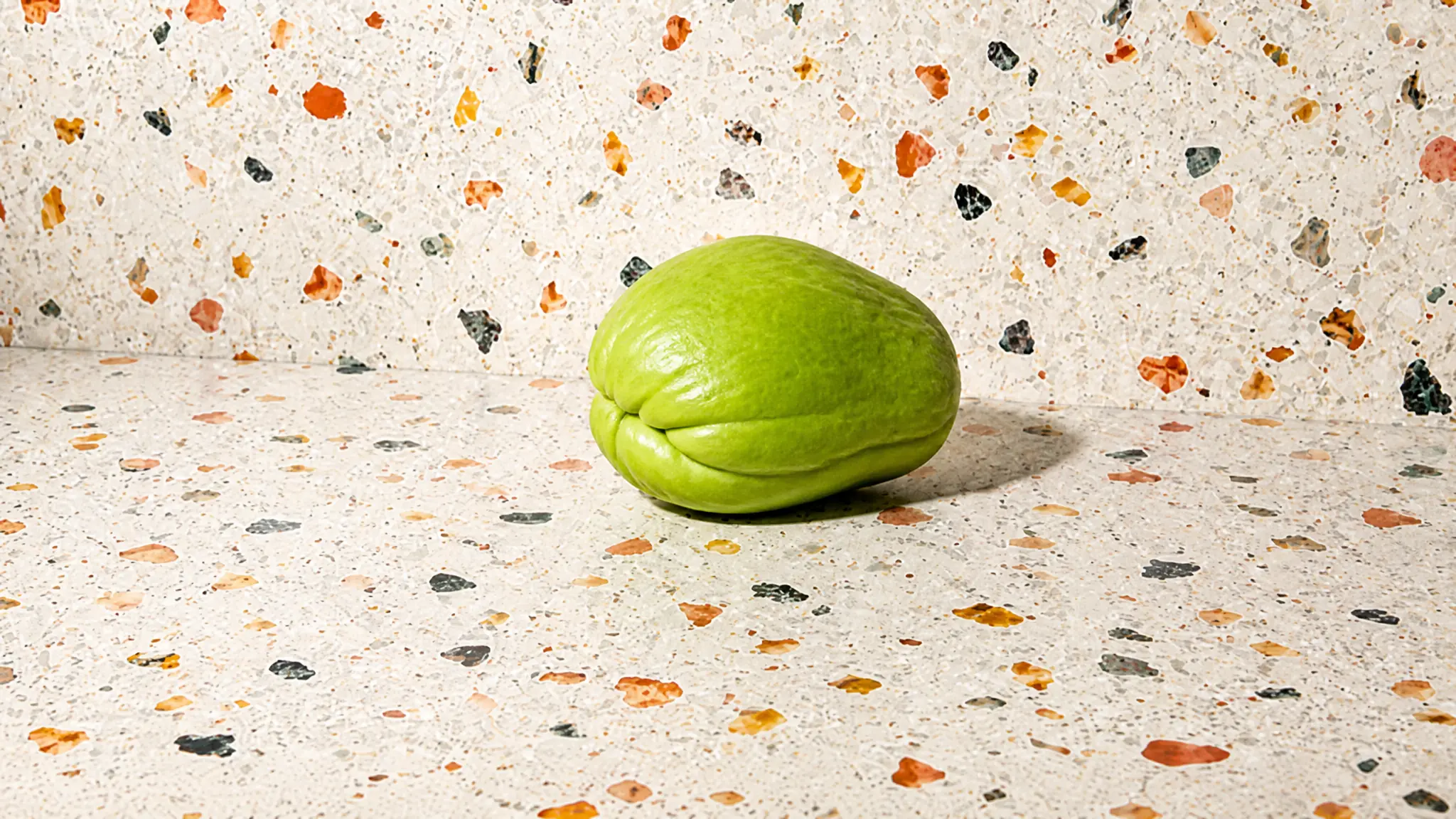
Chayote
Vegetable
Last updated July 5, 2026. The Tummi Food Team maintains this Can I Feed This safety guide guide. Supporting links appear in Sources when available.



Clinically reviewed by Andria Procopio and Arefa Mohamed
Direct answer
Can babies eat Chayote?
Yes, chayote can be introduced around 6 months of age when baby is ready for solids, prepared in an age-appropriate, cooked, and soft form.
- Serve Age6+months
Most babies start solids around 6 months once they show readiness signs. Match the texture and serving size to your baby's skills.
- No Allergens
Chayote is not flagged as one of the major allergens tracked in this database. Still watch your baby closely when serving any new food.
- Choking Risk123453
Some choking risk. Use the prep section to change the size, shape, or texture before serving.
This guide is for everyday food prep questions. Ask your pediatrician about medical concerns, feeding delays, allergy plans, or serious reactions.
How Do You Serve Chayote?
How to serve Chayote to babies 6 months and older
- 1Peel the chayote, remove and discard the seed, then simmer or steam until very soft. Test with a fork— it should break apart easily.
- 2Serve either mashed for spoon-feeding or as a large, soft wedge the child can hold and gnaw; make wedges at least fist-sized so they can’t fit whole pieces in their mouth.
- 3Keep your hands and utensils out of the child’s mouth—allow them to chew or spit out large bites and gently guide rather than pry food out.
- 4Always stay within arm’s reach while they eat, check the food temperature before serving, and watch for any signs of choking.
How to serve Chayote to babies 9 months and older
- 1Cook chayote until very soft and cut into small, bite-sized pieces so the child can practice the pincer grasp and easily mash food with their gums.
- 2Or offer larger, soft wedges or lightly mashed chayote on a pre-loaded spoon to support independent self-feeding.
- 3If serving raw, slice extremely thinly or grate finely to make chewing easier and lower choking risk.
- 4Always supervise while eating and check texture and temperature before serving; remove any tough skin or stringy parts.
How to serve Chayote to babies 12 months and older
- 1Cook chayote until very soft (steam, boil, or roast) and cut into small, easy-to-spear pieces about 1–2 cm so a fork can pierce them easily.
- 2Pre-load the fork or briefly demonstrate spearing so the child can imitate; offer one piece at a time to reduce choking risk.
- 3Serve raw chayote only when paper-thin sliced or finely grated, and start by mixing a few shreds into other foods to check chewing and acceptance.
- 4Keep portions small and use child-sized utensils — always supervise while the child practices to ensure safe chewing and swallowing.
Is Chayote a Common Allergen?
Chayote is not a common allergen and is not one of the major allergens (peanut, tree nut, dairy, egg, soy, wheat/gluten, fish, shellfish, sesame). Rare allergies to members of the Cucurbitaceae family or to fruit seeds have been reported, and the skin may contain latex-like compounds that can irritate sensitive skin — peeling or cooking the skin reduces this risk. If your child has a known latex allergy or prior reactions to squash/cucumber/melon, avoid chayote and consult an allergist before introducing it. Also watch for allergens added during preparation (e.g., butter, sauces).
Is Chayote a Choking Hazard?
Moderate Choking Risk
Raw chayote is firm, slippery, and can be difficult for babies to chew, so it poses a higher choking risk than softer foods. Stay within arm’s reach during meals, be alert for signs of gagging or choking, and be prepared to respond quickly if needed.
Have More Questions?
Yes. Chayote can be stored in the refrigerator for up to 3-4 days when kept in a plastic bag or airtight container, making it convenient for batch cooking or preparing fresh portions for your baby.
Yes. You can freeze pureed chayote in an airtight container or freezer bag for up to 3 months, allowing you to prepare in advance and have healthy, ready-to-eat options for your baby.
Yes. Choosing organic chayote can reduce exposure to pesticides, though conventional chayote is also safe if washed thoroughly, as it is naturally free from many common allergens.
Yes. You can combine chayote with other vegetables or fruits to introduce new flavors and textures to your baby, as long as all ingredients are suitable for their age and dietary needs.
A typical portion size for a baby depends on their age and appetite, but start with 1-2 tablespoons of cooked, mashed chayote and adjust based on your baby's hunger and tolerance.
Save Chayote to your food log
Track foods, reactions, and prep notes in Tummi when you want to keep your baby's feeding history in one place.
Sources
- Effect of Sechium edule var. nigrum spinosum (Chayote) on Oxidative Stress and Pro-Inflammatory Markers in Older Adults with Metabolic Syndrome: An Exploratory Study doi.org
- Chayote (Sechium edule): A review of nutritional composition, bioactivities and potential applications doi.org
- Modifications of allergenicity linked to food technologies pubmed.ncbi.nlm.nih.gov
- Butternut squash (Cucurbita moschata) dermatitis doi.org
- Allergy to pumpkin and crossreactivity to pollens and other foods doi.org
What Other Vegetable Can Babies Eat?
See all →

Source-Linked Guidance
See the evidence behind the guide.
Food guides show direct links to public-health guidance and research when supporting references are available. Source inclusion does not imply endorsement.
 Centers for Disease Control and Prevention
Developmental milestones, nutrition guidelines, and allergen introduction timelines.
 American Academy of Pediatrics
Evidence-based feeding recommendations from the leading pediatric authority.
 National Institutes of Health
Peer-reviewed research on infant nutrition, allergies, and food safety.