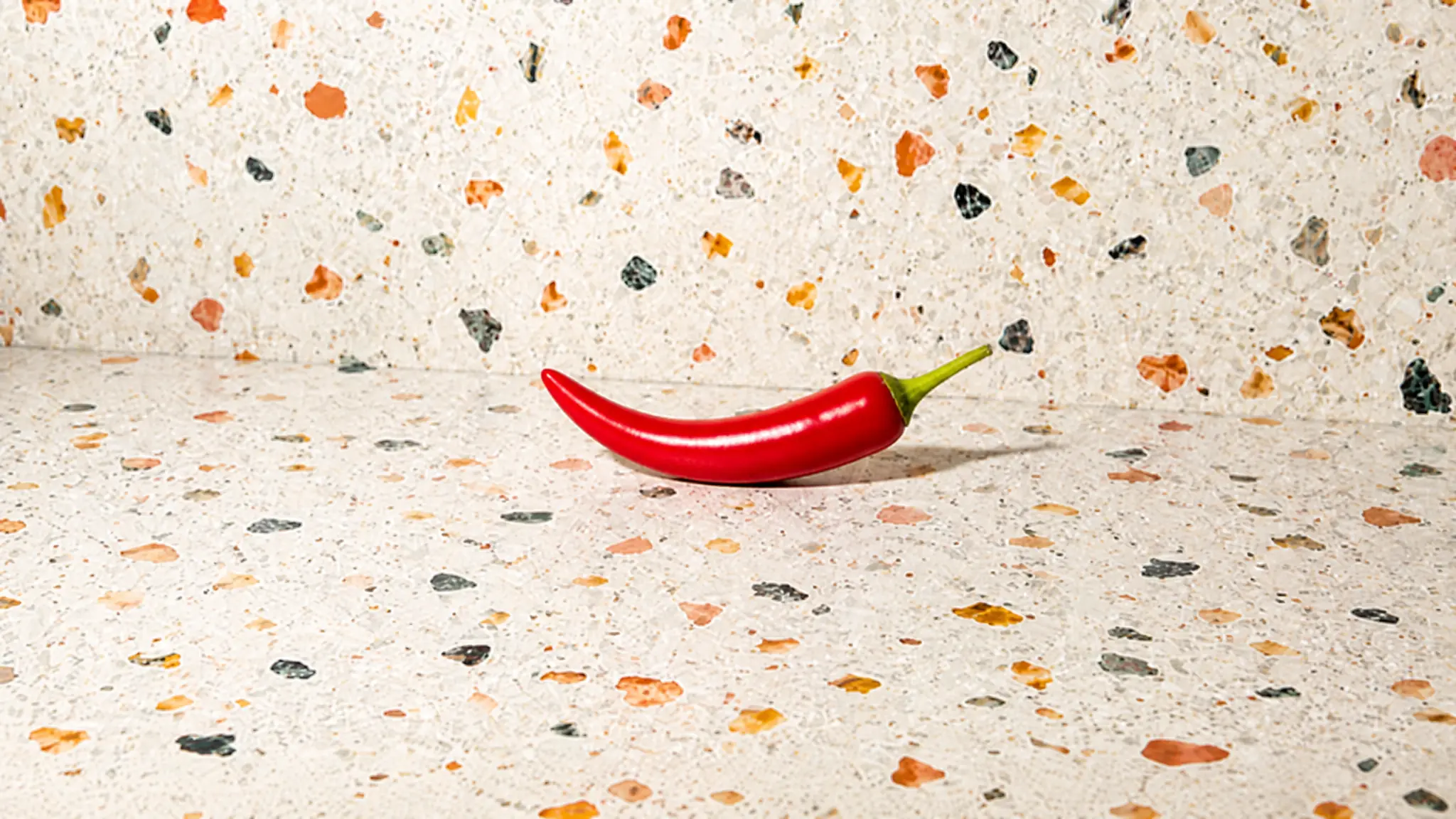
Chili Pepper
Vegetable
Last updated July 5, 2026. The Tummi Food Team maintains this Can I Feed This safety guide guide. Supporting links appear in Sources when available.



Clinically reviewed by Andria Procopio and Arefa Mohamed
Direct answer
Can babies eat Chili Pepper?
Babies can try a small amount of mild chili pepper from around 6 months, once they are developmentally ready for complementary foods. Prepare it in a soft texture suited to the baby's feeding skills, and avoid very hot or concentrated forms because capsaicin can cause burning and irritation.
- Serve Age6+months
Most babies start solids around 6 months once they show readiness signs. Match the texture and serving size to your baby's skills.
- No Allergens
Chili Pepper is not flagged as one of the major allergens tracked in this database. Still watch your baby closely when serving any new food.
- Choking Risk123453
Some choking risk. Use the prep section to change the size, shape, or texture before serving.
This guide is for everyday food prep questions. Ask your pediatrician about medical concerns, feeding delays, allergy plans, or serious reactions.
How Do You Serve Chili Pepper?
How to serve Chili Pepper to babies 6 months and older
- 1Start with a very small amount — a tiny pinch or just a few grains (about 1/16 teaspoon) stirred into a spoonful of another food so baby can sample mild heat without being overwhelmed.
- 2Mix the chili into a creamy base like mashed avocado, plain yogurt, or milk to soften the sensation and make the flavor easier to accept.
- 3Offer a single tiny taste the first time and wait 15–30 minutes while watching for rash, facial swelling, gagging, persistent coughing, or diaper irritation. Contact your pediatrician if you see severe or worsening symptoms.
- 4Keep spicy tastes occasional rather than regular until baby has tried a wide range of unspiced foods and clearly tolerates mild spice.
- 5After preparing or touching chili, wash hands and utensils and avoid touching the baby’s eyes or face to prevent transfer of chili oils.
How to serve Chili Pepper to babies 12 months and older
- 1Wash the pepper, remove seeds and the white membrane, then cut into thin strips, semi‑circles, or finely chop to mix into meals.
- 2Serve raw or cooked; roasting, sautéing, or simmering will mellow the heat and often make peppers easier to eat.
- 3Offer a creamy accompaniment (yogurt, avocado, or milk) to help neutralize spiciness, tell the child it may be spicy before they bite, and supervise to prevent them rubbing their eyes after handling peppers.
- 4Start with a very small taste to check tolerance and watch for any adverse reactions, and always wash hands and utensils after handling to avoid eye contact.
How to serve Chili Pepper to babies 18 months and older
- 1Slice chilies into thin rounds or cut larger peppers into bite-size pieces and remove stems to reduce choking risk and make pieces easy to handle.
- 2Offer very small portions and encourage tiny tastes instead of full bites so your child can adjust to the heat.
- 3Start by seasoning family dishes with a light sprinkle of chili powder—use a very small amount and increase gradually as tolerated.
- 4Serve chilies with dairy or other fatty foods (yogurt, cheese, milk) to help neutralize the heat and make tasting more comfortable.
- 5Model trying the food yourself and describe the flavor; calm, positive reactions help children feel safe trying new, spicy tastes.
Is Chili Pepper a Common Allergen?
Chili peppers are not a common food allergen, but rare IgE‑mediated pepper allergies have been reported; more commonly capsaicin causes mouth, skin or gastrointestinal irritation and contact dermatitis ("chili burn"). Avoid giving spicy peppers to infants and introduce small amounts cautiously in older children—watch for mouth or throat itching/swelling, hives, vomiting, or breathing difficulty. Children with eczema or other food allergies may be more susceptible; seek medical advice if any allergic-type symptoms occur.
Is Chili Pepper a Choking Hazard?
Moderate Choking Risk
Chili peppers themselves aren’t typically a choking hazard when very finely chopped, but whole peppers or large pieces can be. Their spiciness often makes babies cough, salivate, or gag more than milder foods, which can increase the chance of choking, so stay nearby and attentive. Also note babies may rub their eyes or face after touching peppers, which can cause irritation but isn’t a choking risk.
Have More Questions?
Yes, a baby may be offered a small amount of mild chili pepper from around 6 months if developmentally ready for complementary foods. Use an age-appropriate soft texture, avoid very hot or concentrated chili products, and stop if the capsaicin causes marked burning or irritation.
A caregiver may offer a small taste of mild chili pepper from around 6 months once the baby is developmentally ready, but tasting it yourself cannot guarantee how the baby will respond. Serve it in an age-appropriate soft texture, avoid very hot or concentrated forms, and stop if it causes marked burning or irritation.
A 6-month-old may try a small amount of mild chili pepper if they show developmental readiness for complementary foods. Prepare it in a soft texture matched to the baby's feeding skills, avoid very hot or concentrated forms, and stop if capsaicin causes marked mouth, skin, or digestive irritation.
You may mix a small amount of mild chili pepper into another age-appropriate food, but mixing is not required and does not prevent capsaicin irritation. When a baby is first starting complementary foods, offering new ingredients separately can make reactions easier to identify; once the ingredients are familiar, they may be combined in a texture suited to the baby's feeding skills.
Finely chopped chili pepper is not automatically free of choking risk; suitability depends on whether its texture and piece size match the baby's feeding skills. Avoid firm raw chunks, prepare the pepper soft enough for the child to manage, keep the child seated, and watch throughout the meal. Capsaicin-related coughing or gagging is irritation and should not be used as evidence that the food cannot obstruct the airway.
Save Chili Pepper to your food log
Track foods, reactions, and prep notes in Tummi when you want to keep your baby's feeding history in one place.
Sources
- Putting out the fire - Efficacy of common beverages in reducing oral burn from capsaicin (Physiology & Behavior, 2019) doi.org
- Bell Pepper Allergy: Different Sensitization Profiles (Journal of Investigational Allergology and Clinical Immunology, 2018) doi.org
- Anaphylactic reaction to bell pepper (Capsicum annuum) in a patient with a latex-fruit syndrome (Allergologia et Immunopathologia, 2014) doi.org
- Capsaicin: An Uncommon Exposure and Unusual Treatment (Clinical Practice and Cases in Emergency Medicine, 2019) doi.org
- Capsaicin: Current Understanding of Its Mechanisms and Therapy of Pain and Other Uses (Molecules, 2016) doi.org
- Allergic sensitization and clinical reactions to latex, food and pollen in adult patients (Clinical and Experimental Allergy, 2000) doi.org
- Characterization of cross-reactive bell pepper allergens involved in the latex-fruit syndrome (Clinical & Experimental Allergy, 2004) doi.org
- Oral Allergy Syndrome: An Update for Stomatologists (Journal of Allergy, 2015) doi.org
- Mixed Spices at Culinary Doses Have Prebiotic Effects in Healthy Adults: A Pilot Study (Nutrients, 2019) doi.org
- The effects of capsaicin on reflux, gastric emptying and dyspepsia (Alimentary Pharmacology & Therapeutics, 2000) doi.org
What Other Vegetable Can Babies Eat?
See all →

Source-Linked Guidance
See the evidence behind the guide.
Food guides show direct links to public-health guidance and research when supporting references are available. Source inclusion does not imply endorsement.
 Centers for Disease Control and Prevention
Developmental milestones, nutrition guidelines, and allergen introduction timelines.
 American Academy of Pediatrics
Evidence-based feeding recommendations from the leading pediatric authority.
 National Institutes of Health
Peer-reviewed research on infant nutrition, allergies, and food safety.