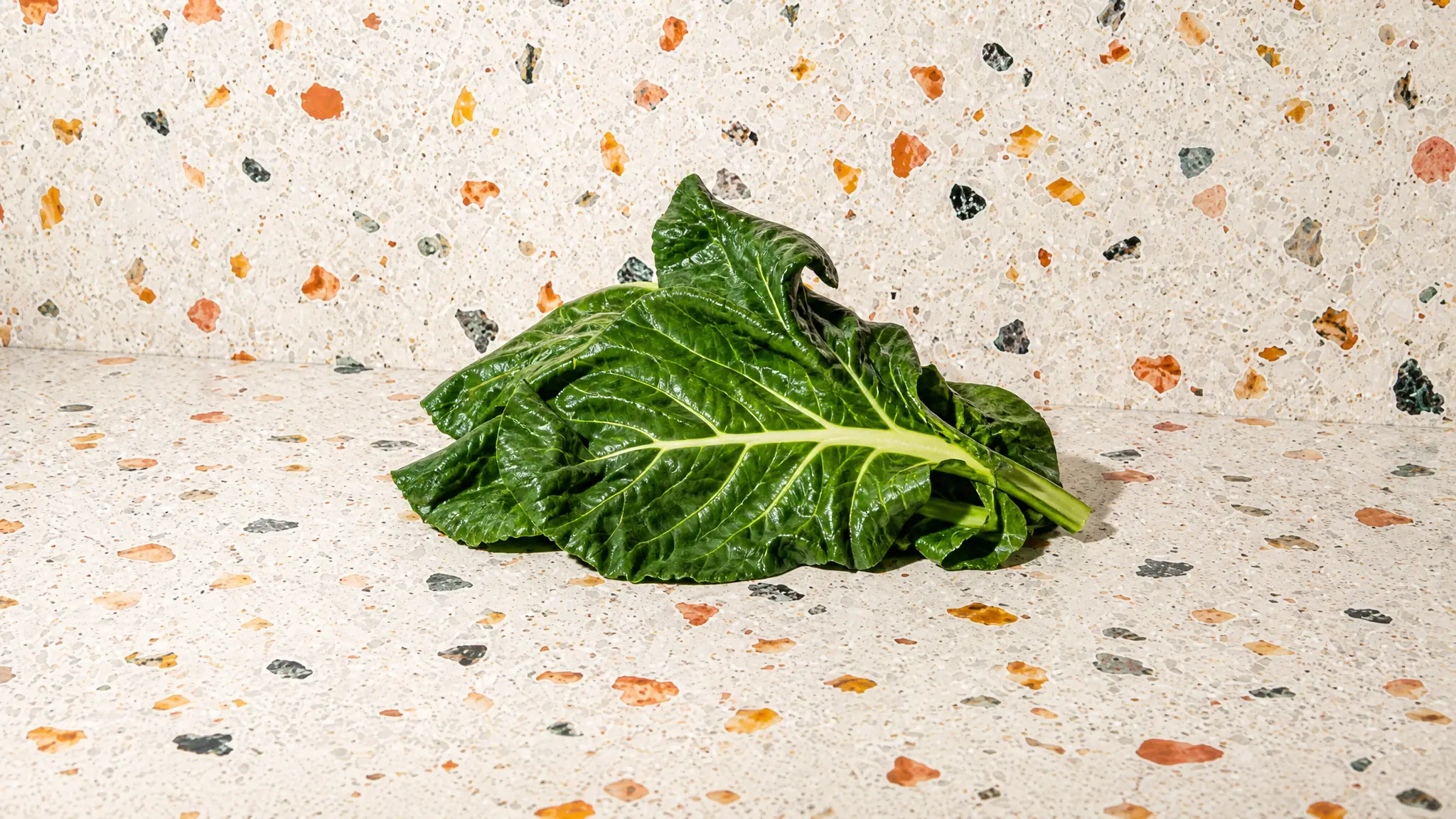

Collard Greens
Vegetable
Last updated July 5, 2026. The Tummi Food Team maintains this Can I Feed This safety guide guide. Supporting links appear in Sources when available.



Clinically reviewed by Andria Procopio and Arefa Mohamed
Direct answer
Can babies eat Collard Greens?
Yes, collard greens can be introduced around 6 months of age when babies start solids, prepared in a developmentally appropriate way.
- Serve Age6+months
Most babies start solids around 6 months once they show readiness signs. Match the texture and serving size to your baby's skills.
- No Allergens
Collard Greens is not flagged as one of the major allergens tracked in this database. Still watch your baby closely when serving any new food.
- Choking Risk123451
Lower choking risk when served in the right texture. Always supervise meals and adjust the shape for your baby.
This guide is for everyday food prep questions. Ask your pediatrician about medical concerns, feeding delays, allergy plans, or serious reactions.
How Do You Serve Collard Greens?
How to serve Collard Greens to babies 6 months and older
- 1Cook collard greens until very soft — simmer 20–30 minutes or steam until leaves mash easily.
- 2Remove thick stems, then finely chop or shred the leaves so pieces are small and won't cling to the tongue.
- 3Mix well with a smooth, scoopable base like mashed potato, porridge, polenta, or pureed beans to create an even, soft texture.
- 4For finger-food practice, press small, soft portions into firm shapes so baby can hold them without large leaf fragments; ensure pieces are soft.
How to serve Collard Greens to babies 9 months and older
- 1Steam or sauté collards until very tender, then shred or finely slice so strands are easy for small fingers to grasp.
- 2Offer thin raw slices sparingly to practice texture and finger skills, as raw leaves can be tougher to chew. Very thin ribbons are easier to bite and manage.
- 3Mix finely chopped, cooked collards into purees, scrambled eggs, rice, or other foods to add flavor and a softer texture while still encouraging self-feeding.
- 4Serve small pieces, check temperature, and stay within arm’s reach to supervise every bite to reduce choking risk.
How to serve Collard Greens to babies 12 months and older
- 1Cook or serve raw depending on chewing ability: steam or sauté leaves until tender for softer texture, or finely shred raw leaves for easier finger-food handling.
- 2Remove thick stems and ribs; cut into small pieces or thin shreds to reduce choking risk and make chewing easier.
- 3Encourage self-feeding with age-appropriate utensils—preload a fork or spoon if they need help and demonstrate scooping or picking up pieces.
- 4Pair collard greens with familiar foods (e.g., mashed potato, beans, or a mild dip) to improve acceptance and flavor balance.
- 5Expect some spitting or gagging as textures change; stay within reach and supervise every bite.
Is Collard Greens a Common Allergen?
Collard greens themselves are not a common food allergen and are not listed among the FDA’s major allergens. The main risk is added ingredients or cross-contact during preparation—common additions like butter, bacon, soy sauce, fish sauce, or nuts can introduce milk, pork, soy, fish, or tree-nut allergens. Always check how greens are cooked and served if a child has food allergies, and avoid cross-contact in shared kitchens.
Is Collard Greens a Choking Hazard?
Low Choking Risk
Collard greens carry a low choking risk overall, though their leaves can cling to a baby’s tongue or the roof of the mouth and may cause gagging or coughing. Stay within arm’s reach, closely observe your baby’s swallowing and breathing, and be ready to administer infant choking first aid if needed. These precautions help keep mealtimes safe as your baby learns to manage leafy textures.
Have More Questions?
Yes. Collard greens can be introduced to babies around 6 months once they are ready for solids, as they are a nutritious vegetable suitable for young children.
Yes. Collard greens are nutritious and provide essential micronutrients that support a baby’s growth and development, including vitamins A, C, K, calcium, and magnesium.
No. Collard greens are not a common allergen, but those with known allergies to other cruciferous vegetables or pollen-related syndromes should watch for reactions.
No. When prepared appropriately for a baby's age and developmental stage, collard greens pose a low choking risk, especially when cooked and cut into small, manageable pieces.
No. Nitrates in collard greens are naturally occurring and generally not a concern in a balanced diet, especially when served in moderation alongside other vegetables.
Save Collard Greens to your food log
Track foods, reactions, and prep notes in Tummi when you want to keep your baby's feeding history in one place.
Sources
- Cruciferous vegetables as a treasure of functional foods bioactive compounds (Frontiers in Nutrition, 2022) doi.org
- The beneficial effects of Brassica vegetables on human health (Roczniki Państwowego Zakładu Higieny, 2012) pubmed.ncbi.nlm.nih.gov
- IgE-mediated allergy to raw cabbage but not to cooked (Allergy, 2009) doi.org
- The safety of cruciferous plants in humans: a systematic review (Journal of Biomedicine & Biotechnology, 2012) doi.org
- Brassica oleracea pollen, a new source of occupational allergens (Allergy, 2006) doi.org
- Oral Allergy Syndrome (OAS) and Pollen Fruit Syndrome (PFS) (American Academy of Allergy, Asthma, and Immunology) aaaai.org
- Nitrate in leafy green vegetables and estimated intake (African Journal of Traditional, Complementary, and Alternative Medicines, 2017) doi.org
- AAP clinical report on infant methemoglobinemia (American Family Physician, 2005) aafp.org
- EFSA Explains Risk Assessment: Nitrites and Nitrates Added in Food (European Food Safety Authority, 2017) efsa.europa.eu
What Other Vegetable Can Babies Eat?
See all →
Source-Linked Guidance
See the evidence behind the guide.
Food guides show direct links to public-health guidance and research when supporting references are available. Source inclusion does not imply endorsement.
 Centers for Disease Control and Prevention
Developmental milestones, nutrition guidelines, and allergen introduction timelines.
 American Academy of Pediatrics
Evidence-based feeding recommendations from the leading pediatric authority.
 National Institutes of Health
Peer-reviewed research on infant nutrition, allergies, and food safety.