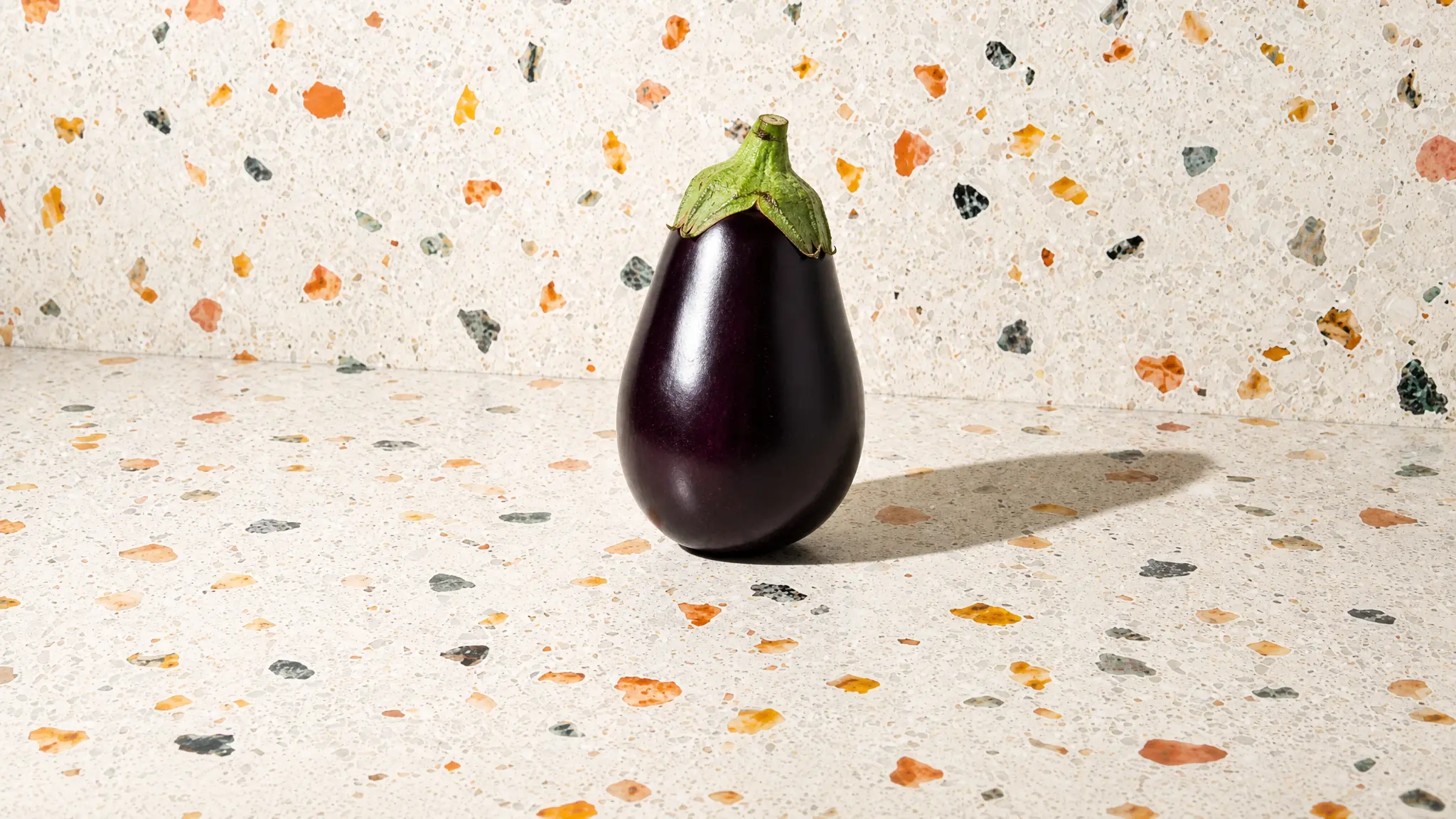
Eggplant
Vegetable
Last updated July 5, 2026. The Tummi Food Team maintains this Can I Feed This safety guide guide. Supporting links appear in Sources when available.



Clinically reviewed by Andria Procopio and Arefa Mohamed
Direct answer
Can babies eat Eggplant?
Yes, babies can have eggplant from around 6 months, once they are developmentally ready for solid foods. Cook it until soft and serve it in a texture and shape suited to the baby's feeding skills.
- Serve Age6+months
Most babies start solids around 6 months once they show readiness signs. Match the texture and serving size to your baby's skills.
- No Allergens
Eggplant is not flagged as one of the major allergens tracked in this database. Still watch your baby closely when serving any new food.
- Choking Risk123453
Some choking risk. Use the prep section to change the size, shape, or texture before serving.
This guide is for everyday food prep questions. Ask your pediatrician about medical concerns, feeding delays, allergy plans, or serious reactions.
How Do You Serve Eggplant?
How to serve Eggplant to babies 6 months and older
- 1Cook eggplant until very soft (roast, steam, or bake); test by pressing with a fork so the flesh squashes easily.
- 2Cut into long wedges or large flat slices so baby can grasp and gnaw; keeping the skin on helps pieces hold together, but peel if the skin feels tough to your baby.
- 3Mash or make a scoopable puree (plain baba ganoush is fine) for spoon-feeding or pre-loading a spoon — serve without added salt or strong spices.
- 4Remove any large, hard seeds if present and check texture for choking risk; serve soft, floppy pieces that bend when squeezed.
- 5Let pieces cool to lukewarm and always supervise while eating. Test temperature on your wrist before serving.
How to serve Eggplant to babies 9 months and older
- 1Cook eggplant until very soft (steam, roast, or simmer), peel if the skin is tough, and cut into small, soft, bite-sized pieces that are easy for little fingers to pick up.
- 2Offer thin wedges or slightly larger pieces for practicing bites, but ensure the center is tender and soft enough to mash with the gums.
- 3Mix into pasta, omelets, casseroles, or stir-fries, or lightly mash so it blends with other textures and flavors for easier acceptance.
- 4Remove any stringy or charred skin, supervise during eating, and cut sizes small enough to avoid choking—repeated exposure helps babies accept new textures.
How to serve Eggplant to babies 12 months and older
- 1Cook eggplant until very soft (roast, steam, or bake), then cut into small, easy-to-grasp pieces like bite-sized cubes or thin wedges for self-feeding.
- 2Serve alongside family meals so the toddler can eat the same foods; ensure pieces are soft enough to mash with gums and remove any tough skin or large seeds.
- 3Offer a halved, roasted eggplant "boat" with a soft filling so they can practice scooping the flesh and filling with a spoon or their fingers.
- 4Always cool to lukewarm, check for stringy parts and mash or cut as needed, and avoid adding salt or honey.
Is Eggplant a Common Allergen?
Eggplant is not a common major food allergen (peanut, tree nuts, milk, egg, soy, wheat, fish, shellfish, sesame) but rare IgE‑mediated reactions and oral allergy syndrome (mouth itching, swelling) have been reported, especially in people with pollen allergies or sensitivity to other nightshades (tomato, potato). Cooking usually reduces OAS symptoms; skin contact can sometimes cause dermatitis in sensitive individuals. Also watch for cross‑contact during preparation (eg, fried in peanut oil). Seek medical care if hives, facial/throat swelling, breathing difficulty, or other severe symptoms occur.
Is Eggplant a Choking Hazard?
Moderate Choking Risk
Eggplant can be a choking risk when raw or undercooked because it may be firm and slippery, making it harder for babies to bite and control in their mouths. Keep baby within arm’s reach during meals and watch closely for signs of gagging or choking so you can respond quickly. Familiarize yourself with infant choking first aid so you’re prepared to act if needed.
Have More Questions?
Yes, cooked eggplant can be stored for a baby. Refrigerate it promptly in a covered, shallow container and use it within four days.
Yes, cooked eggplant puree can be frozen. Cool it promptly, divide it into covered freezer-safe containers, and freeze it rather than leaving it at room temperature.
No, organic eggplant is not automatically a better choice for a baby. Organic describes how food is produced; whichever type you choose, wash the eggplant under running water before preparing it and cook it until soft.
Yes, eggplant can be mixed with other foods for a baby. Cook it until soft and make sure the combined meal has a texture suited to the baby's age and feeding skills.
For a baby starting solid foods, offer a small portion of cooked, soft eggplant and feed slowly while watching closely. There is no need to begin with a prescribed number of teaspoons.
Save Eggplant to your food log
Track foods, reactions, and prep notes in Tummi when you want to keep your baby's feeding history in one place.
Sources
- IgE response to two new allergen proteins of Solanum melongena L. (eggplant) doi.org
- Allergy to eggplant (Solanum melongena) doi.org
- Eggplant anaphylaxis in a patient with latex allergy doi.org
- What’s the Deal With Nightshade Vegetables? (Health Essentials, Cleveland Clinic) health.clevelandclinic.org
What Other Vegetable Can Babies Eat?
See all →
Source-Linked Guidance
See the evidence behind the guide.
Food guides show direct links to public-health guidance and research when supporting references are available. Source inclusion does not imply endorsement.
 Centers for Disease Control and Prevention
Developmental milestones, nutrition guidelines, and allergen introduction timelines.
 American Academy of Pediatrics
Evidence-based feeding recommendations from the leading pediatric authority.
 National Institutes of Health
Peer-reviewed research on infant nutrition, allergies, and food safety.