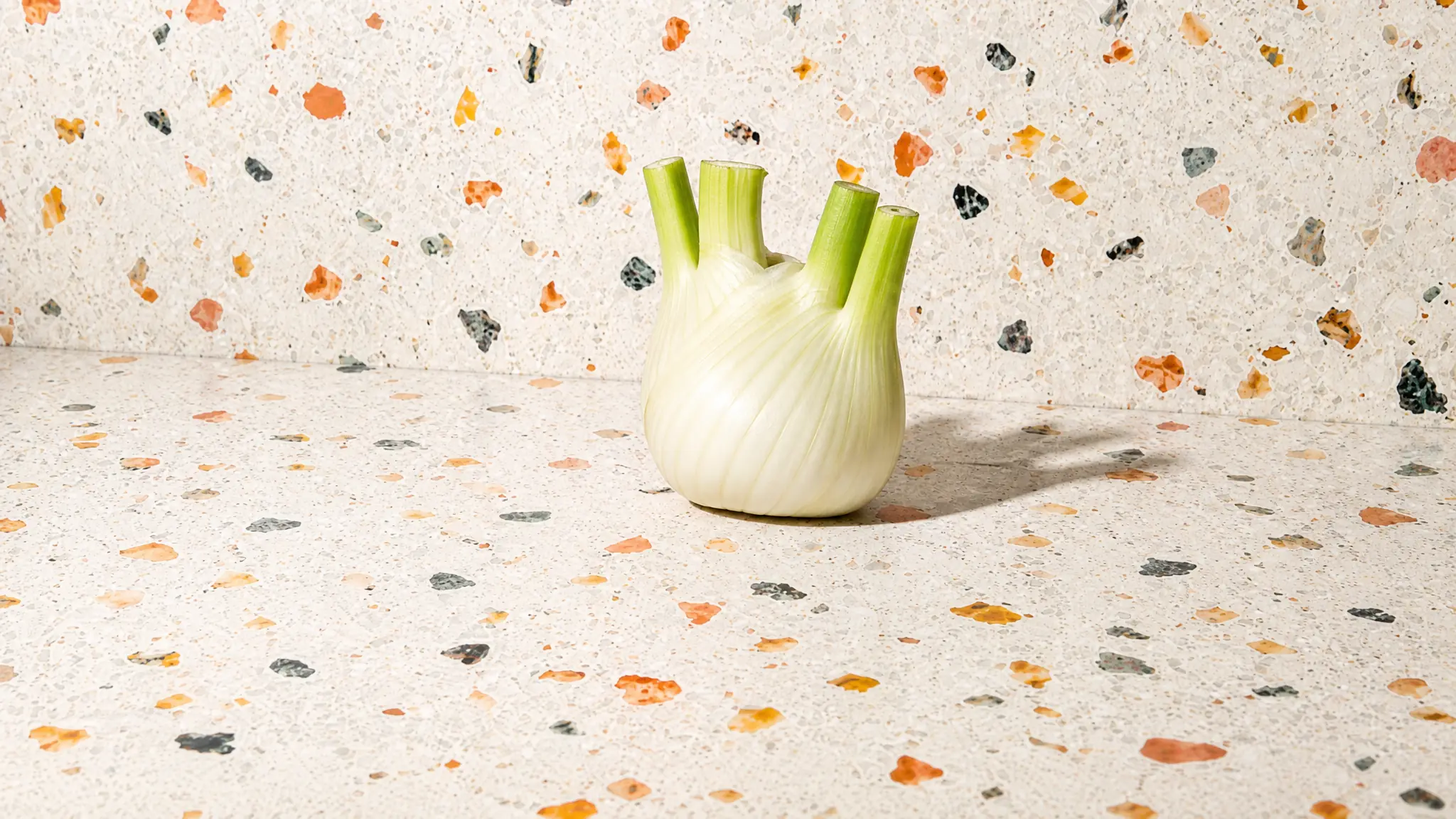
Fennel
Vegetable
Last updated July 5, 2026. The Tummi Food Team maintains this Can I Feed This safety guide guide. Supporting links appear in Sources when available.



Clinically reviewed by Andria Procopio and Arefa Mohamed
Direct answer
Can babies eat Fennel?
Fennel can be introduced around 6 months when your baby is developmentally ready for solid foods. Wash it and cook the bulb until very soft, then serve it in a developmentally appropriate shape and texture; avoid hard pieces of raw fennel because they can be difficult to chew and may pose a choking hazard.
- Serve Age6+months
Most babies start solids around 6 months once they show readiness signs. Match the texture and serving size to your baby's skills.
- No Allergens
Fennel is not flagged as one of the major allergens tracked in this database. Still watch your baby closely when serving any new food.
- Choking Risk123453
Some choking risk. Use the prep section to change the size, shape, or texture before serving.
This guide is for everyday food prep questions. Ask your pediatrician about medical concerns, feeding delays, allergy plans, or serious reactions.
How Do You Serve Fennel?
How to serve Fennel to babies 6 months and older
- 1Cut the fennel bulb into large wedges and cook (steamed, boiled, or roasted) until very soft so the baby can grasp and gum the pieces.
- 2For scoopable foods like dal or porridge, add a pinch of crushed fennel seed to gently flavor without overpowering.
- 3Finely chop the fronds and stir into mashed vegetables or yogurt for a mild, herby taste.
- 4If you make a homemade fennel puree, serve immediately and discard any leftovers to limit nitrate risk.
How to serve Fennel to babies 9 months and older
- 1Remove tough core and any stringy parts, then slice small and cook until very soft (steam, roast, or simmer) so pieces mash with gentle pressure — offer bite-sized pieces about the size of a large pea to reduce choking.
- 2For raw serving, thinly grate or very thinly slice fennel so it’s easy to pick up and chew; mix with yogurt or applesauce to soften texture if needed.
- 3Use ground or crushed fennel seed to add flavor to cooked dishes — avoid giving whole seeds to a child because they can be a choking hazard.
- 4Always supervise meals, seat your child upright, introduce one new food at a time, and watch for any gagging or allergic reactions.
How to serve Fennel to babies 12 months and older
- 1Cut fennel into thin, long slices or matchstick-style pieces that are easy for little fingers to hold so the child can practice biting and tearing.
- 2Offer soft, cooked wedges that are fork-tender as a gentler option while introducing long, flat raw sticks as chewing skills improve; model how to bite by taking one small bite first.
- 3Remove any tough core or stringy parts and always check temperature before serving to avoid burns and choking hazards.
- 4Stay within arm’s reach during meals and introduce firmer raw sticks only after the child reliably follows simple eating directions and demonstrates safe chewing.
Is Fennel a Common Allergen?
Fennel is not a top-9 food allergen but can cause allergic reactions in some people, especially via oral allergy syndrome (cross-reactivity) with pollens—commonly birch—and with other Apiaceae like celery and carrot. Fennel seeds or concentrated extracts may trigger stronger reactions than cooked bulb/leaf. If your child has known pollen allergies (e.g., birch) or celery/carrot allergy, introduce fennel cautiously and watch for mouth itching, hives, swelling, vomiting, or breathing trouble. Seek medical care immediately for any signs of anaphylaxis; otherwise cooking may reduce but not eliminate risk.
Is Fennel a Choking Hazard?
Moderate Choking Risk
Fennel can be a choking hazard—its bulb is firm, especially when raw or undercooked, which makes it harder for babies to chew and raises the risk of choking. Stay within arm’s reach and supervise closely when baby is trying fennel, and be alert for signs of choking or gagging. Caregivers should know basic infant choking first aid before offering this food.
Have More Questions?
Fennel can be offered regularly as one of a variety of foods, but it does not need to be served every day. Follow your baby's hunger and fullness cues, and prepare fennel in a shape and texture appropriate to their development.
Yes, cooked fennel puree can be frozen. Place it promptly in small, shallow freezer containers, and discard it if it has remained at room temperature for more than 2 hours.
Store leftover cooked fennel promptly in a shallow, covered container in the refrigerator, within 2 hours of preparation. Use refrigerated cooked leftovers within 4 days, or freeze them for longer storage; discard food left at room temperature for more than 2 hours.
Yes, fennel can be mixed with other foods your baby eats. Cook and prepare the fennel and the other ingredients in shapes and textures appropriate to your baby's development.
There is no single fennel portion that suits every baby. When your baby is beginning solids, you can offer 1 or 2 tablespoons and then follow their hunger and fullness cues rather than expecting them to finish a set amount.
Save Fennel to your food log
Track foods, reactions, and prep notes in Tummi when you want to keep your baby's feeding history in one place.
Sources
- Antifungal activity of selected volatile essential oils against Penicillium sp. - Open Life Sci (2020) doi.org
- Gas Chromatography-Mass Spectrometry-Based Classification of 12 Fennel Varieties - ACS Omega (2021) doi.org
- Foeniculum vulgare Mill: a review of its botany, phytochemistry, pharmacology... - BioMed Res Int (2014) doi.org
- Severe methemoglobinemia due to food intoxication in infants - Pediatric Emergency Care (2005) doi.org
- Dietary modifications for infantile colic - Cochrane Database (2018) doi.org
- Nitrate in leafy green vegetables and estimated intake - AJTCAM (2017) doi.org
- Infant methemoglobinemia: the role of dietary nitrate in food and water - Pediatrics (2005) doi.org
- Food sources of nitrates and nitrites - AJCN (2009) doi.org
- Vegetable-borne nitrate and nitrite and the risk of methaemoglobinaemia - Toxicol Lett (2011) doi.org
- Vascular effects of dietary nitrate - British Journal of Clinical Pharmacology (2013) doi.org
What Other Vegetable Can Babies Eat?
See all →

Source-Linked Guidance
See the evidence behind the guide.
Food guides show direct links to public-health guidance and research when supporting references are available. Source inclusion does not imply endorsement.
 Centers for Disease Control and Prevention
Developmental milestones, nutrition guidelines, and allergen introduction timelines.
 American Academy of Pediatrics
Evidence-based feeding recommendations from the leading pediatric authority.
 National Institutes of Health
Peer-reviewed research on infant nutrition, allergies, and food safety.