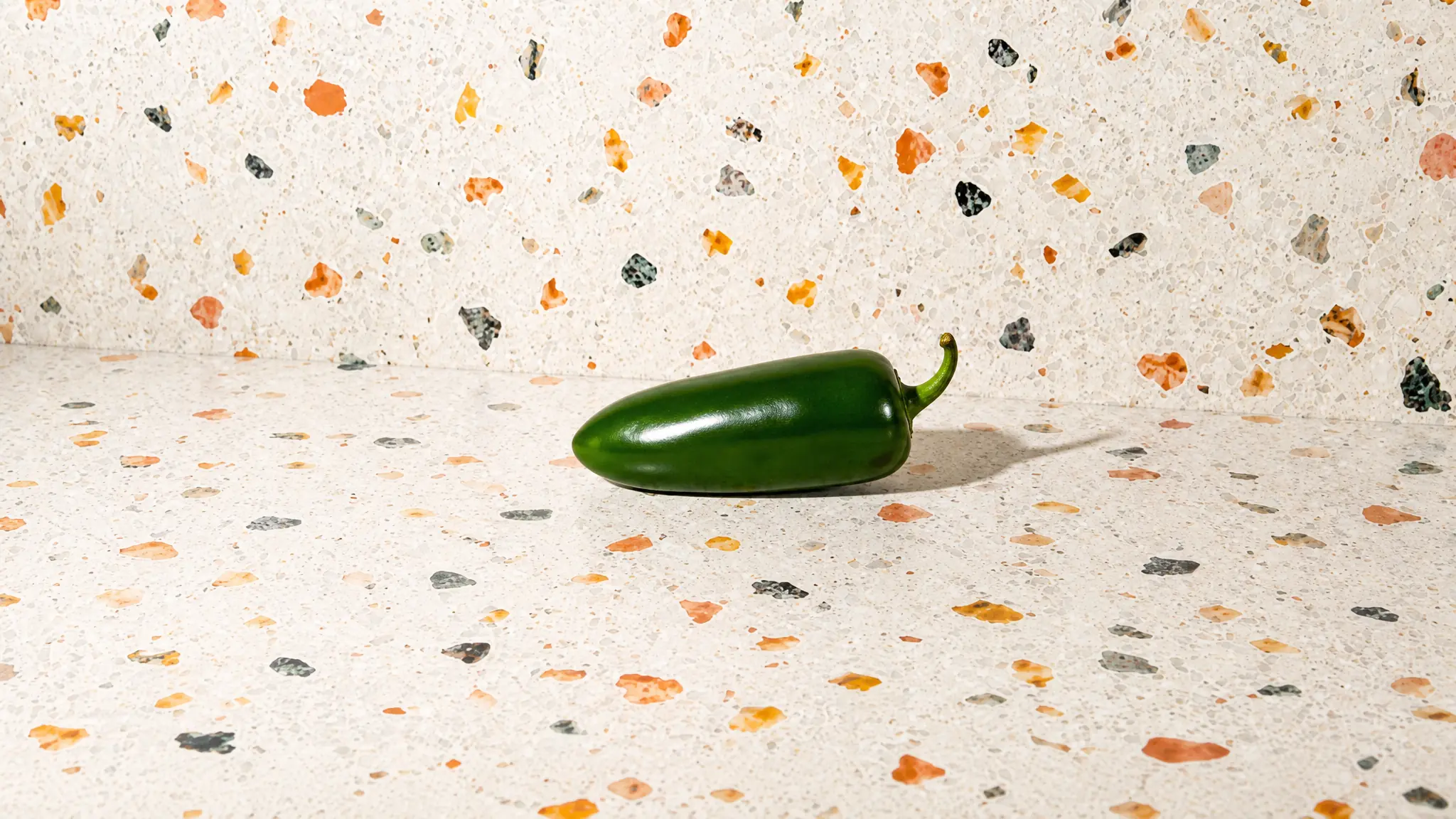
Jalapeño Pepper
Vegetable
Last updated July 5, 2026. The Tummi Food Team maintains this Can I Feed This safety guide guide. Supporting links appear in Sources when available.



Clinically reviewed by Andria Procopio and Arefa Mohamed
Direct answer
Can babies eat Jalapeño Pepper?
Jalapeño pepper may be offered around 6 months once a baby is developmentally ready for solid foods. At first, use a small amount of cooked, soft, finely chopped jalapeño mixed into another food, because capsaicin can irritate the mouth, skin, eyes, and digestive tract.
- Serve Age6+months
Most babies start solids around 6 months once they show readiness signs. Match the texture and serving size to your baby's skills.
- No Allergens
Jalapeño Pepper is not flagged as one of the major allergens tracked in this database. Still watch your baby closely when serving any new food.
- Choking Risk123453
Some choking risk. Use the prep section to change the size, shape, or texture before serving.
This guide is for everyday food prep questions. Ask your pediatrician about medical concerns, feeding delays, allergy plans, or serious reactions.
How Do You Serve Jalapeño Pepper?
How to serve Jalapeño Pepper to a 8-month-old baby
- 1Offer a very small taste (about a pea-size) of a dish that contains a tiny amount of finely chopped jalapeño — never give the whole pepper itself.
- 2Mix the jalapeño into a creamy food like mashed avocado, plain yogurt, or full-fat pureed vegetables to blunt the heat and make swallowing easier.
- 3Remove seeds and inner membranes and cook briefly to reduce spice. Removing seeds lowers both the heat and choking risk.
- 4Start with a pea-sized portion mixed into food and wait 3–5 days before offering another new spicy item; watch for signs of intolerance such as rash, vomiting, diarrhea, or unusual fussiness.
- 5If there is a history of reflux, severe eczema, or food allergies in the family, check with your pediatrician before introducing spicy foods.
How to serve Jalapeño Pepper to a 11-month-old baby
- 1Remove seeds and the white membrane, then finely chop the jalapeño; you can use it raw or briefly cook it to reduce sharpness.
- 2Start with a very small amount—a tiny pinch—and mix into shared foods like chili, guacamole, or salsa so the heat is diluted.
- 3Serve with a bland, cooling option such as whole‑fat yogurt or mashed avocado to soothe any burning; keep the creamy side available if the baby seems uncomfortable.
- 4Closely supervise during and after eating, wash hands and face after handling to prevent eye rubbing, and stop feeding if you notice coughing, wheezing, rash, or persistent distress.
How to serve Jalapeño Pepper to a 17-month-old baby
- 1Cut jalapeño into very thin strips, thin semi-circles, or finely chop; remove seeds and the inner membrane to reduce heat.
- 2Cook briefly (sauté or roast) or blanch 30–60 seconds to mellow spiciness. Cooking reduces heat.
- 3Small amounts of finely chopped pickled jalapeño are acceptable—mix into other foods so the heat is dispersed and easier to test.
- 4Always serve with a dairy or fatty food (yogurt, cheese, avocado) and tell the child the bite may be spicy before they try it.
How to serve Jalapeño Pepper to babies 18 months and older
- 1Slice jalapeño into thin rounds and serve sparingly as a topping so bites are easy to manage.
- 2To reduce heat, cook briefly (grill, roast, or sauté) and remove stem and seeds; offer larger pieces only after the child has shown they tolerate spicy foods.
- 3Always pair with a creamy or fatty accompaniment (yogurt, avocado, or cheese) to help neutralize heat, and introduce only a small amount at first to test tolerance.
- 4Supervise while eating, warn the child the food may be spicy, and remind them to wash hands and avoid rubbing their eyes after handling.
Is Jalapeño Pepper a Common Allergen?
Most people tolerate jalapeños, as true allergy to Capsicum (peppers) is uncommon. However, peppers can cause oral allergy syndrome in people with pollen allergies, and rare IgE‑mediated reactions have been reported; inhaled spice dust can also trigger symptoms. Some studies show cross-reactivity between chili/pepper proteins and other foods (including reported cross-reactivity with certain tree nuts), so avoid if a child has known pepper or related-food allergies. If a child develops hives, swelling, difficulty breathing, or other systemic symptoms after exposure, seek medical care promptly.
Is Jalapeño Pepper a Choking Hazard?
Moderate Choking Risk
Jalapeño peppers are not a common choking hazard when they’re finely chopped, but their heat can trigger coughing, excessive saliva, and gagging which may make feeding more difficult. Those reactions can increase the chance of gagging, so stay within arm’s reach and be ready to intervene if your baby coughs or rubs their face or eyes. Monitor closely during the first tries and stop if the baby shows distress.
Have More Questions?
Jalapeño pepper can be included as a vegetable in a baby's varied diet, but only a small amount may be comfortable because its capsaicin can irritate the mouth, skin, eyes, or digestive tract.
Jalapeño pepper can pose a choking risk when it is raw, hard, or served in pieces that are difficult for a baby to manage. Cook it until soft, chop it finely for an early eater, and watch the baby throughout the meal.
Jalapeño pepper is not one of the nine major food allergens identified by the FDA, although foods outside that list can still cause allergic reactions in sensitive people. Capsaicin can also cause nonallergic irritation of the mouth or skin; trouble breathing requires emergency help.
Jalapeño pepper should not be used as a remedy to help a baby poop. Excess hot pepper can irritate the digestive tract and may cause abdominal pain, vomiting, or diarrhea.
Babies may try jalapeño pepper around 6 months once they are developmentally ready for solid foods. Begin with a small amount that is cooked until soft and finely chopped into another food, and stop if the capsaicin causes distress or marked irritation.
Save Jalapeño Pepper to your food log
Track foods, reactions, and prep notes in Tummi when you want to keep your baby's feeding history in one place.
Sources
- Putting out the fire - Efficacy of common beverages in reducing oral burn from capsaicin (Physiology & Behavior, 2019) doi.org
- Bell Pepper Allergy: Different Sensitization Profiles (Journal of Investigational Allergology and Clinical Immunology, 2018) doi.org
- Anaphylactic reaction to bell pepper (Allergologia et Immunopathologia, 2014) doi.org
- Capsaicin: An Uncommon Exposure and Unusual Treatment (Clinical Practice and Cases in Emergency Medicine, 2019) doi.org
- Capsaicin: Current Understanding of Its Mechanisms and Therapy of Pain (Molecules, 2016) doi.org
- Allergic sensitization and clinical reactions to latex, food and pollen (Clinical and Experimental Allergy, 2000) doi.org
- Characterization of cross-reactive bell pepper allergens involved in the latex-fruit syndrome (Clinical and Experimental Allergy, 2004) doi.org
- Oral Allergy Syndrome: An Update for Stomatologists (Journal of Allergy, 2015) doi.org
- Mixed Spices at Culinary Doses Have Prebiotic Effects in Healthy Adults (Nutrients, 2019) doi.org
- The effects of capsaicin on reflux, gastric emptying and dyspepsia (Alimentary Pharmacology & Therapeutics, 2000) doi.org
What Other Vegetable Can Babies Eat?
See all →

Source-Linked Guidance
See the evidence behind the guide.
Food guides show direct links to public-health guidance and research when supporting references are available. Source inclusion does not imply endorsement.
 Centers for Disease Control and Prevention
Developmental milestones, nutrition guidelines, and allergen introduction timelines.
 American Academy of Pediatrics
Evidence-based feeding recommendations from the leading pediatric authority.
 National Institutes of Health
Peer-reviewed research on infant nutrition, allergies, and food safety.