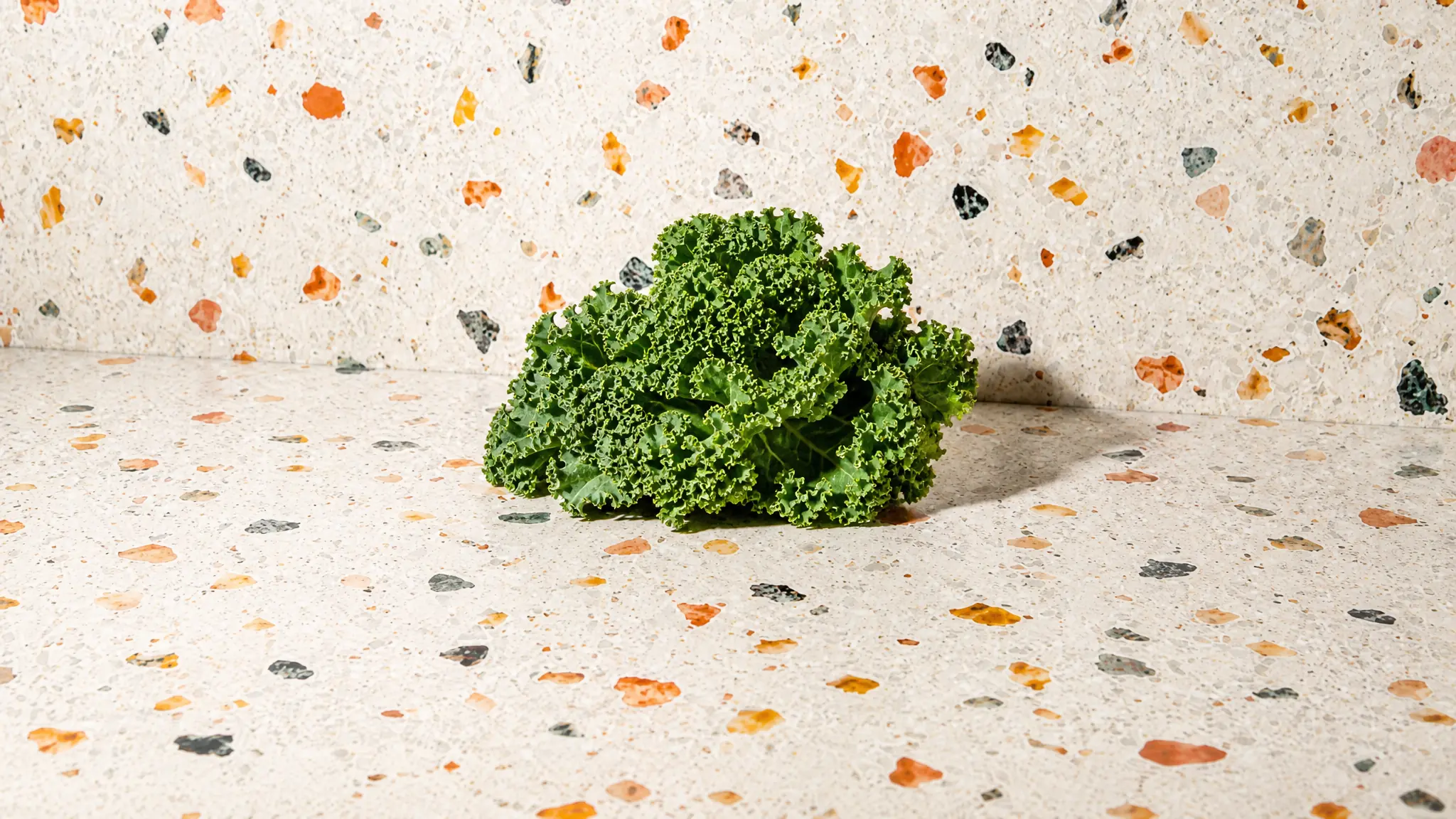
Kale
Vegetable
Last updated July 5, 2026. The Tummi Food Team maintains this Can I Feed This safety guide guide. Supporting links appear in Sources when available.



Clinically reviewed by Andria Procopio and Arefa Mohamed
Direct answer
Can babies eat Kale?
Yes, kale can be introduced around 6 months when your baby is ready for solids, prepared well to prevent choking.
- Serve Age6+months
Most babies start solids around 6 months once they show readiness signs. Match the texture and serving size to your baby's skills.
- No Allergens
Kale is not flagged as one of the major allergens tracked in this database. Still watch your baby closely when serving any new food.
- Choking Risk123451
Lower choking risk when served in the right texture. Always supervise meals and adjust the shape for your baby.
This guide is for everyday food prep questions. Ask your pediatrician about medical concerns, feeding delays, allergy plans, or serious reactions.
How Do You Serve Kale?
How to serve Kale to babies 6 months and older
- 1Cook until very soft: Steam or simmer kale 10–15 minutes, then finely chop or shred and mix into mashed vegetables, porridge, or other soft, scoopable foods so pieces don’t cling to the tongue.
- 2Remove thick stems: Cut out or very finely mince tough stems to avoid stringy bits that are hard to swallow.
- 3Soften and thin for scoopability: Thin with a little breastmilk, formula, or broth and mash or briefly blend to make a smooth, scoopable texture.
- 4Supervised teether option: Offer a thick, well-washed raw kale stem for brief, supervised chewing to encourage mouth exploration—stop immediately if large pieces come off.
How to serve Kale to babies 9 months and older
- 1Offer shredded kale — cooked or raw — in thin strands so baby can pick them up easily to practice grasping and chewing skills.
- 2Stir finely chopped, cooked kale into mashed vegetables, scrambled eggs, or pasta to add nutrients without changing texture.
- 3Kale chips can be given for self-feeding only if they crumble easily. Choose lower-sodium options if you offer them often.
- 4Always supervise self-feeding, remove or soften tough stems, and wait to offer larger pieces until baby handles the texture safely.
How to serve Kale to babies 12 months and older
- 1Remove tough stems and finely chop or thinly shred leaves so pieces are small and easy to gum or chew.
- 2Steam 3–5 minutes or lightly sauté until tender. Soft texture reduces choking risk.
- 3If serving raw, massage leaves with a little olive oil and finely shred so they’re easier to chew; offer tiny forkfuls or a preloaded spoon to encourage safe self-feeding.
- 4Always stay within arm’s reach, give small bites, and offer water in an open cup to help swallow bits; expect some spitting as they learn and respond calmly.
Is Kale a Common Allergen?
Kale is not one of the common (top‑9) food allergens, but raw kale can trigger oral allergy syndrome (itchy mouth or throat) in people with pollen allergies—especially birch‑pollen sensitive individuals. For babies and young children, serve kale cooked and well‑pureed (steam/boil) to soften fibers and reduce potential irritants and oxalates; avoid giving large amounts raw. Wash thoroughly to reduce pesticide residue. If your child develops itching, swelling, hives, vomiting, or breathing difficulty after eating kale, stop and seek medical care.
Is Kale a Choking Hazard?
Low Choking Risk
Kale is generally a low choking risk when offered in an age-appropriate way, but its leaves can cling to the tongue or roof of the mouth and cause gagging or coughing. Stay within arm’s reach during meals and have an open cup available to help wash pieces down if needed. Familiarize yourself with infant choking first aid so you can respond quickly if a true choking emergency occurs.
Have More Questions?
Yes, kale can be stored for your baby's meals. Wash fresh kale under running water before preparing it; if you cook it as part of a baby meal, cool it promptly, refrigerate it, and use it within 2 days. Discard any portion your baby has already eaten from.
Yes, you can freeze kale puree for your baby. Cool it promptly before freezing, thaw it thoroughly in the refrigerator or with a microwave's defrost setting, and use it within 24 hours after defrosting.
No, organic kale is not required for your baby. Whether you choose organic or conventional kale, wash it thoroughly under running water before preparing it.
Yes, you can combine kale with other foods for your baby. Serve it with foods from other food groups in a texture suited to your baby's age and development.
There is no single amount of kale that every baby should eat at a meal. Offer a developmentally appropriate amount and let your baby's hunger and fullness cues guide how much they eat.
Save Kale to your food log
Track foods, reactions, and prep notes in Tummi when you want to keep your baby's feeding history in one place.
Sources
- Blaiss MS., McCants ML., Lehrer SB. (1987). Anaphylaxis to cabbage. Ann Allergy Asthma Immunology, 58(4):248-50.
- Hermanides HK., Laheÿ-de Boer AM., Zuidmeer L., Guikers C., van Ree R., et al. (2006). Brassica oleracea pollen, a new source of occupational allergens. Allergy, 61(4):498–502. DOI:10.1111/j.1398-9995.2006.01055.x.
- American Academy of Allergy Asthma & Immunology. Oral Allergy Syndrome (OAS) or Pollen Fruit Syndrome (PFS).
- Kashyap RR., Kashyap RS. (2015). Oral Allergy Syndrome: An Update for Stomatologists. Journal of allergy, 2015, 543928. DOI:10.1155/2015/543928.
- Brkić D., Bošnir J., Bevardi M., Bošković AG., Miloš S., et al. (2017). NITRATE IN LEAFY GREEN VEGETABLES AND ESTIMATED INTAKE. African Journal of Traditional, Complementary, and Alternative Medicines, 14(3):31–41. DOI:10.21010/ajtcam.v14i3.4.
- Filer LJ., Lowe CJ., Barness LA., Goldbloom RB., Heald FP., et al. (1970). Infant Methemoglobinemia: The Role of Dietary Nitrate. Pediatrics, 46(3):475-478.
- European Food Safety Authority. (2017). EFSA Explains Risk Assessment: Nitrites and Nitrates Added in Food.
- Harvard T.H. Chan School of Public Health. Are Anti-Nutrients Harmful?
- Grases F., Costa-Bauza A., Prieto RM. (2006). Renal lithiasis and nutrition. Nutrition Journal, 5:23. DOI:10.1186/1475-2891-5-23.
What Other Vegetable Can Babies Eat?
See all →

Source-Linked Guidance
See the evidence behind the guide.
Food guides show direct links to public-health guidance and research when supporting references are available. Source inclusion does not imply endorsement.
 Centers for Disease Control and Prevention
Developmental milestones, nutrition guidelines, and allergen introduction timelines.
 American Academy of Pediatrics
Evidence-based feeding recommendations from the leading pediatric authority.
 National Institutes of Health
Peer-reviewed research on infant nutrition, allergies, and food safety.