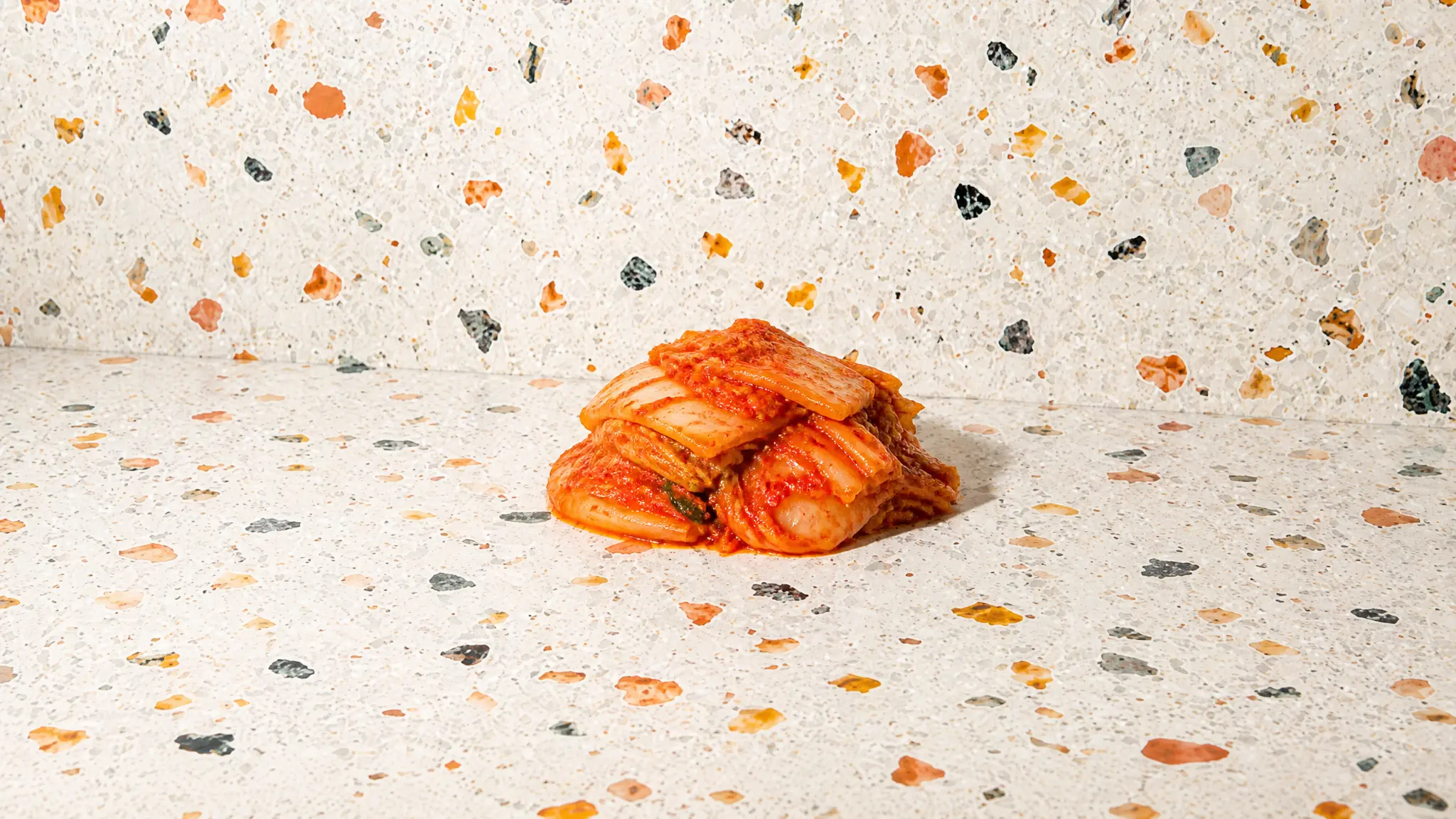
Kimchi
Vegetable
Last updated July 5, 2026. The Tummi Food Team maintains this Can I Feed This safety guide guide. Supporting links appear in Sources when available.



Clinically reviewed by Andria Procopio and Arefa Mohamed
Direct answer
Can babies eat Kimchi?
Kimchi may be offered in a small amount from around 6 months, once your baby is developmentally ready for solids. Choose a lower-sodium option when possible, check the ingredients for allergens, and serve it soft and finely chopped or mashed to suit your baby's eating skills.
- Serve Age6+months
Most babies start solids around 6 months once they show readiness signs. Match the texture and serving size to your baby's skills.
- Allergens
Kimchi is flagged for fish, shellfish, and soy. Introduce common allergens in a baby-safe form and follow your clinician's advice if your baby is higher risk.
- Choking Risk123452
Lower choking risk when served in the right texture. Always supervise meals and adjust the shape for your baby.
This guide is for everyday food prep questions. Ask your pediatrician about medical concerns, feeding delays, allergy plans, or serious reactions.
How Do You Serve Kimchi?
How to serve Kimchi to babies 6 months and older
- 1Finely chop or thinly slice kimchi until soft and easy to pick up; mix into scoopable foods like porridge, rice, or soft noodles so pieces are small and flavors are distributed.
- 2For finger-feeding, offer a strip about the width of two adult fingers so baby can lick and munch—ensure it's cool and well-drained.
- 3Rinse kimchi briefly under cold running water to reduce heat and surface salt, then squeeze out excess liquid before serving.
- 4Read labels carefully—many kimchis contain fish, shellfish, sesame, or soy; introduce any potential allergens separately in small amounts and watch for reactions over several days.
How to serve Kimchi to babies 9 months and older
- 1Chop kimchi into small, soft, pea-sized pieces and steam or finely chop any tough cabbage or radish so it can be mashed with gums.
- 2Rinse or soak kimchi briefly and squeeze out excess liquid to reduce spice and salt, then taste to confirm it’s mild enough.
- 3Mix a small amount into plain rice, mashed vegetables, or unsweetened yogurt to introduce flavor while diluting heat and sodium.
- 4Offer only small portions at first and watch for allergic reactions or digestive upset over 2–3 days; avoid fish sauce or shellfish-containing kimchi unless those foods are already tolerated.
How to serve Kimchi to babies 12 months and older
- 1Cut kimchi into long strips or bite-size chunks so the child can grip pieces and practice biting and tearing.
- 2Serve plain or mixed into small portions of rice, noodles, or scrambled egg to soften texture and tone down spice.
- 3If kimchi tastes too strong, briefly rinse or gently squeeze to remove excess brine. This reduces salt and heat while keeping flavor.
- 4Always check ingredient labels for hidden allergens and start with a small portion, observing the child’s chewing and tolerance before increasing serving size.
Is Kimchi a Common Allergen?
Kimchi often contains fish- or shellfish-based ingredients (e.g., anchovy fish sauce or salted fermented shrimp) and some recipes use soy-based seasonings. Recipes vary—vegan/plant-based kimchi omits fish/shellfish. If your child has fish, shellfish, or soy allergies, check ingredient labels or ask how it was made; avoid unless you can verify it’s allergen-free. For severe allergies, treat kimchi as potentially unsafe unless confirmed otherwise.
Is Kimchi a Choking Hazard?
Low Choking Risk
Kimchi’s texture can vary—some batches are soft while others are firm or slippery—making it potentially a choking risk for young babies. Firm pieces like cabbage or radish and slippery bits can be hard for infants to chew and control. Keep babies within arm’s reach during meals, watch closely for signs of choking, and be prepared to act with appropriate first aid.
Have More Questions?
Yes, you may offer a small amount of kimchi from around 6 months, once your baby is developmentally ready for solids. Choose a lower-sodium option when possible and prepare the texture for your baby's eating skills.
Kimchi can be included in a baby's varied diet, but its salt content means it is best offered only in a small amount. Choose a lower-sodium product when possible and check the ingredients for allergens.
Kimchi may contain common allergens, depending on its ingredients. Check the full label for fish, crustacean shellfish, soy, sesame, and any other allergens relevant to your child each time you buy it.
Kimchi can pose a choking risk if its pieces are firm, slippery, stringy, or difficult for your baby to manage. Make it soft and finely chop or mash it to suit your baby's eating skills, and watch your baby throughout the meal.
Offer only a small amount of kimchi because babies should not eat much salt. Let your baby decide whether to eat it or ask for more, without using a fixed portion target.
Save Kimchi to your food log
Track foods, reactions, and prep notes in Tummi when you want to keep your baby's feeding history in one place.
Sources
- Anaphylaxis to cabbage: detection of allergens pubmed.ncbi.nlm.nih.gov
What Other Vegetable Can Babies Eat?
See all →
Source-Linked Guidance
See the evidence behind the guide.
Food guides show direct links to public-health guidance and research when supporting references are available. Source inclusion does not imply endorsement.
 Centers for Disease Control and Prevention
Developmental milestones, nutrition guidelines, and allergen introduction timelines.
 American Academy of Pediatrics
Evidence-based feeding recommendations from the leading pediatric authority.
 National Institutes of Health
Peer-reviewed research on infant nutrition, allergies, and food safety.