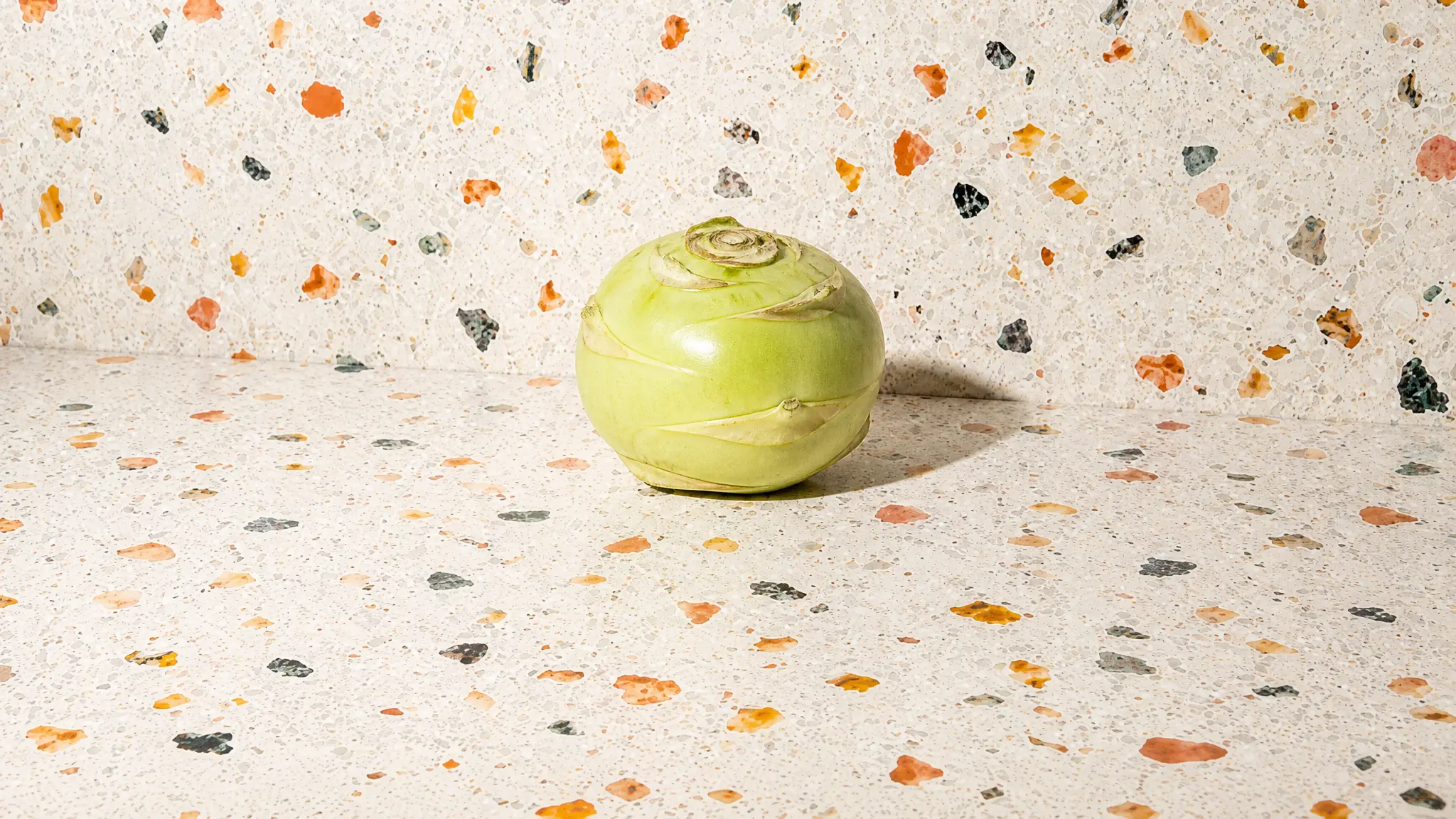
Kohlrabi
Vegetable
Last updated July 5, 2026. The Tummi Food Team maintains this Can I Feed This safety guide guide. Supporting links appear in Sources when available.



Clinically reviewed by Andria Procopio and Arefa Mohamed
Direct answer
Can babies eat Kohlrabi?
Yes, babies can eat cooked and soft kohlrabi starting at around 6 months of age when beginning solids.
- Serve Age6+months
Most babies start solids around 6 months once they show readiness signs. Match the texture and serving size to your baby's skills.
- No Allergens
Kohlrabi is not flagged as one of the major allergens tracked in this database. Still watch your baby closely when serving any new food.
- Choking Risk123452
Lower choking risk when served in the right texture. Always supervise meals and adjust the shape for your baby.
This guide is for everyday food prep questions. Ask your pediatrician about medical concerns, feeding delays, allergy plans, or serious reactions.
How Do You Serve Kohlrabi?
How to serve Kohlrabi to babies 8 months and older
- 1Steam or simmer kohlrabi pieces until very soft (about 10–15 minutes for bite-sized cubes); peel larger bulbs first if the skin feels tough.
- 2Cut cooked kohlrabi into thick wedges or sticks your baby can grasp and gnaw. Remove any tough strings or skin and always test softness by mashing with a fork.
- 3For spoon feeding, mash or lightly puree cooked kohlrabi to a scoopable texture, thinning with breastmilk, formula, or cooking water as needed.
- 4Finely chop cooked kohlrabi leaves and stir in sparingly for extra flavor and nutrients, introducing new greens slowly and watching for reactions.
How to serve Kohlrabi to babies 11 months and older
- 1Cut cooked kohlrabi into soft, bite-sized pieces about pea-sized so fingers can pick them up and gums can mash them.
- 2Finely grate raw kohlrabi into thin shreds to create easy-to-hold finger food that still offers a gentle crunch.
- 3Mash cooked kohlrabi smooth for spoon-feeding or mix with other purees; expect messy shoveling as they learn to self-feed.
- 4Always supervise meals, remove the tough core and skin, and avoid large firm chunks; offer pea-sized pieces or smaller if unsure.
How to serve Kohlrabi to babies 24 months and older
- 1Grate or slice very thinly — serve raw plain or mixed into yogurt, hummus, or salads for a crunchy snack that’s easy to pick up.
- 2Cut into matchsticks or paper-thin rounds for dipping with mild spreads like yogurt or avocado to introduce new flavors.
- 3Mash or grate and fold into patties, fritters, dumplings, meatballs, or pancakes to add moisture and mild sweetness; bind with egg or mashed banana if needed.
- 4Cook until soft and tender before serving larger pieces — check texture to reduce choking risk by testing that pieces mash easily with a fork.
- 5Make ahead: store grated or cooked kohlrabi in an airtight container in the fridge for 2–3 days, or roast leftover pieces for a sweeter option.
Is Kohlrabi a Common Allergen?
Kohlrabi (a cruciferous vegetable) is not a common food allergen and is generally considered safe in normal food amounts. Allergic reactions are rare, though people with pollen-food allergy/oral allergy syndrome or sensitivities to other mustard/cruciferous family plants could experience mild mouth itching or similar reactions. As with any new food, introduce kohlrabi in small amounts, watch for hives, swelling, vomiting, or breathing problems, and seek immediate care for severe reactions. Consult your pediatrician before introducing if your child has known food allergies.
Is Kohlrabi a Choking Hazard?
Low Choking Risk
Kohlrabi can be a choking hazard for young children—raw, firm pieces are especially risky for those under five. Closely supervise babies when they’re eating and watch for signs of true airway obstruction (persistent coughing, inability to breathe, or blue lips); seek emergency help immediately if these occur. Caregivers should be familiar with infant/child choking first aid and have a plan in case of an emergency.
Have More Questions?
Yes, you can store cooked or pureed kohlrabi in an airtight container in the refrigerator for up to 24-48 hours. For longer storage, freeze in small portions for up to 3 months.
Yes, you can freeze fresh kohlrabi, but it's best to peel and chop it first, then blanch briefly before freezing to preserve flavor and texture.
It depends. Organic kohlrabi may have fewer pesticides, but all vegetables should be thoroughly washed and peeled to reduce pesticide residue and dirt before preparing for your baby.
Yes, combining kohlrabi with other vegetables like carrots or sweet potatoes can introduce your baby to new flavors and textures while increasing nutrient variety.
It depends. For portion sizes, start with 1-2 tablespoons of cooked, mashed kohlrabi and gradually increase based on your baby's appetite and developmental stage.
Save Kohlrabi to your food log
Track foods, reactions, and prep notes in Tummi when you want to keep your baby's feeding history in one place.
Sources
- Anti‑Diabetic and Anti‑Inflammatory Effects of Green and Red Kohlrabi Cultivars (Preventive Nutrition and Food Science, 2014) doi.org
- Identification and expression analysis of glucosinolate biosynthetic genes (Molecules, 2015) doi.org
- Volatile Compounds of Selected Raw and Cooked Brassica Vegetables (Molecules, 2019) doi.org
- The Metabolism of Glucosinolates by Gut Microbiota (Nutrients, 2021) doi.org
- Kohlrabi, raw (USDA FoodData Central) fdc.nal.usda.gov
- Characterization of dietary fiber lignins from fruits and vegetables (Journal of Agricultural and Food Chemistry, 2005) doi.org
- Brassica oleracea pollen, a new source of occupational allergens (Allergy, 2006) doi.org
- Oral Allergy Syndrome: An Update for Stomatologists (Journal of Allergy, 2015) doi.org
What Other Vegetable Can Babies Eat?
See all →

Source-Linked Guidance
See the evidence behind the guide.
Food guides show direct links to public-health guidance and research when supporting references are available. Source inclusion does not imply endorsement.
 Centers for Disease Control and Prevention
Developmental milestones, nutrition guidelines, and allergen introduction timelines.
 American Academy of Pediatrics
Evidence-based feeding recommendations from the leading pediatric authority.
 National Institutes of Health
Peer-reviewed research on infant nutrition, allergies, and food safety.