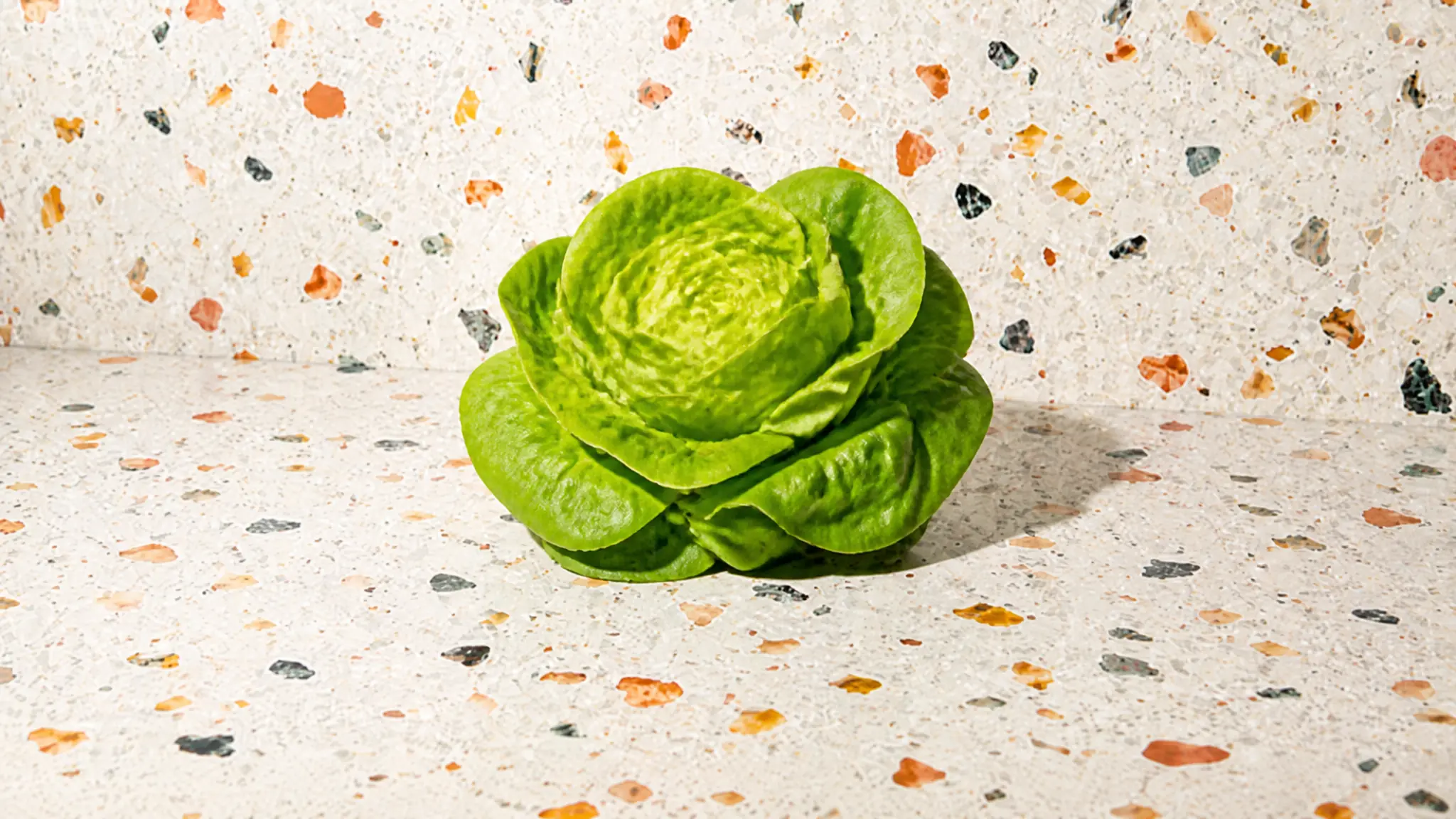
Lettuce
Vegetable
Last updated July 5, 2026. The Tummi Food Team maintains this Can I Feed This safety guide guide. Supporting links appear in Sources when available.



Clinically reviewed by Andria Procopio and Arefa Mohamed
Direct answer
Can babies eat Lettuce?
Yes, lettuce can be introduced around 6 months, but serve it finely chopped or shredded for easy chewing and swallowing.
- Serve Age6+months
Most babies start solids around 6 months once they show readiness signs. Match the texture and serving size to your baby's skills.
- No Allergens
Lettuce is not flagged as one of the major allergens tracked in this database. Still watch your baby closely when serving any new food.
- Choking Risk123451
Lower choking risk when served in the right texture. Always supervise meals and adjust the shape for your baby.
This guide is for everyday food prep questions. Ask your pediatrician about medical concerns, feeding delays, allergy plans, or serious reactions.
How Do You Serve Lettuce?
How to serve Lettuce to babies 6 months and older
- 1Remove the flimsy leaf and offer a long, sturdy lettuce rib for baby to hold and gnaw—this gives a safe handle and supports teething.
- 2Cook until very soft (steam or sauté), then finely shred or chop before serving to reduce choking risk.
- 3Fold shredded lettuce into scoopable foods like yogurt, mashed avocado, or purees so baby can practice self-feeding and taste greens.
- 4Start with small amounts mixed into familiar foods and repeat often to build acceptance. Mix with a favorite (for example yogurt or mashed potato) to make the flavor more appealing.
- 5Always supervise and offer only soft, appropriately sized pieces; discard fibrous or slippery bits that could cause gagging.
How to serve Lettuce to babies 9 months and older
- 1Serve finely chopped or shredded lettuce (rib or leaf) so pieces are small enough for the pincer grasp.
- 2Offer whole sturdy ribs separately for biting and tearing practice while the baby sits upright.
- 3Toss greens with a light, thin dressing or a little olive oil to reduce clinging; avoid thick dressings.
- 4Offer a small open cup of water or milk to help any clingy pieces pass and to practice sipping. Supervise closely while the baby eats.
How to serve Lettuce to babies 12 months and older
- 1Wash leaves thoroughly, remove tough stems, then finely shred or chop into small, bite-sized pieces for easy chewing.
- 2Offer raw leaves for finger-feeding or lightly steam until wilted and cool to soften. Avoid thick ribs to reduce choking risk.
- 3Cut across stems into narrow strips for utensil practice, or leave whole soft leaves for supervised tearing to build motor skills.
- 4Serve plain or with a small dip on the side; eat with your child to model dipping and utensil use, and always supervise while they eat.
- 5Offer without pressure—repeat offers over time even after refusals, and stop and respond calmly if coughing or gagging occurs.
Is Lettuce a Common Allergen?
Lettuce rarely causes true food allergy, but people with pollen allergies can get oral allergy syndrome (itching or swelling of the lips, mouth, or throat) when eating raw lettuce. There are rare reports of more serious lettuce-specific reactions. The main practical risk for children is cross‑contamination in salads or prepared foods (dressings and toppings can contain nuts, eggs, dairy, shellfish, or gluten), so always check ingredients and avoid mixed salads if a child has known allergies. Wash leaves well before serving to reduce surface contaminants.
Is Lettuce a Choking Hazard?
Very Low Choking Risk
Lettuce isn’t typically a common choking hazard, but its flimsy leaves and small shreds can cling to the roof of the mouth or be aspirated, often causing gagging or coughing in young eaters. Because babies can struggle to manage loose shreds or whole leaves, closely supervise them during meals and stay within arm’s reach. If your child has repeated choking, difficulty breathing, or a concerning reaction, seek immediate medical help.
Have More Questions?
Yes. Lettuce can be stored in a refrigerator wrapped in a towel or in a loosely covered container for several days, but it's best to consume it fresh for optimal quality.
Yes. You can freeze pureed or chopped lettuce to extend its shelf life, but freezing may alter its texture, making it more suitable for cooked dishes or purees.
Yes. Organic lettuce is grown without synthetic pesticides or fertilizers, making it a good choice if you prefer organic produce for your baby's diet.
Yes. You can combine lettuce with other baby-friendly foods like carrots or cucumbers to create a balanced and varied meal for your little one.
Yes. Typical portion sizes for babies around 6 months are small, about 1-2 teaspoons of chopped or pureed lettuce, depending on their appetite and tolerance.
Save Lettuce to your food log
Track foods, reactions, and prep notes in Tummi when you want to keep your baby's feeding history in one place.
Sources
- Centers for Disease Control. Lettuce, Other Leafy Greens, and Food Safety. cdc.gov
- U.S. Food & Drug Administration. Selecting and Serving Produce Safely. fda.gov
- Muñoz-García E., Luengo-Sánchez O., Moreno-Pérez N., Cuesta-Herranz J., Pastor-Vargas C., & Cardona V. Lettuce Allergy Is a Lipid Transfer Syndrome-Related Food Allergy With a High Risk of Severe Reactions (2017). doi.org
- Helbling A., Schwartz HJ., Lopez M., Lehrer SB. Lettuce and carrot allergy: are they related? Allergy Proc. (1994). doi.org
- Asero R., Mistrello G., Roncarolo D., Amato S., Caldironi G., Barocci F., Van Ree R. Immunological cross-reactivity between lipid transfer proteins from botanically unrelated plant-derived foods: a clinical study. (2002). pubmed.ncbi.nlm.nih.gov
- Canela L. Oral allergy syndrome. The World Allergy Organization Journal (2015). doi.org
- Kashyap R.R., Kashyap R.S. Oral Allergy Syndrome: An Update for Stomatologists. Journal of Allergy (2015). doi.org
- American Academy of Allergy Asthma & Immunology. Oral Allergy Syndrome (OAS) or Pollen Food Syndrome (PFS). aaaai.org
What Other Vegetable Can Babies Eat?
See all →


Source-Linked Guidance
See the evidence behind the guide.
Food guides show direct links to public-health guidance and research when supporting references are available. Source inclusion does not imply endorsement.
 Centers for Disease Control and Prevention
Developmental milestones, nutrition guidelines, and allergen introduction timelines.
 American Academy of Pediatrics
Evidence-based feeding recommendations from the leading pediatric authority.
 National Institutes of Health
Peer-reviewed research on infant nutrition, allergies, and food safety.