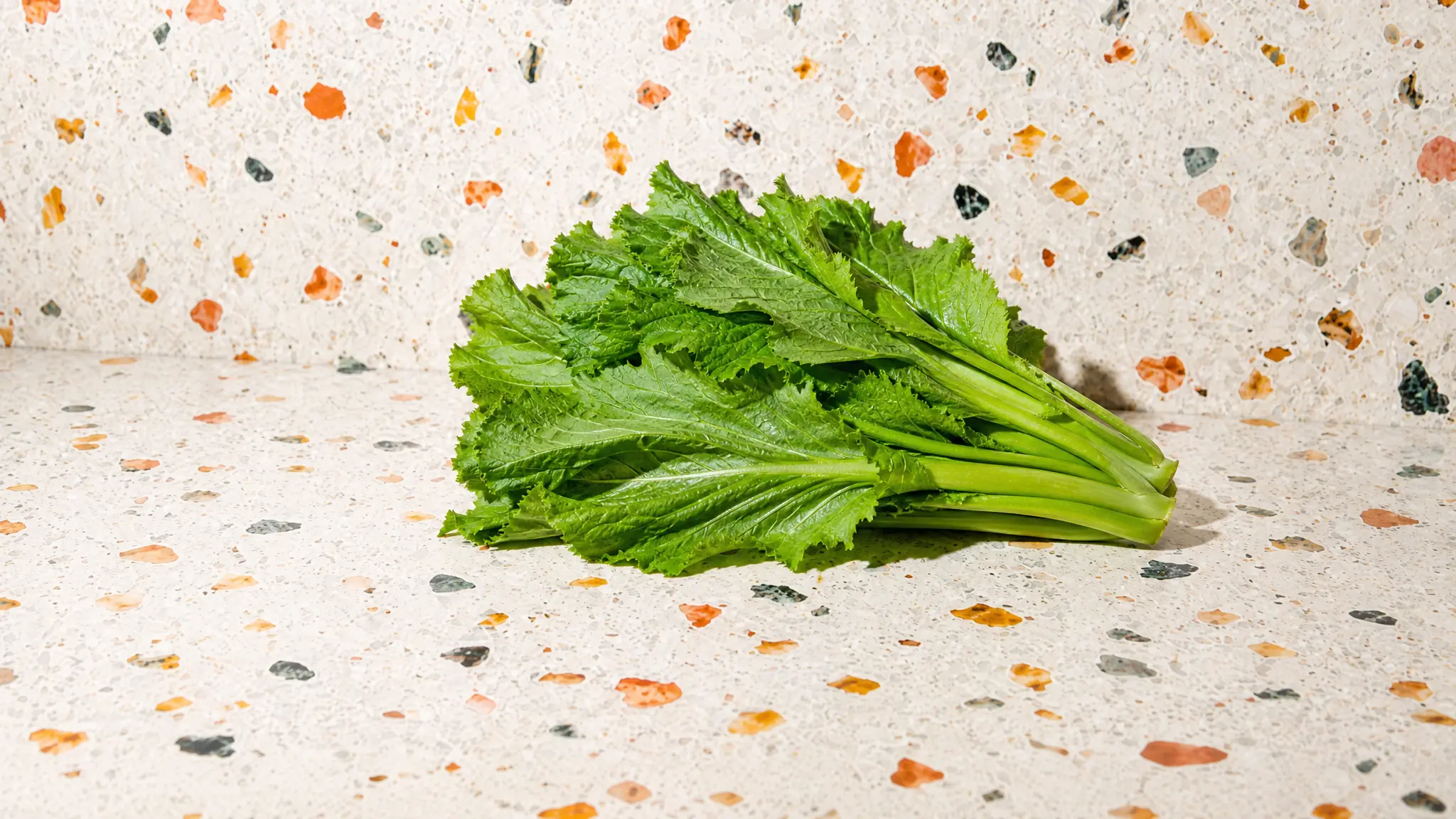
Mustard Greens
Vegetable
Last updated July 5, 2026. The Tummi Food Team maintains this Can I Feed This safety guide guide. Supporting links appear in Sources when available.



Clinically reviewed by Andria Procopio and Arefa Mohamed
Direct answer
Can babies eat Mustard Greens?
Yes, mustard greens can be introduced around 6 months when your baby is ready for solids, ensuring they are cooked and soft.
- Serve Age6+months
Most babies start solids around 6 months once they show readiness signs. Match the texture and serving size to your baby's skills.
- No Allergens
Mustard Greens is not flagged as one of the major allergens tracked in this database. Still watch your baby closely when serving any new food.
- Choking Risk123452
Lower choking risk when served in the right texture. Always supervise meals and adjust the shape for your baby.
This guide is for everyday food prep questions. Ask your pediatrician about medical concerns, feeding delays, allergy plans, or serious reactions.
How Do You Serve Mustard Greens?
How to serve Mustard Greens to babies 6 months and older
- 1Cook leaves and stems until very tender so stems mash easily with a fork.
- 2Finely chop or puree the cooked greens and gently fold them into plain purees, porridges, or mashed vegetables to create soft, scoopable textures.
- 3For self-feeding, offer a long, thick cooked stem (leaf removed) as a teething handle and closely supervise since babies may poke or gag while exploring.
- 4Avoid added salt or strong spices, serve lukewarm, and ensure any pieces are very soft and small enough to prevent choking.
How to serve Mustard Greens to babies 9 months and older
- 1Cook greens until very soft, then finely shred and stir into mashed potatoes, pureed grains, or yogurt to make a smooth, scoopable meal.
- 2Cut cooked greens into small, bite-sized pieces (about a pea or fingertip) so they’re easy to pick up and chew.
- 3If offering tender raw leaves, tear into thin strips and test texture by squashing between fingers—avoid any pieces that stay firm.
- 4Remove tough stems or thick ribs before serving. Always stay within arm’s reach and supervise closely while your child practices self-feeding.
How to serve Mustard Greens to babies 12 months and older
- 1Finely chop or shred leaves into small, manageable pieces so toddlers can easily bite or gum them.
- 2Serve tender leaves raw or briefly cook (steam, sauté, or stir‑fry) until soft to reduce chewiness.
- 3Mix mustard greens into family dishes—scrambled eggs, pasta, soups, or casseroles—so flavors and textures are familiar.
- 4Remove tough stems and thick ribs; if pieces remain firm, mince or puree to a soft consistency to lower choking risk.
- 5Introduce gradually over several days and watch for any digestive upset or allergic reaction; avoid heavy spices and strong condiments at first.
Is Mustard Greens a Common Allergen?
Mustard greens (leaves) are from the mustard plant. Most serious food allergy risk comes from mustard seeds, which are a recognized major allergen, but people with mustard seed allergy may also react to the leaves because of shared proteins—reactions to leaves are less common but possible. If your child has a known mustard allergy (or other severe food allergies), avoid mustard greens until cleared by an allergist and watch for hives, swelling, vomiting, or breathing problems. Note: mustard greens are high in vitamin K (can affect warfarin) and contain oxalates (avoid if prone to kidney stones).
Is Mustard Greens a Choking Hazard?
Low Choking Risk
Mustard greens are generally low risk for choking, though shredded pieces can cling to the tongue or roof of the mouth and may cause gagging or coughing. Always keep baby within arm’s reach and create a calm, supervised eating environment so you can respond quickly if needed. Familiarize yourself with the signs of choking and basic infant choking first aid.
Have More Questions?
Yes. Mustard greens can be stored in an airtight container in the refrigerator for up to 3 days, making it convenient to prepare fresh batches for your baby's meals.
It depends. Freezing pureed mustard greens is possible but may slightly alter the texture and nutrient retention, so prepare small portions if you plan to freeze them.
Yes. Choosing organic mustard greens can reduce exposure to pesticides, which is beneficial when feeding young children who are more sensitive to chemical residues.
It depends. Combining mustard greens with foods your baby already tolerates can introduce new flavors and improve acceptance; however, introduce new pairings gradually to monitor for reactions.
It depends. Babies typically eat small, manageable portions, about 1-2 teaspoons per feeding at first, gradually increasing as they become more accustomed to solids.
Save Mustard Greens to your food log
Track foods, reactions, and prep notes in Tummi when you want to keep your baby's feeding history in one place.
Sources
- Mustard - A priority food allergen - Canada.ca canada.ca
- Oral Allergy Syndrome (OAS) - AAAAI aaaai.org
- EFSA explains: Nitrites and nitrates added to food (2017) efsa.europa.eu
- A Comprehensive Review on Mustard-Induced Allergy and Implications for Human Health - PubMed pubmed.ncbi.nlm.nih.gov
What Other Vegetable Can Babies Eat?
See all →
Source-Linked Guidance
See the evidence behind the guide.
Food guides show direct links to public-health guidance and research when supporting references are available. Source inclusion does not imply endorsement.
 Centers for Disease Control and Prevention
Developmental milestones, nutrition guidelines, and allergen introduction timelines.
 American Academy of Pediatrics
Evidence-based feeding recommendations from the leading pediatric authority.
 National Institutes of Health
Peer-reviewed research on infant nutrition, allergies, and food safety.