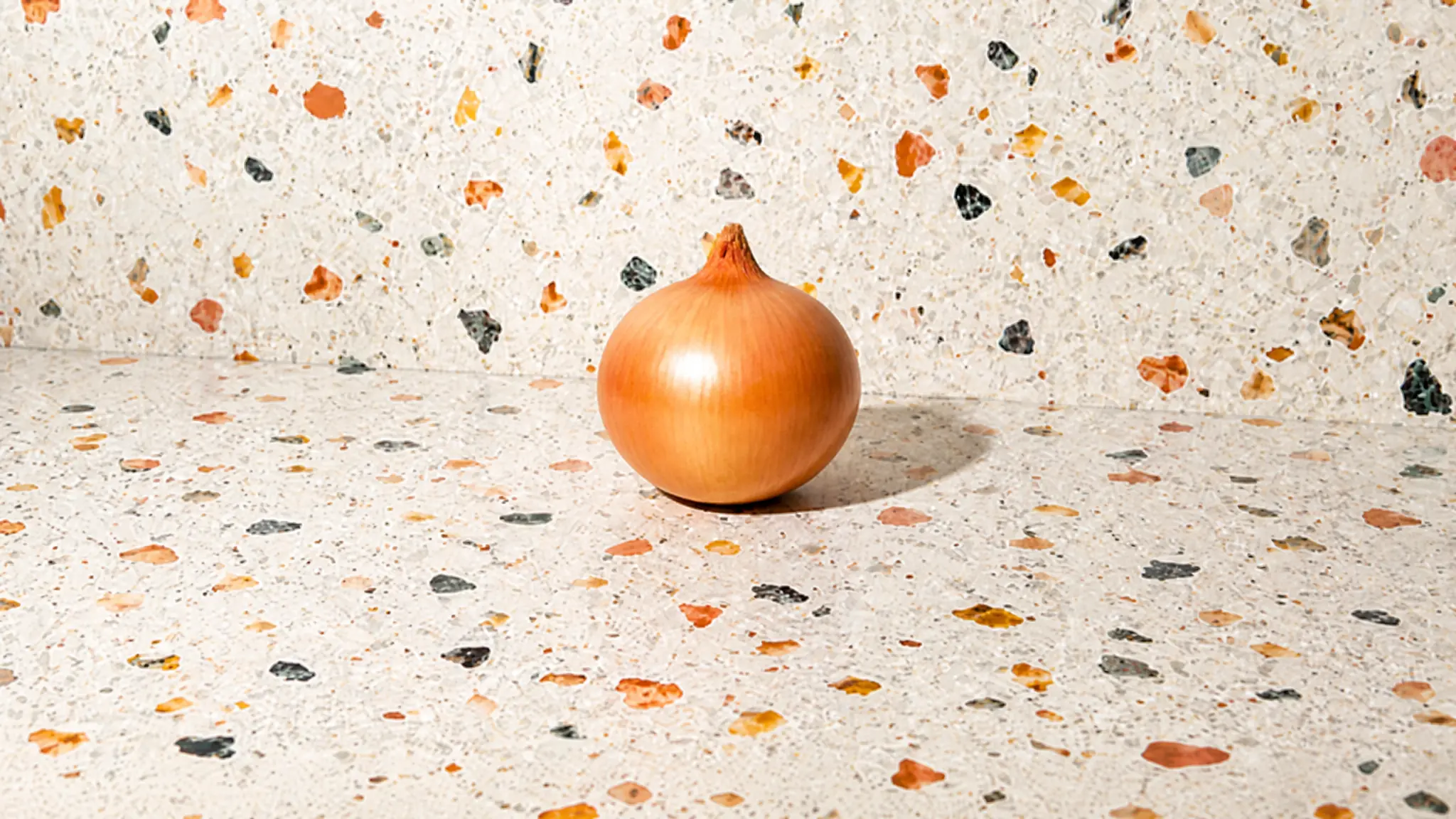
Onion
Vegetable
Last updated July 5, 2026. The Tummi Food Team maintains this Can I Feed This safety guide guide. Supporting links appear in Sources when available.



Clinically reviewed by Andria Procopio and Arefa Mohamed
Direct answer
Can babies eat Onion?
Yes, onions can be introduced around 6 months old when your baby starts solids, cooked until soft to ensure safety and easy digestion.
- Serve Age6+months
Most babies start solids around 6 months once they show readiness signs. Match the texture and serving size to your baby's skills.
- No Allergens
Onion is not flagged as one of the major allergens tracked in this database. Still watch your baby closely when serving any new food.
- Choking Risk123453
Some choking risk. Use the prep section to change the size, shape, or texture before serving.
This guide is for everyday food prep questions. Ask your pediatrician about medical concerns, feeding delays, allergy plans, or serious reactions.
How Do You Serve Onion?
How to serve Onion to babies 6 months and older
- 1Cook onion until very soft using steaming, boiling, or roasting so pieces fall apart and are easy to gum.
- 2Finely mince, mash, or blend onion to stir into grains, legumes, rice, eggs, or protein mixes; for thicker textures, chop or thinly slice so pieces remain soft.
- 3Offer large, well-cooked slices or wedges as a finger food for baby to hold and gnaw while you watch closely.
- 4Avoid small whole varieties like pearl onions unless they are fully cooked and chopped. Introduce in small amounts and observe for any digestive sensitivity or reaction.
How to serve Onion to babies 9 months and older
- 1Cook onions until very soft using steaming, boiling, or light sautéing so they mash easily between gums. Very soft pieces lower choking risk.
- 2Cut cooked onion into very small, soft pieces (pea-sized) or thin, soft strips; for pearl onions, chop or flatten to avoid whole round pieces.
- 3Mix cooked onion into familiar foods—purees, mashed vegetables, scrambled eggs, soft pasta, or stews—so your baby gets flavor without a new texture.
- 4You can briefly offer a thin raw outer layer for smell/taste exposure, but supervise closely and remove if the baby gags or spits it out.
How to serve Onion to babies 12 months and older
- 1Serve larger pieces of well-cooked onion that are soft and easily mashed so the child can safely practice chewing and swallowing.
- 2Offer raw onion only finely chopped or in very thin slices and start with tiny amounts while watching for any gagging or refusal.
- 3Cooked pearl onions may be served whole or halved once they’re very soft; avoid pickled or firm/crunchy preparations until chewing is consistently reliable.
- 4Always supervise mealtimes and slowly increase texture firmness as the child demonstrates readiness.
Is Onion a Common Allergen?
True onion allergy is uncommon; most people have intolerance (bloating, stomach pain, gas) or mild reactions. However, true IgE‑mediated allergy—ranging from mouth itching and hives to vomiting, swelling or breathing difficulty—has been reported, and handling or inhaling onion vapours can cause skin or respiratory symptoms. Cooking often reduces but may not eliminate allergenicity (some onion proteins are thermostable), and people allergic to onion may react to other alliums like garlic or leeks. If your child has swelling, hives, vomiting, or breathing trouble after exposure, seek urgent medical care and discuss formal allergy testing with your GP or allergist.
Is Onion a Choking Hazard?
Moderate Choking Risk
Raw onions can be firm and slippery and therefore pose a higher choking risk; small, round varieties (like pearl onions) are particularly hazardous. Stay within arm’s reach and supervise closely during meals, and be prepared to respond to choking emergencies.
Have More Questions?
Yes. Onions can be introduced to babies around 6 months old once they are starting solids and have no allergy history to other alliums.
Yes. Onions are healthy for babies, providing fiber, vitamins, and antioxidants that support development and immune health.
No. Onion allergies are rare for babies, but sensitivities can occur, especially in those with pollen allergies or sensitivities to related foods.
Yes. Raw onion can be a choking hazard due to its firmness and slipperiness; always serve in age-appropriate preparations.
Yes. Red onions are safe for babies if prepared properly; they offer flavonoids that may support immune function.
Save Onion to your food log
Track foods, reactions, and prep notes in Tummi when you want to keep your baby's feeding history in one place.
Sources
- Garlic and onions: Their cancer prevention properties pmc.ncbi.nlm.nih.gov
- Immunological characterization of onion (Allium cepa) allergy pmc.ncbi.nlm.nih.gov
- Garlic - Drugs and Lactation Database (LactMed®) ncbi.nlm.nih.gov
- Oral Allergy Syndrome (OAS) — American Academy of Allergy, Asthma & Immunology aaaai.org
- Relationships between oral allergy syndrome and sensitization to pollen antigen (mugwort) pubmed.ncbi.nlm.nih.gov
- Recent Advances in Bioactive Compounds, Health Functions, and Safety Concerns of Onion (Allium cepa L.) frontiersin.org
- Quercetin, Inflammation and Immunity mdpi.com
What Other Vegetable Can Babies Eat?
See all →
Source-Linked Guidance
See the evidence behind the guide.
Food guides show direct links to public-health guidance and research when supporting references are available. Source inclusion does not imply endorsement.
 Centers for Disease Control and Prevention
Developmental milestones, nutrition guidelines, and allergen introduction timelines.
 American Academy of Pediatrics
Evidence-based feeding recommendations from the leading pediatric authority.
 National Institutes of Health
Peer-reviewed research on infant nutrition, allergies, and food safety.