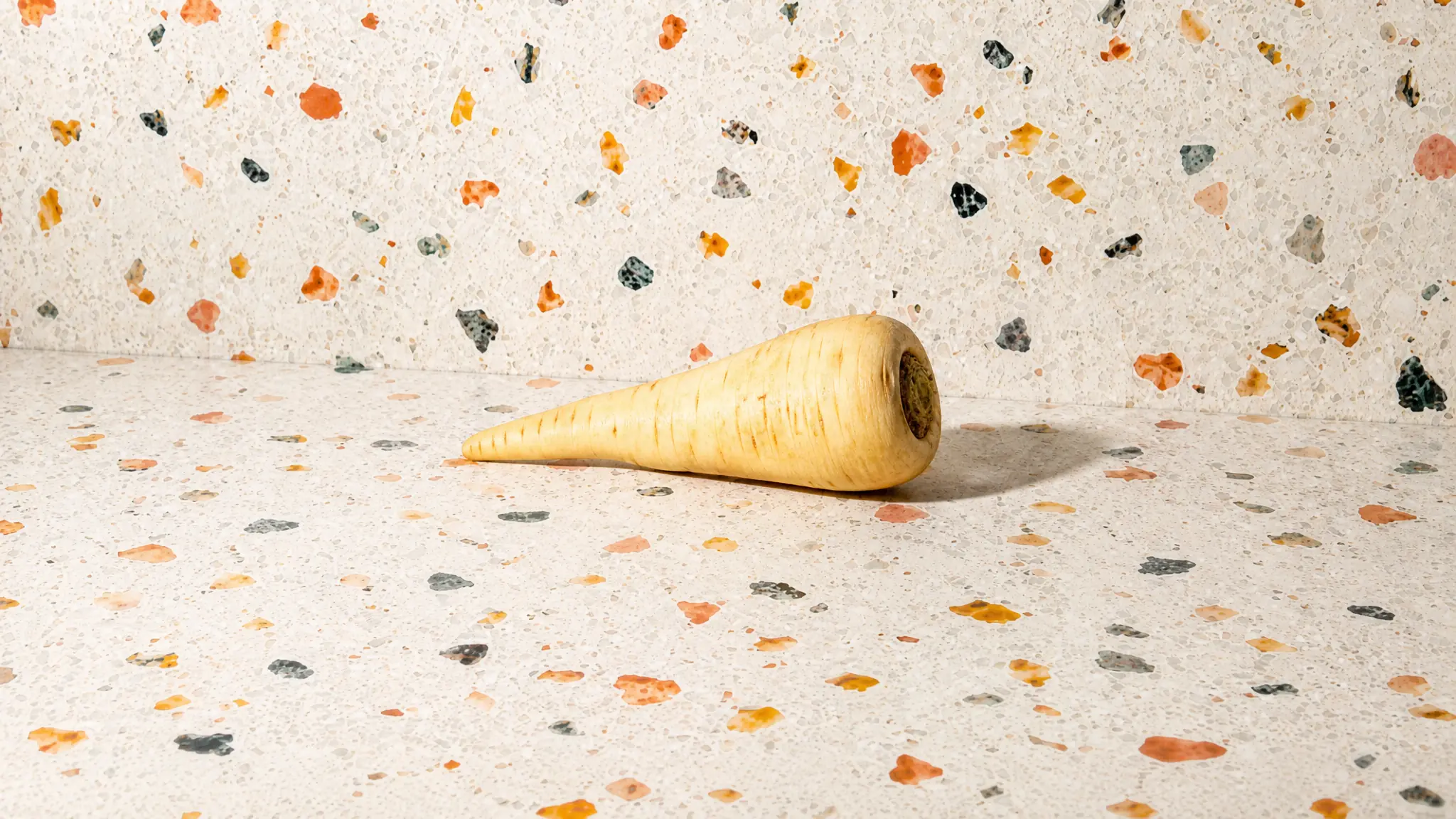
Parsnip
Vegetable
Last updated July 5, 2026. The Tummi Food Team maintains this Can I Feed This safety guide guide. Supporting links appear in Sources when available.



Clinically reviewed by Andria Procopio and Arefa Mohamed
Direct answer
Can babies eat Parsnip?
Yes, babies can eat cooked, pureed parsnips starting at 6 months when they begin solids.
- Serve Age6+months
Most babies start solids around 6 months once they show readiness signs. Match the texture and serving size to your baby's skills.
- No Allergens
Parsnip is not flagged as one of the major allergens tracked in this database. Still watch your baby closely when serving any new food.
- Choking Risk123452
Lower choking risk when served in the right texture. Always supervise meals and adjust the shape for your baby.
This guide is for everyday food prep questions. Ask your pediatrician about medical concerns, feeding delays, allergy plans, or serious reactions.
How Do You Serve Parsnip?
How to serve Parsnip to babies 6 months and older
- 1Cook parsnips until very soft (fork-tender); cut into long, lengthwise spears so your baby can grasp and gum them — avoid small pieces that could be swallowed whole.
- 2For a smoother option, mash cooked parsnip with a little unsalted butter, breastmilk, formula, or a neutral oil. Aim for a spreadable, lump-free texture.
- 3Serve warm, not hot; always test the temperature yourself before offering.
- 4Skip added salt or sugar; if desired, add a tiny pinch of mild cinnamon or vanilla for gentle flavor.
How to serve Parsnip to babies 9 months and older
- 1Peel and trim the parsnip, then cut into long matchsticks or small 1–2 cm chunks; avoid thin coin-shaped slices that can break into hard-to-chew pieces.
- 2Cook until very tender—a fork should slide through easily; steam or boil small chunks for about 10–12 minutes, or roast larger pieces at 200°C/400°F for 20–25 minutes until soft and slightly caramelized.
- 3Serve cooled to lukewarm and either lightly mashed or as soft bite-sized pieces that hold shape but can be squashed with gums; test a piece yourself before offering.
- 4Remove any tough skins or fibrous cores, cut to a size the baby can pick up safely, and always supervise during eating.
How to serve Parsnip to babies 12 months and older
- 1Cook parsnips until very soft (fork-tender) and cut into bite-sized pieces that your child can easily pick up and chew.
- 2Offer as mashed, pureed, or soft finger-food pieces to encourage independent eating and fork practice. Mix into mashed potatoes, grains, or salads to introduce familiar flavors and textures.
- 3Progress textures slowly — start smooth, then move to soft lumps, and later try lightly roasted pieces — and always supervise while your child is eating.
- 4Keep seasoning simple: avoid added salt or strong spices; use mild herbs or a small drizzle of olive oil for flavor, and cool to a safe temperature before serving.
- 5Store cooked parsnip in the refrigerator for up to 3 days or freeze portions for later; reheat thoroughly and check temperature before serving.
Is Parsnip a Common Allergen?
Parsnips are not a common food allergen, but because they’re in the Apiaceae family (related to carrots and celery) people with celery or carrot allergies — or pollen‑food cross‑reactivity (e.g., birch pollen) — may rarely react (itchy mouth/throat or oral allergy syndrome). Also note: wild parsnip sap can cause phytophotodermatitis (a non‑allergic skin burn/rash when plant juice contacts skin and is exposed to sunlight), so avoid handling raw sap without gloves. If your child has known vegetable or pollen allergies, introduce parsnip cautiously and talk to your pediatrician or an allergist for personalized advice.
Is Parsnip a Choking Hazard?
Low Choking Risk
Raw parsnips can be a choking hazard for babies. Cooked parsnips are safer, but pieces that are small, round, or firm can still pose a risk, so avoid coin-shaped pieces and supervise closely. Be ready to respond if your baby gags or shows signs of choking.
Have More Questions?
Yes, you can store cooked parsnips in an airtight container in the refrigerator for up to 3 days or freeze puree for longer storage.
Yes, it is safe to prepare parsnip purees and store them in the freezer in small portions for up to 3 months.
It depends. Organic parsnips may be free from pesticides, but always wash thoroughly to reduce any pesticide residues or dirt.
It depends. Combining parsnips with compatible foods can introduce new flavors and nutrients, but introduce new foods one at a time and watch for reactions.
It depends. Serving sizes for babies vary, but typically 1-2 tablespoons of mashed or pureed parsnips are appropriate for a starting portion for infants.
Save Parsnip to your food log
Track foods, reactions, and prep notes in Tummi when you want to keep your baby's feeding history in one place.
Sources
What Other Vegetable Can Babies Eat?
See all →

Source-Linked Guidance
See the evidence behind the guide.
Food guides show direct links to public-health guidance and research when supporting references are available. Source inclusion does not imply endorsement.
 Centers for Disease Control and Prevention
Developmental milestones, nutrition guidelines, and allergen introduction timelines.
 American Academy of Pediatrics
Evidence-based feeding recommendations from the leading pediatric authority.
 National Institutes of Health
Peer-reviewed research on infant nutrition, allergies, and food safety.