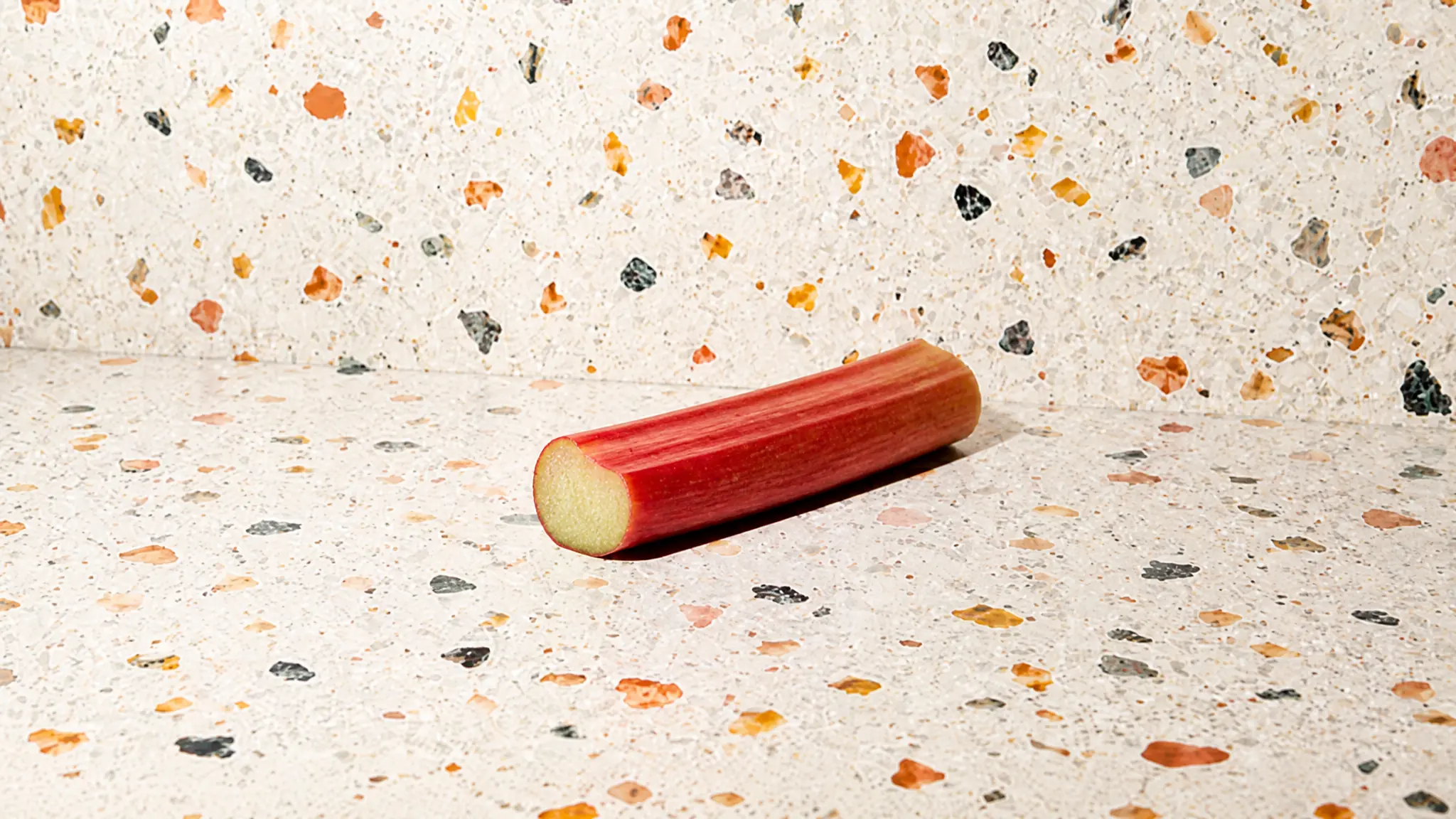
Rhubarb
Vegetable
Last updated July 5, 2026. The Tummi Food Team maintains this Can I Feed This safety guide guide. Supporting links appear in Sources when available.



Clinically reviewed by Andria Procopio and Arefa Mohamed
Direct answer
Can babies eat Rhubarb?
Rhubarb stalks can be offered from around 6 months once a baby is developmentally ready for solids. Remove and discard the toxic leaves, and cook the stalk until soft before serving it in an age-appropriate texture.
- Serve Age6+months
Most babies start solids around 6 months once they show readiness signs. Match the texture and serving size to your baby's skills.
- No Allergens
Rhubarb is not flagged as one of the major allergens tracked in this database. Still watch your baby closely when serving any new food.
- Choking Risk123453
Some choking risk. Use the prep section to change the size, shape, or texture before serving.
This guide is for everyday food prep questions. Ask your pediatrician about medical concerns, feeding delays, allergy plans, or serious reactions.
How Do You Serve Rhubarb?
How to serve Rhubarb to babies 6 months and older
- 1Use only rhubarb stalks — never the leaves; discard leaves before cooking.
- 2Cook stalks in a little water until very soft (about 10–15 minutes), then drain and cool.
- 3Puree or finely mash to a smooth, scoopable texture; stir into warm cereal, yogurt, or ricotta to mellow the tartness.
- 4Offer a small amount at first, watch for any reaction over 2–3 days, and limit added sugar — pair with mashed apple or pear if you want it sweeter.
How to serve Rhubarb to a 12-month-old baby
- 1Cook rhubarb until very soft and remove any stringy fibers; discard leaves (they are poisonous).
- 2Finely chop or mash cooked rhubarb so it can be swallowed safely, then mix a tiny amount into spoonable foods like yogurt, applesauce, or pureed fruit.
- 3Start with a very small amount (about a quarter teaspoon) and increase slowly to avoid digestive upset.
- 4Avoid adding sugar; instead pair it with naturally sweet foods such as banana, cooked apple, or cooked strawberries to balance the tart flavor.
- 5Offer only one new preparation at a time and monitor for any reactions (rash, vomiting, diarrhea) for 48 hours — stop and seek advice if they occur.
How to serve Rhubarb to a 24-month-old baby
- 1Remove the leaves and cook rhubarb until very soft (stew, bake, or steam) so pieces are scoopable and lower choking risk.
- 2Mash or puree for easier swallowing, offer soft bite-sized cooked pieces as chewing skills improve, and only give very thin raw slices if the child consistently handles crisp textures.
- 3Flavor simply—mix cooked rhubarb into yogurt, porridge, compote, or mild savory dishes and use gentle spices like cinnamon or lemon; avoid added sugar and skip sweetened preparations for the youngest children.
- 4Offer rhubarb occasionally as part of a varied diet because it contains oxalates, and consult a healthcare provider if there are kidney concerns or unusual reactions.
Is Rhubarb a Common Allergen?
Rhubarb stalks are not a common major allergen (not milk, egg, peanut, tree‑nut, soy, fish, shellfish, sesame or gluten), but people with pollen allergies—especially birch—can get oral allergy syndrome (itchy or tingly mouth/throat) from raw rhubarb; cooking usually reduces this risk. Important safety note: rhubarb leaves are poisonous (high in oxalates) and must never be eaten or given to children. If your child has a history of severe food or pollen allergies, offer cooked rhubarb first and check with your pediatrician before introducing it.
Is Rhubarb a Choking Hazard?
Moderate Choking Risk
Cooked rhubarb is not usually a choking hazard, but raw stalks can be stringy and firm and may pose a risk. To reduce choking risk, ensure pieces are soft and appropriately sized for your child’s chewing ability, and stay within arm’s reach and attentive during meals. Watch for fibrous strands or thick sections that can be hard to manage and remove or further soften them before offering.
Have More Questions?
Babies can eat cooked rhubarb stalks from around 6 months, once they show the developmental signs of readiness for solids. Remove the toxic leaves and cook the stalk until soft before offering it in a developmentally appropriate texture.
No, the color doesn't matter. Both green and red rhubarb stalks are edible, with the main consideration being freshness and flavor, not hue.
Cooked rhubarb stalk can be one of the foods offered as part of a varied diet, but the leaves must never be eaten because they are toxic. If a child has a kidney disorder, seek individualized advice from their healthcare professional before offering high-oxalate foods such as rhubarb.
Raw rhubarb stalk can be firm and fibrous, making it harder for a baby to chew and swallow. For babies, cook rhubarb until soft, prepare it in a texture suited to their developmental abilities, and supervise them throughout eating.
Rhubarb is not one of the nine major food allergens, but it can still cause an allergic reaction in some people. When introducing it, offer a small amount on its own and watch for signs of a reaction.
Save Rhubarb to your food log
Track foods, reactions, and prep notes in Tummi when you want to keep your baby's feeding history in one place.
Sources
- What we already know about rhubarb: a comprehensive review (Xiang et al., 2020) doi.org
- Update on oxalate crystal disease (Lorenz et al., 2013) doi.org
- Oxalate content of foods and its effect on humans (Noonan & Savage, 1999) pubmed.ncbi.nlm.nih.gov
- Effect of different cooking methods on vegetable oxalate content (Chai & Liebman, 2005) doi.org
- Rhubarb and oxalosis (Barceloux, 2009) doi.org
- Antioxidant activity, phenolic and anthocyanin contents of various rhubarb varieties (Takeoka et al., 2012) doi.org
- Sugar in Infants, Children and Adolescents: Position Paper (Fidler Mis et al., 2017) doi.org
- Phytodermatitis in East and southeast of Turkey: A prospective study (An & Ozturk, 2019) doi.org
- Allergen of the Month--Monk's Rhubarb (Weber, 2015) doi.org
What Other Vegetable Can Babies Eat?
See all →
Source-Linked Guidance
See the evidence behind the guide.
Food guides show direct links to public-health guidance and research when supporting references are available. Source inclusion does not imply endorsement.
 Centers for Disease Control and Prevention
Developmental milestones, nutrition guidelines, and allergen introduction timelines.
 American Academy of Pediatrics
Evidence-based feeding recommendations from the leading pediatric authority.
 National Institutes of Health
Peer-reviewed research on infant nutrition, allergies, and food safety.