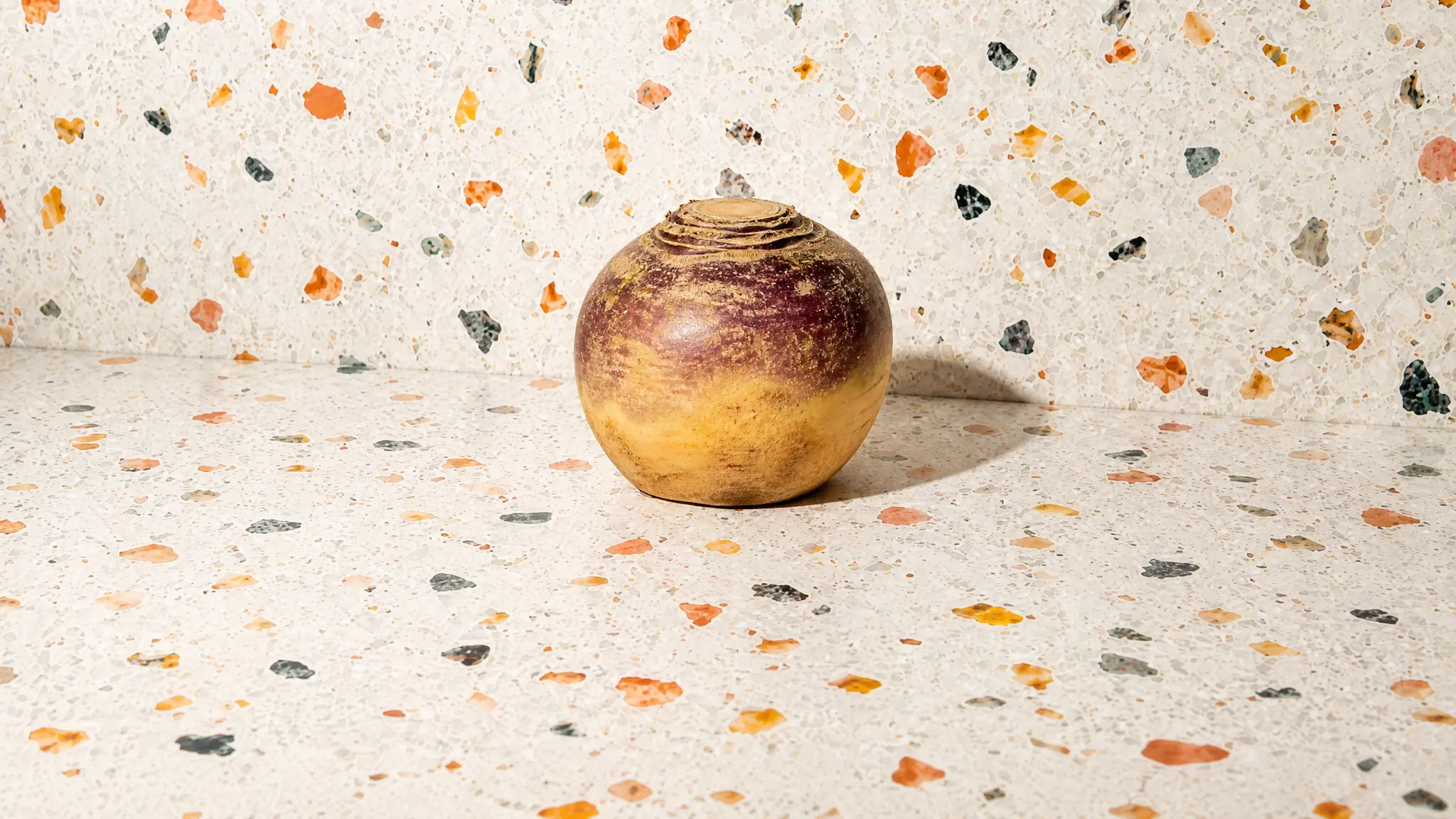
Rutabaga (Swede)
Vegetable
Last updated July 5, 2026. The Tummi Food Team maintains this Can I Feed This safety guide guide. Supporting links appear in Sources when available.


Clinically reviewed by Andria Procopio and Arefa Mohamed
Direct answer
Can babies eat Rutabaga (Swede)?
Yes, babies can eat cooked and pureed rutabaga starting around 6 months of age when they are ready for solids.
- Serve Age6+months
Most babies start solids around 6 months once they show readiness signs. Match the texture and serving size to your baby's skills.
- No Allergens
Rutabaga (Swede) is not flagged as one of the major allergens tracked in this database. Still watch your baby closely when serving any new food.
- Choking Risk123452
Lower choking risk when served in the right texture. Always supervise meals and adjust the shape for your baby.
This guide is for everyday food prep questions. Ask your pediatrician about medical concerns, feeding delays, allergy plans, or serious reactions.
How Do You Serve Rutabaga (Swede)?
How to serve Rutabaga (Swede) to babies 6 months and older
- 1Peel and cut rutabaga into bite-sized chunks, then cook (steam or boil) until very soft and fork-tender so the flesh squashes easily.
- 2For self-feeding, offer thicker mashable wedges the baby can hold and gnaw; ensure pieces are soft enough to mash with gums and supervise while eating.
- 3For spoon-feeding, mash to a smooth or slightly textured consistency and stir into cooked grains, lentils, or mashed beans to add flavor and nutrients.
- 4If using young rutabaga greens, cook them well and finely chop before mixing into mashed root or egg dishes; a well-cooked whole leaf may be given briefly as a supervised teether but should not be expected to be eaten.
How to serve Rutabaga (Swede) to babies 9 months and older
- 1Cut rutabaga into pea-sized pieces and cook until very soft — they should mash easily with gentle pressure against a plate.
- 2For a raw option, grate rutabaga very finely and mix into yogurt, mashed banana, or purees so strands are thin and unlikely to pose a choking risk.
- 3Peel and remove any tough core, then steam or roast until fork-tender. Serve in pea-sized or mashed portions to reduce choking risk.
- 4Always have your child sitting upright and supervise every bite; offer one or two pieces at a time and wait for steady chewing before giving more.
How to serve Rutabaga (Swede) to babies 12 months and older
- 1Cook rutabaga until very soft (steam, boil, or roast), then mash or finely grate to remove lumps and make it easier to swallow.
- 2Start with small, bite‑sized cooked pieces and wait until your child can chew reliably before offering raw options — when ready, serve very thin raw slices or ribbons as finger food or salad additions.
- 3Use mashed or grated cooked rutabaga as an ingredient: fold into patties, dumplings, fritters, meatballs, or pancakes to add mild sweetness and moisture.
- 4For safety and texture, make raw pieces extremely thin and always supervise eating; if your child struggles with raw textures, lightly steam slices first.
Is Rutabaga (Swede) a Common Allergen?
Rutabaga (swede) is not a common allergen and is generally safe for most people, including infants. It contains no dairy, egg, soy, gluten, nuts, peanuts, sesame, fish, or shellfish, though individuals with sensitivities to cruciferous/root vegetables may experience digestive upset or rare allergic reactions. Introduce gradually per feeding guidelines and watch for any individual adverse response.
Is Rutabaga (Swede) a Choking Hazard?
Low Choking Risk
Rutabaga can be a choking hazard because raw or undercooked root is very firm and difficult to chew. Keep baby within arm’s reach and closely supervise all meals, watching for signs of gagging or choking. Be prepared to act quickly and review infant choking first aid so you can respond if needed.
Have More Questions?
Yes. Rutabaga can be stored in a cool, dark place for several weeks or in the refrigerator for up to a week, making it convenient for meal prep.
Yes. Freezing pureed rutabaga is a good way to prepare in advance; just ensure it's cooled completely before transferring to an airtight container or freezer bag.
It depends. Organic rutabaga may have fewer pesticide residues, but both organic and conventional rutabaga are safe for babies when prepared properly.
Yes. Combining rutabaga with other vegetables or grains can create varied flavors and textures, supporting baby’s interest and dietary diversity.
It depends. Typically, starting with about 1-2 tablespoons per feeding is appropriate for babies beginning solids, but portion size can increase as baby grows and shows appetite.
Save Rutabaga (Swede) to your food log
Track foods, reactions, and prep notes in Tummi when you want to keep your baby's feeding history in one place.
Sources
- Bitter taste of Brassica vegetables: The role of genetic factors, receptors, isothiocyanates, glucosinolates, and flavor context doi.org
- Phytotherapy and food applications from Brassica genus doi.org
- Anaphylaxis to cabbage: detection of allergens pubmed.ncbi.nlm.nih.gov
- Brassica oleracea pollen, a new source of occupational allergens doi.org
What Other Vegetable Can Babies Eat?
See all →
Source-Linked Guidance
See the evidence behind the guide.
Food guides show direct links to public-health guidance and research when supporting references are available. Source inclusion does not imply endorsement.
 Centers for Disease Control and Prevention
Developmental milestones, nutrition guidelines, and allergen introduction timelines.
 American Academy of Pediatrics
Evidence-based feeding recommendations from the leading pediatric authority.
 National Institutes of Health
Peer-reviewed research on infant nutrition, allergies, and food safety.