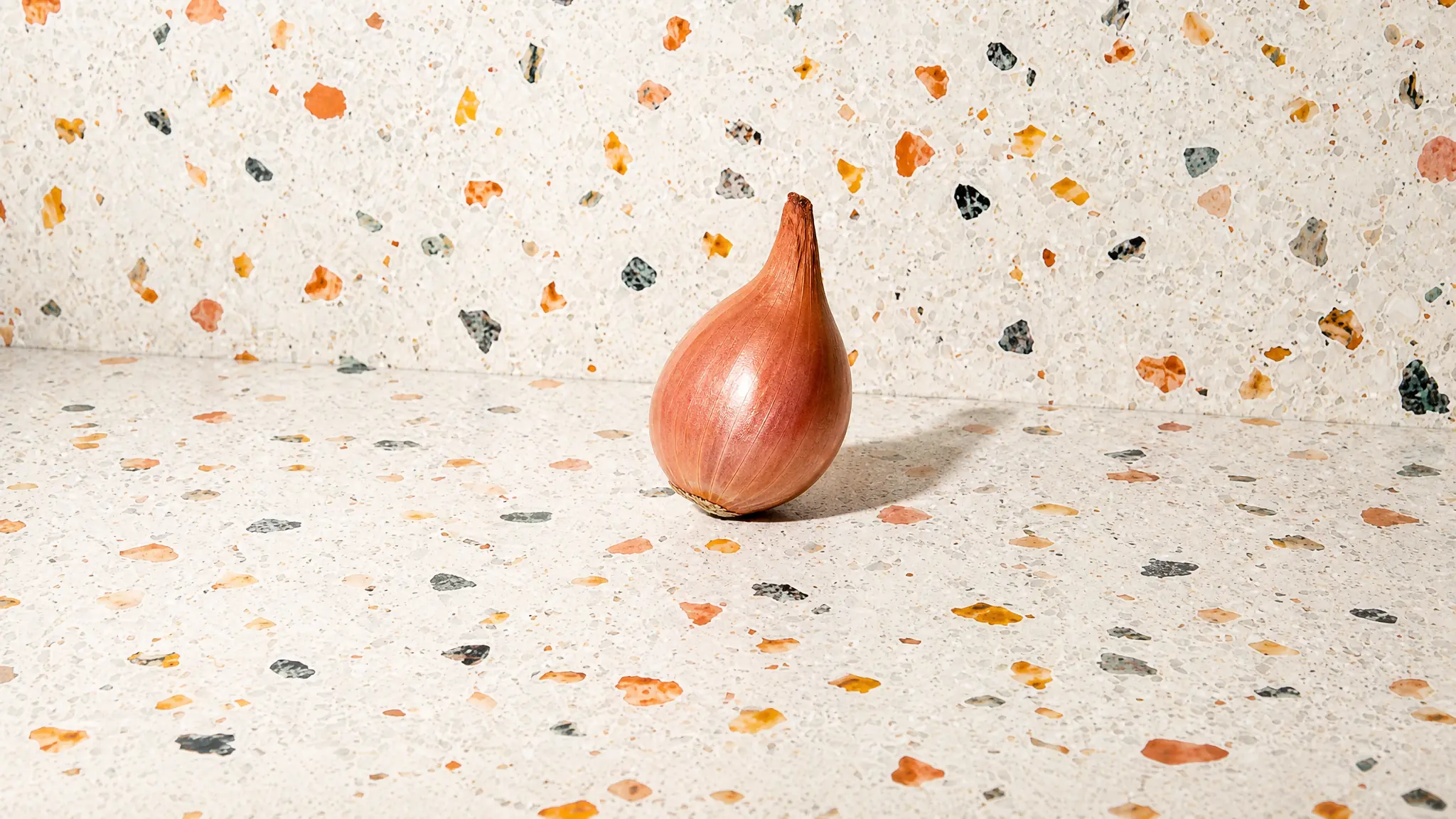
Shallot
Vegetable
Last updated July 5, 2026. The Tummi Food Team maintains this Can I Feed This safety guide guide. Supporting links appear in Sources when available.



Clinically reviewed by Andria Procopio and Arefa Mohamed
Direct answer
Can babies eat Shallot?
Yes, shallots can be introduced around 6 months of age when your baby is ready for solids, prepared plain and cooked to ensure safety.
- Serve Age6+months
Most babies start solids around 6 months once they show readiness signs. Match the texture and serving size to your baby's skills.
- No Allergens
Shallot is not flagged as one of the major allergens tracked in this database. Still watch your baby closely when serving any new food.
- Choking Risk123453
Some choking risk. Use the prep section to change the size, shape, or texture before serving.
This guide is for everyday food prep questions. Ask your pediatrician about medical concerns, feeding delays, allergy plans, or serious reactions.
How Do You Serve Shallot?
How to serve Shallot to babies 6 months and older
- 1Finely mince or chop fully cooked shallot and stir it into spoonable meals like porridges, stews, or casseroles so the flavor is evenly distributed.
- 2Mix minced shallot into soft finger foods such as frittatas, omelets, small bean burgers, or meatballs to add taste without large pieces.
- 3If using pickled shallots, make sure they are fully soft and chop them very finely; keep pieces tiny and tender to lower choking risk.
- 4Sauté briefly until very soft to mellow sharpness if raw shallot seems strong before adding to dishes.
- 5Test texture by pressing a small piece between thumb and finger—if it mashes easily it’s appropriate, and always supervise during feeding.
How to serve Shallot to babies 9 months and older
- 1Cook until very soft using steaming, boiling, or roasting so pieces mash easily between fingers.
- 2Chop into small, soft pieces or thin slices sized to your child’s chewing ability and test texture by pressing with a fork.
- 3Offer plain or mixed into family dishes like soups, stews, frittatas, or meatballs to introduce flavor and texture.
- 4Serve warm but not hot and stay within arm’s reach while they eat to reduce choking risk.
- 5Refrigerate leftovers within 2 hours and reheat until steaming, then cool to a safe serving temperature.
How to serve Shallot to babies 12 months and older
- 1Offer well‑cooked pieces that are soft and easy to mash with gums—cut into larger, manageable pieces to encourage chewing rather than swallowing whole.
- 2If your child tolerates raw shallot, serve it very finely chopped or paper‑thin sliced so the flavor is milder and pieces are easy to handle.
- 3Continue serving cooked, chopped shallot as part of meals; avoid fried, crunchy, or firm pieces until chewing skills are more developed.
- 4Always cool to a safe temperature, give small portions to start, and supervise mealtimes to reduce choking risk.
Is Shallot a Common Allergen?
Shallots are not a common allergen for most people but are in the Allium family (onions, garlic, leeks) and can cause reactions in people who are allergic to other alliums. True IgE‑mediated allergy is uncommon, though cross‑reactive proteins between garlic, onion and shallot have been identified. Some individuals experience intolerance or FODMAP‑related GI symptoms rather than an allergy. If a child has a known onion/garlic allergy or develops hives, swelling, breathing difficulty, vomiting, or other acute symptoms after eating shallot, avoid it and consult an allergist promptly.
Is Shallot a Choking Hazard?
Moderate Choking Risk
Shallots can be firm and slippery, which increases the risk of choking for infants and young toddlers. Always supervise meals closely and stay within arm’s reach so you can act immediately if a child begins to choke. Be familiar with choking first aid so you can respond quickly and confidently in an emergency.
Have More Questions?
Yes, you can store cooked baby shallots in an airtight container in the refrigerator for up to 3 days.
Yes, you can freeze pureed shallots for up to 3 months in a freezer-safe container.
It depends. Organic shallots may have fewer pesticides, but conventional shallots are also safe for babies when properly prepared.
Yes, you can combine shallots with other vegetables like carrots or potatoes to introduce new flavors and textures to your baby's diet.
Typically, a small portion of about 1-2 teaspoons is appropriate for a baby starting solids, adjusting as your baby becomes accustomed to new flavors.
Save Shallot to your food log
Track foods, reactions, and prep notes in Tummi when you want to keep your baby's feeding history in one place.
Sources
- Kaempferol: A Key Emphasis to Its Anticancer Potential doi.org
- Simple saponification method for the quantitative determination of carotenoids in green vegetables doi.org
- Evaluation and comparison of the content of total polyphenols and antioxidant activity of selected species of the genus Allium doi.org
- Immunological characterization of onion (Allium cepa) allergy doi.org
What Other Vegetable Can Babies Eat?
See all →
Source-Linked Guidance
See the evidence behind the guide.
Food guides show direct links to public-health guidance and research when supporting references are available. Source inclusion does not imply endorsement.
 Centers for Disease Control and Prevention
Developmental milestones, nutrition guidelines, and allergen introduction timelines.
 American Academy of Pediatrics
Evidence-based feeding recommendations from the leading pediatric authority.
 National Institutes of Health
Peer-reviewed research on infant nutrition, allergies, and food safety.