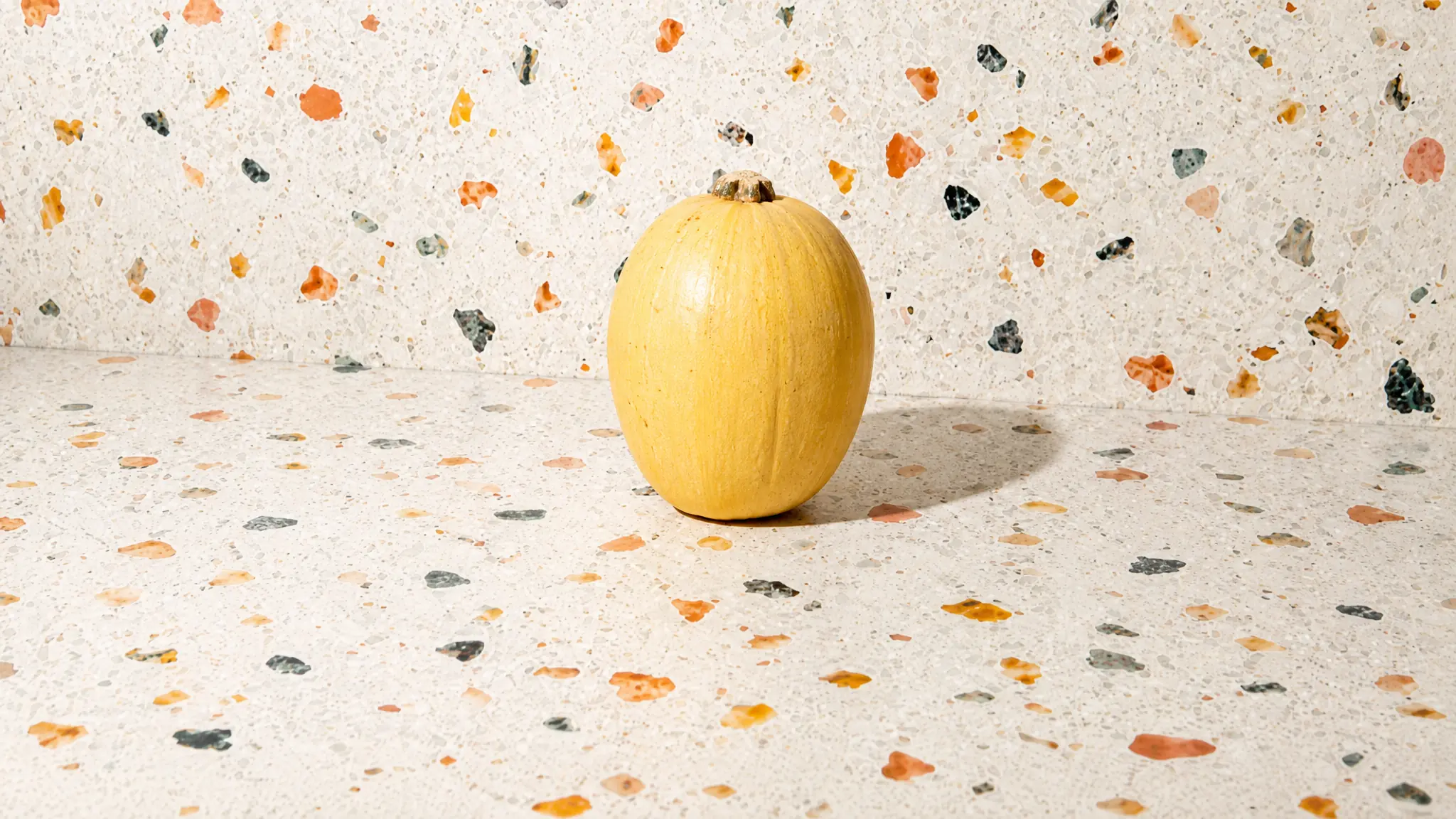
Spaghetti Squash
Vegetable
Last updated July 5, 2026. The Tummi Food Team maintains this Can I Feed This safety guide guide. Supporting links appear in Sources when available.



Clinically reviewed by Andria Procopio and Arefa Mohamed
Direct answer
Can babies eat Spaghetti Squash?
Yes, spaghetti squash can be introduced around 6 months old when solids are suitable, prepared by cooking and pulling apart the flesh into noodle-like strands.
- Serve Age6+months
Most babies start solids around 6 months once they show readiness signs. Match the texture and serving size to your baby's skills.
- No Allergens
Spaghetti Squash is not flagged as one of the major allergens tracked in this database. Still watch your baby closely when serving any new food.
- Choking Risk123451
Lower choking risk when served in the right texture. Always supervise meals and adjust the shape for your baby.
This guide is for everyday food prep questions. Ask your pediatrician about medical concerns, feeding delays, allergy plans, or serious reactions.
How Do You Serve Spaghetti Squash?
How to serve Spaghetti Squash to babies 6 months and older
- 1Cook the squash until very tender (roasted or steamed), scrape the strands, then finely chop the strands into short pieces so baby can easily pick them up.
- 2Serve in a shallow bowl for scooping and lightly toss with olive oil or a mild sauce to add flavor and prevent sticking.
- 3If the strands cause gagging, mix the chopped squash into scoopable foods (mashed vegetables, yogurt, or applesauce) or pre-load a spoon to model feeding.
- 4For a larger finger food, fold the chopped strands into beaten eggs or batter and cook as soft patties or fritters; cut into manageable pieces.
- 5Ensure pieces are soft and cooled to a safe temperature, offer appropriately sized portions, and always supervise while baby is eating.
How to serve Spaghetti Squash to babies 12 months and older
- 1Roast (400°F for 25–40 minutes) or microwave (10–12 minutes) until tender; let cool slightly so it’s safe to handle and eat.
- 2Cut in half and remove seeds, then rake strands with a fork and chop them into short, toddler-sized lengths to make picking up easier.
- 3Serve the strands loosely on the plate instead of a tight pile; occasionally pre-load an age-appropriate fork to encourage utensil practice.
- 4Offer a cooled half squash as a ‘boat’ — demonstrate scooping strands to spark curiosity and self-feeding skills.
- 5Always check temperature, trim any long strands, and supervise meals to reduce choking risk.
How to serve Spaghetti Squash to babies 18 months and older
- 1Cook the squash until strands are tender and easily separated—roast, bake, or microwave until a fork pulls out long, soft strands.
- 2Serve as long, soft strands or cut into short, easy-to-grasp pieces to match the child’s skill; keep texture soft but not mushy to support safe chewing.
- 3Offer a small fork or allow finger picking and twirling to promote independent eating and fine motor practice, supervising each bite.
- 4Present playfully (for example, a squash “boat” or mixed with a familiar sauce) to invite exploration and sensory learning—focus on engagement rather than increasing portion size.
Is Spaghetti Squash a Common Allergen?
Spaghetti squash itself is not a common food allergen and is generally safe for children. Allergic reactions to squash are rare, but children with known vegetable allergies, pollen-food (oral allergy) syndrome, or latex-fruit cross-reactivity should take caution and consult their pediatrician. Be aware that preparation can introduce allergens (e.g., butter/cheese, nuts, soy sauce, or gluten-containing sauces). Serve in age-appropriate soft pieces to avoid choking.
Is Spaghetti Squash a Choking Hazard?
Low Choking Risk
Yes — spaghetti squash can be a choking hazard. Raw or undercooked squash is very firm and difficult to chew, and even soft strands or pieces can spread on the tongue and stick in the mouth, which may trigger gagging or increase choking risk. Keep a close, attentive presence during feeds so you can respond quickly if baby gags or chokes.
Have More Questions?
Yes. Spaghetti squash can be stored in an airtight container in the refrigerator for 3-5 days after cooking, ensuring it stays fresh for your baby's meals.
Yes. You can freeze cooked spaghetti squash purees in freezer-safe containers for up to 3 months, making it convenient for batch feeding and meal prep.
Yes. Organic spaghetti squash is grown without synthetic pesticides or fertilizers, making it a preferable option if you prioritize organic produce for your baby.
Yes. For mixing foods, you can combine cooked spaghetti squash with other suitable purees or cooked vegetables, helping introduce new flavors and textures to your baby.
Yes. For babies just starting solids, portion sizes are small, typically 1-2 teaspoons, gradually increasing as your baby shows readiness and interest.
Save Spaghetti Squash to your food log
Track foods, reactions, and prep notes in Tummi when you want to keep your baby's feeding history in one place.
Sources
- Regulatory control of carotenoid accumulation in winter squash during storage (Zhang et al., 2014) doi.org
- The Benefits and Risks of Certain Dietary Carotenoids that Exhibit both Anti- and Pro-Oxidative Mechanisms—A Comprehensive Review (Black et al., 2020) mdpi.com
- Allergy to pumpkin and cross-reactivity to other Cucurbitaceae fruits (Figueredo et al., 2000) jacionline.org
- Butternut squash (Cucurbita moschata) dermatitis (Potter & Hashimoto, 1994) onlinelibrary.wiley.com
- Oral Allergy Syndrome (OAS) / Pollen-Food Allergy Syndrome (PFAS) — AAAAI (organizational resource) aaaai.org
- Allergy caused by ingestion of zucchini (Cucurbita pepo): Characterization of allergens and cross-reactivity (Reindl et al., 2000) jacionline.org
- Oral Allergy Syndrome: An Update for Stomatologists (Kashyap, 2015) onlinelibrary.wiley.com
What Other Vegetable Can Babies Eat?
See all →

Source-Linked Guidance
See the evidence behind the guide.
Food guides show direct links to public-health guidance and research when supporting references are available. Source inclusion does not imply endorsement.
 Centers for Disease Control and Prevention
Developmental milestones, nutrition guidelines, and allergen introduction timelines.
 American Academy of Pediatrics
Evidence-based feeding recommendations from the leading pediatric authority.
 National Institutes of Health
Peer-reviewed research on infant nutrition, allergies, and food safety.