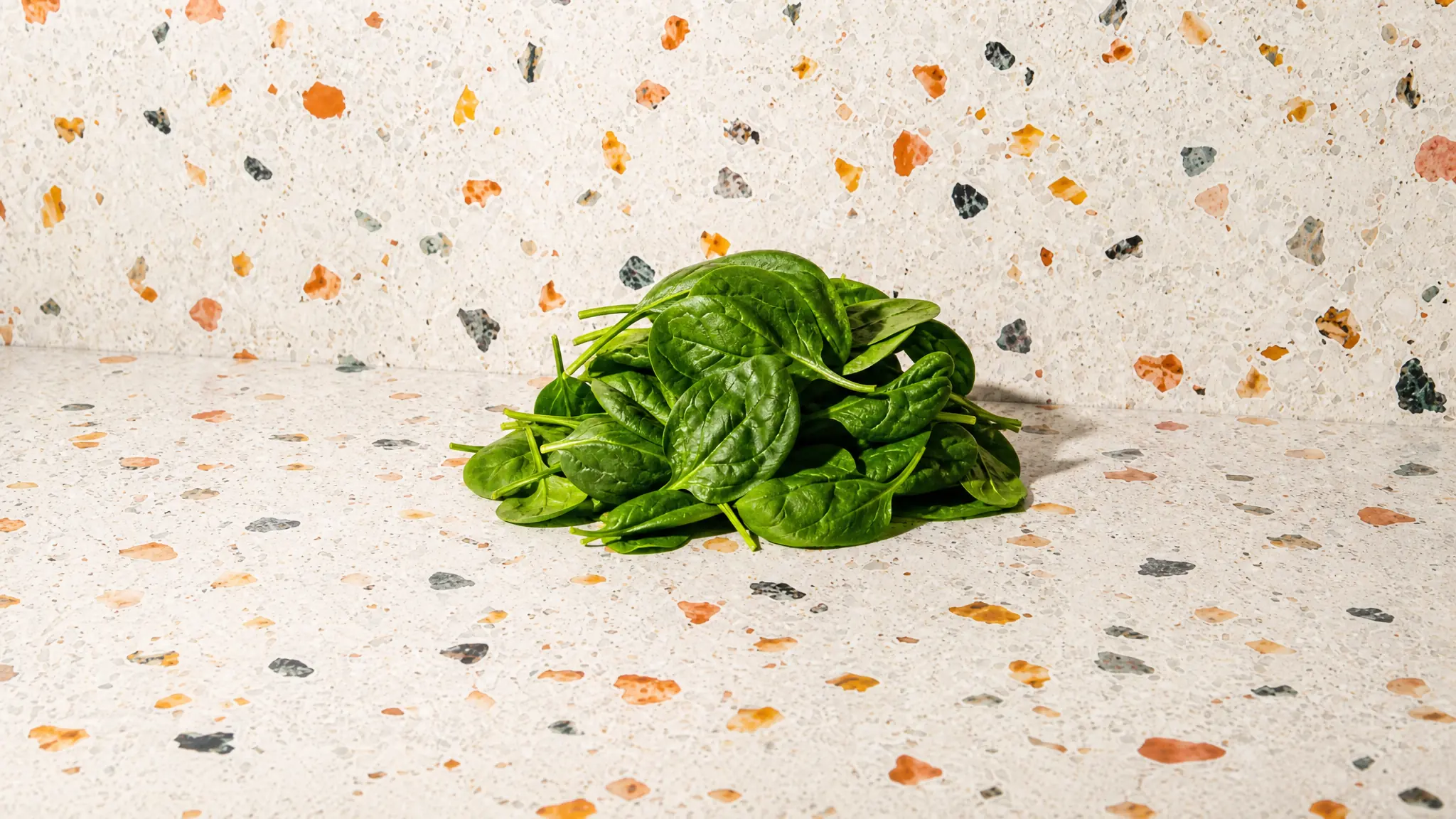
Spinach
Vegetable
Last updated July 5, 2026. The Tummi Food Team maintains this Can I Feed This safety guide guide. Supporting links appear in Sources when available.



Clinically reviewed by Andria Procopio and Arefa Mohamed
Direct answer
Can babies eat Spinach?
Yes, spinach can be introduced around 6 months of age when pureed or well-cooked to ensure it's safe and easy for babies to eat.
- Serve Age6+months
Most babies start solids around 6 months once they show readiness signs. Match the texture and serving size to your baby's skills.
- No Allergens
Spinach is not flagged as one of the major allergens tracked in this database. Still watch your baby closely when serving any new food.
- Choking Risk123451
Lower choking risk when served in the right texture. Always supervise meals and adjust the shape for your baby.
This guide is for everyday food prep questions. Ask your pediatrician about medical concerns, feeding delays, allergy plans, or serious reactions.
How Do You Serve Spinach?
How to serve Spinach to babies 6 months and older
- 1Finely chop fully cooked spinach until very soft, then mix into mashed vegetables, porridge, or purees so baby can scoop and swallow easily.
- 2Fold small amounts of chopped spinach into soft finger foods like thin egg strips or tiny, well-cooked meat patties to introduce texture without large leaf pieces.
- 3Avoid offering whole leaf pieces on their own. They may cling to the tongue or roof of the mouth and make swallowing harder.
- 4Serve small portions, check the temperature, and watch while they eat to ensure pieces are small and easy to swallow.
How to serve Spinach to babies 9 months and older
- 1Finely chop or cut spinach into thin ribbons. Remove any tough stems to avoid large pieces that can catch in the throat.
- 2Mix the spinach into scoopable foods (yogurt, mashed potato, porridge), sauces, or cooked dishes so it blends into a texture your child handles well.
- 3Briefly steam or sauté to soften leaves and reduce loose fragments. For raw servings, choose very tender baby spinach and chop it finely.
- 4Always supervise while eating; small leaf fragments can cause gagging but are usually harmless — adjust texture (more finely chopped, mashed, or pureed) if gagging occurs.
How to serve Spinach to babies 12 months and older
- 1Cooked or raw: steam or lightly sauté spinach until tender for easier chewing, or serve raw finely chopped in salads—ensure leaves are soft and thick stems are removed.
- 2Chop small: cut leaves into bite-sized pieces so a child can manage them safely.
- 3Support self-feeding: preload a child-safe fork or spoon and offer small portions while supervising; expect some spitting as chewing skills develop.
- 4Boost iron absorption: serve with vitamin C–rich foods like orange, tomato, or bell pepper, and let hot spinach cool to warm before serving.
Is Spinach a Common Allergen?
Spinach is not a common food allergen for most children, but rare allergic reactions and oral allergy syndrome (mouth itching/swelling) have been reported. For infants, spinach can contain high nitrate levels — some health agencies advise avoiding spinach/chard as baby food for very young infants (often recommending waiting until around 6–12 months or avoiding as a main baby food) because of methemoglobinemia risk; introduce small amounts of cooked, well‑washed spinach later. Always watch for signs of an allergic reaction (hives, swelling, vomiting, difficulty breathing) and seek medical care if they occur.
Is Spinach a Choking Hazard?
Very Low Choking Risk
Spinach is generally a low choking risk for babies, but small leaf pieces—raw or cooked—can cling to the tongue or roof of the mouth and cause harmless gagging. Gagging is common and usually not dangerous, but caregivers should stay within arm’s reach and watch closely during meals. Know the signs of true choking and be prepared to act; training in infant/toddler rescue is recommended.
Have More Questions?
Yes – spinach can be stored in the refrigerator for a few days or frozen for longer storage, but fresh is best for retaining nutrients and flavor.
Yes – you can freeze spinach puree in airtight containers for up to 3 months, making it convenient to prepare baby food in advance.
Yes – choosing organic spinach reduces exposure to pesticides, but conventional spinach is also safe when properly washed and prepared for babies.
Yes – combining cooked spinach with fruit purees or cereals can enhance flavor and nutrient absorption for your baby.
Yes – standard portion sizes for babies start small, about 1-2 teaspoons, gradually increasing as your baby gets used to new textures and flavors.
Save Spinach to your food log
Track foods, reactions, and prep notes in Tummi when you want to keep your baby's feeding history in one place.
Sources
- Ancuceanu et al. (2015) - A Survey of Plant Iron Content (Nutrients) doi.org
- Yadav & Sehgal (2002) - Effect of processing on iron availability (Nutrition and Health) doi.org
- Bergquist et al. (2005) - Flavonoids in Baby Spinach (Journal of Agricultural and Food Chemistry) doi.org
- Mayo Clinic - E. coli: Symptoms and Causes mayoclinic.org
- Ferrer et al. (2011) - Food allergy to spinach (Allergologia et Immunopathologia) doi.org
- Maillard et al. (2000) - Cross-allergy to latex and spinach (Acta Dermato-Venereologica) doi.org
- Sanchez et al. (1997) - Oral allergy syndrome induced by spinach (Allergy) doi.org
- Brkić et al. (2017) - Nitrate in leafy green vegetables (AJTCAM) doi.org
What Other Vegetable Can Babies Eat?
See all →

Source-Linked Guidance
See the evidence behind the guide.
Food guides show direct links to public-health guidance and research when supporting references are available. Source inclusion does not imply endorsement.
 Centers for Disease Control and Prevention
Developmental milestones, nutrition guidelines, and allergen introduction timelines.
 American Academy of Pediatrics
Evidence-based feeding recommendations from the leading pediatric authority.
 National Institutes of Health
Peer-reviewed research on infant nutrition, allergies, and food safety.